
Starship Reaches Orbit for the First Time on Flight 14, Deploying 26 Starlink V3 Satellites

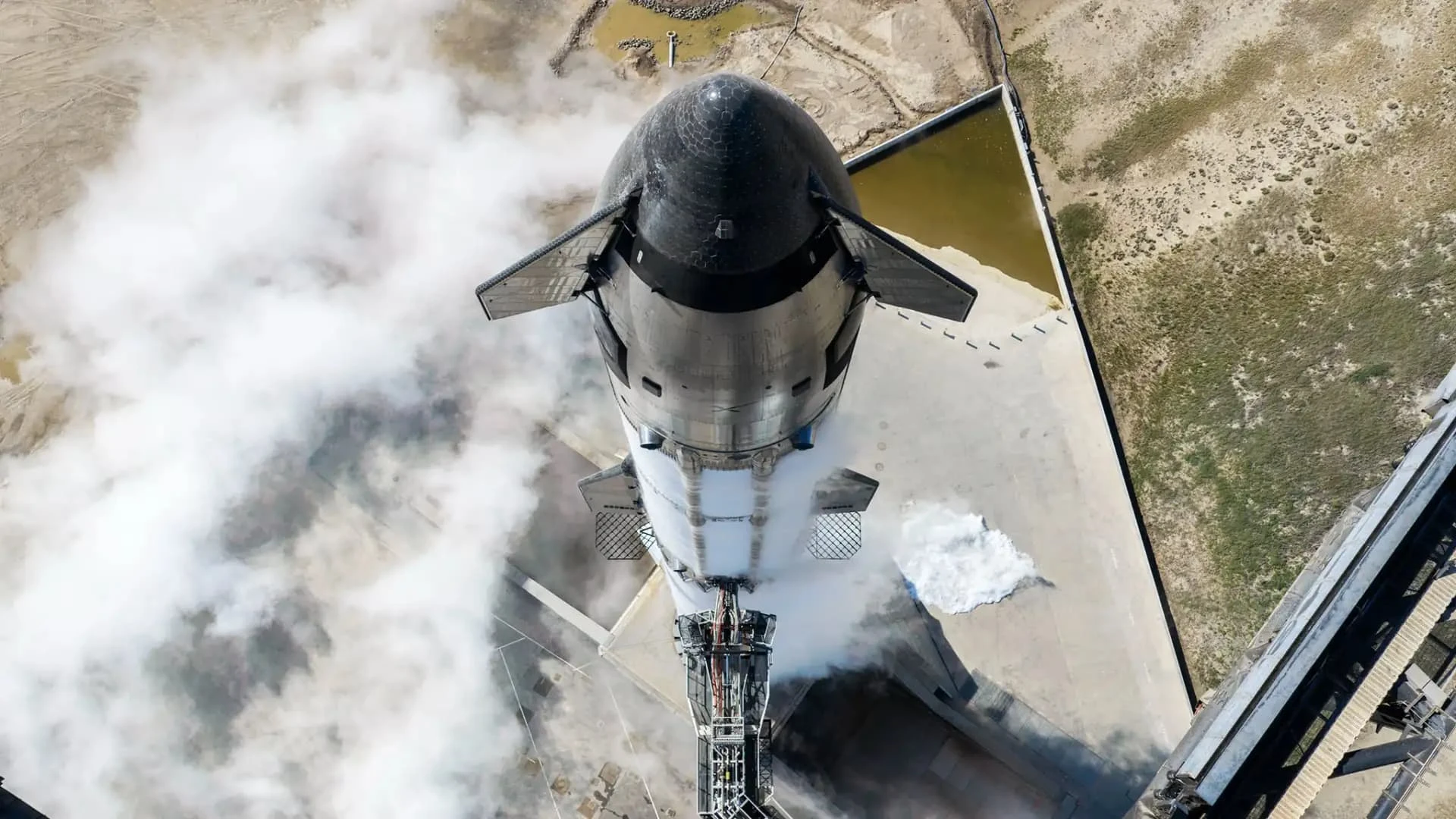
SpaceX's Starship reached orbit for the first time on its fourteenth test flight, launched from Starbase in Texas on September 28, 2026. After 13 earlier suborbital flights, Flight 14 also carried Starship's first operational payload: 26 Starlink V3 satellites.
What Happened
- Ascent: one of the ship's six Raptor engines shut down early. The vehicle compensated by burning the remaining engines longer and still reached its planned trajectory.
- Booster: the Super Heavy booster lost one of its 33 engines during ascent, separated from the ship and flew a return burn before splashing down in the Gulf of Mexico, according to Japanese outlet Space Connect.
- Deployment: the ship entered orbit and released all 26 Starlink V3 satellites, which SpaceX's CEO later said were operating normally.
- Early return: the planned flight of roughly 10 hours and about six orbits was shortened. The ship performed a deorbit burn and splashed down in the North Pacific, near Hawaii, about 3 hours and 9 minutes after liftoff.
- Final moments: several reports said the vehicle tipped over after splashdown. SpaceX's launch history lists the vehicle as expended, so neither stage will be reflown.
Why It Matters
Orbital insertion and payload delivery turn Starship from a flight-test vehicle toward a working launch system. Commentators also noted implications for NASA's lunar plans, and NASA Administrator Jared Isaacman congratulated SpaceX.
Analysts described the result as mixed rather than flawless: the engine anomaly and shortened profile mean some objectives, such as extended orbital operations, were not fully tested.
What Comes Next
SpaceX says data from Flight 14 will feed into Flight 15, which is expected to continue testing reusability, heatshield performance and payload operations. A date has not been confirmed.