
Trump Hints at New Iran Strikes as Israel Tightens West Bank Security

Trump Signals Possible Further US Military Strikes on Iran
WASHINGTON: US President Donald Trump has indicated that Washington could launch further military strikes against Iran, raising fresh concerns about an escalation in the conflict and its potential consequences for regional security.
Speaking to reporters at the White House on Thursday, Trump said the United States had severely weakened Iran through military action but suggested that additional operations remained possible.
"We've knocked the hell out of them, and we may do it a little bit further," Trump said, defending his administration's approach to the conflict.
The US president reiterated that preventing Iran from acquiring nuclear weapons remained a central objective. He also acknowledged that the military campaign could carry political costs, with Americans divided over the decision to continue the war.
Trump did not announce a specific timetable for further strikes or identify potential targets. His remarks nevertheless indicate that Washington has not ruled out additional military action as it considers how to achieve its objectives.
The comments come amid uncertainty over the future of the conflict, stalled diplomatic efforts and continuing concerns about the security of key shipping routes in the region.
Iran Conflict Raises Concerns Over Regional Security
The United States and Israel launched military operations against Iran on February 28, 2026, triggering retaliatory missile and drone attacks by Tehran across the region.
The conflict has affected regional security and raised concerns about energy supplies, maritime traffic and the possibility of further confrontation involving countries across the Middle East.
The Strait of Hormuz, a critical passage for international oil shipments, has been a central point of contention. Disagreements over navigation and maritime security have complicated efforts to reach a lasting settlement.
A memorandum of understanding signed in June had been intended to create a path towards a final peace agreement, but negotiations subsequently stalled over unresolved differences, including access and navigation through the strait.
Trump said on Wednesday that Washington was not negotiating with Iran and indicated that developments could occur soon. His latest remarks suggest that the administration continues to consider its military options, although no final decision on further strikes has been publicly confirmed.
A renewed military campaign could intensify pressure on Iran while increasing the risk of retaliation and further disruption across the region.
Netanyahu Orders Hebron Cordon After Attack Wounds Five Israelis
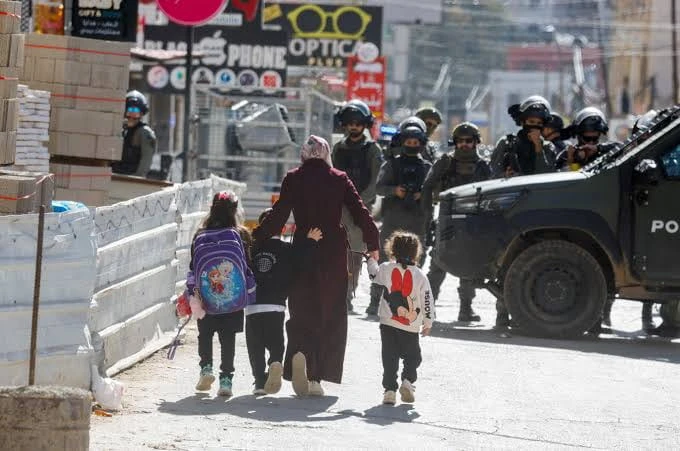
Separately, Israeli Prime Minister Benjamin Netanyahu ordered an immediate security cordon around Hebron and instructed security forces to prepare for a broader lockdown across the occupied West Bank following a shooting attack on Friday.
The incident occurred near Hebron, where two Palestinian gunmen were involved in a prolonged exchange of fire with Israeli forces. Five Israelis were wounded in the attack, with two reported to be in critical condition.
Israeli forces subsequently shot and killed the two alleged attackers, according to the military.
Netanyahu said the security response was intended to prevent further attacks. He also ordered increased military operations and arrests targeting individuals suspected of involvement in militant activity.
The proposed wider restrictions come just days before Israel's parliamentary election, scheduled for Tuesday, October 27. The timing has placed security concerns at the centre of an already tense political environment.
Israeli authorities have not publicly established a connection between the shooting and the separate military confrontation involving Iran.
West Bank Restrictions Could Affect Palestinian Movement
A full lockdown of the occupied West Bank could significantly restrict movement for Palestinians living in the territory, affecting travel between communities, access to workplaces and essential services.
Security closures and checkpoints are frequently imposed by Israeli authorities following attacks or heightened security alerts. However, broader restrictions can create additional difficulties for residents who depend on roads connecting towns, villages and major urban centres.
Netanyahu's order calls for preparations for a wider closure, but the precise scope, duration and implementation of any territory-wide restrictions remain important details.
The shooting has also intensified political debate in Israel over security policy and the government's response to attacks. Netanyahu has presented the operation as necessary to prevent further violence, while restrictions on Palestinian movement remain a recurring source of concern.
The situation near Hebron continues to reflect the wider instability in the West Bank, where security operations, settler-related violence and Palestinian grievances have contributed to persistent tensions.
Two Security Crises Highlight Middle East Uncertainty
Trump's statements on Iran and Netanyahu's orders in the West Bank reflect separate security developments unfolding across the Middle East on the same day.
In the Iran conflict, the immediate uncertainty centres on whether Washington will authorise further military action and how Tehran might respond. The absence of a confirmed decision or timetable means the prospect of renewed strikes remains a possibility rather than an announced operation.
In the West Bank, the immediate focus is on the aftermath of the shooting, the condition of the injured Israelis and the extent of the restrictions that Israeli security forces may impose.
Both developments carry implications beyond their immediate locations. Further military action against Iran could affect regional stability and energy transport, while an expanded West Bank lockdown could deepen restrictions on Palestinian communities and intensify existing tensions.
As diplomatic uncertainty and security concerns continue, the coming days will be important in determining whether these developments lead to further escalation or are contained through security measures and renewed diplomatic efforts.