
India Slams Pakistan at UN Over Kargil War and Minority Rights

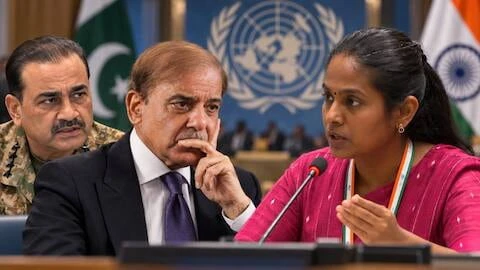
India Raises Kargil War and Minority Rights at the United Nations
UNITED NATIONS India has launched a strong diplomatic response to Pakistan during a United Nations discussion on religious freedom, funeral rights and the protection of minorities, invoking the 1999 Kargil War to challenge Islamabad’s position on these issues.
Bhavika Mangalanandan, First Secretary at India’s Permanent Mission to the UN, delivered the remarks during an interactive dialogue with the UN Special Rapporteur on Freedom of Religion or Belief. The discussion focused on funeral rights in exceptional circumstances and the broader responsibilities of states to protect religious freedom.
India questioned Pakistan’s criticism of New Delhi on minority rights, arguing that Islamabad should address concerns within its own borders before commenting on India’s domestic affairs.
Mangalanandan cited the Kargil conflict, saying Pakistan had refused to accept the bodies of some of its soldiers killed during the 1999 war. She stated that the Indian Army subsequently buried several Pakistani soldiers with military honours and in accordance with Islamic religious rites.
Her remarks brought a historical episode into a contemporary diplomatic debate over religious freedom, the treatment of the dead and the responsibilities of governments during conflict.
Kargil War Reference Becomes Central to India’s Response
The 1999 Kargil War remains a significant chapter in India-Pakistan relations. The conflict erupted after Pakistani soldiers and armed personnel occupied positions on the Indian side of the Line of Control in the Kargil sector of Jammu and Kashmir.
India launched military operations to regain the occupied positions, resulting in intense fighting and casualties on both sides.
At the United Nations, Mangalanandan referred to the handling of Pakistani soldiers’ remains during the conflict to question Pakistan’s position on burial rights and religious freedom.
She argued that the historical episode contradicted Islamabad’s current emphasis on religious rights. Her comments also highlighted the importance of recognising the dignity of fallen soldiers and respecting religious customs in the treatment of their remains.
The reference was part of India’s wider diplomatic argument rather than a separate discussion on the military history of the Kargil conflict.
India Questions UN Report on Religious Freedom
New Delhi also challenged aspects of the UN Special Rapporteur’s report, particularly its treatment of religious discrimination and funeral practices during exceptional circumstances.
Mangalanandan questioned what she described as the report’s disproportionate focus on the Global South during the COVID-19 pandemic, arguing that comparable incidents in developed countries had not received adequate attention.
India maintained that assessments of religious freedom should apply consistent standards across countries and regions. The Indian representative cautioned against selective reporting and the politicisation of human suffering.
The delegation also raised concerns about the report’s discussion of funeral rights for individuals accused or convicted of terrorism.
India argued that consideration of the rights of perpetrators should not overshadow the rights and suffering of victims and their families. The statement emphasised the need to consider public safety, legal safeguards, religious practices and the impact of terrorism when examining such cases.
The exchange highlighted the broader challenge facing international human-rights mechanisms: balancing individual rights, public interests and the consistent application of international standards.
Pakistan’s Treatment of Religious Minorities Under Scrutiny
India’s intervention also focused on the protection of religious minorities in Pakistan. Mangalanandan alleged that minority communities in the country faced continuing rights violations and questioned Islamabad’s standing to criticise India on religious freedom.
Concerns over the treatment of Hindu and Christian communities in Pakistan have included allegations of forced conversions, abductions and marriages involving minority girls, particularly in Sindh province.
Human-rights advocates have called for stronger safeguards, effective enforcement of existing laws and protection for vulnerable communities. The allegations have also drawn attention to questions of consent, child marriage and access to justice.
India’s statement brought these concerns into the UN discussion, linking minority protection to the wider question of whether governments apply the same standards of religious freedom domestically that they advocate internationally.
The claims form part of a contentious diplomatic exchange, and the protection of minority rights remains a broader human-rights issue requiring evidence-based assessment and effective legal safeguards.
Jammu and Kashmir Adds to India-Pakistan Diplomatic Tensions
The exchange also touched on Jammu and Kashmir, a longstanding source of tension between India and Pakistan.
Mangalanandan urged Pakistan to focus on developments in territories under its control rather than commenting on India’s administration of the Union Territory of Jammu and Kashmir.
The remarks reflect the continuing disagreement between the two countries over sovereignty, security and human rights in the region. Both governments have repeatedly raised concerns about conditions across the Line of Control, making Kashmir a recurring subject of international diplomatic exchanges.
India’s latest intervention connected these longstanding differences with the specific UN discussion on religious freedom and funeral rights.
Diplomatic Dispute Highlights Wider Human-Rights Debate
India’s remarks at the United Nations combined historical references to the Kargil War with contemporary concerns about minority protection, religious discrimination and the treatment of terrorism victims.
The intervention also questioned whether international reporting applies consistent standards when examining human-rights violations in different parts of the world.
The exchange underscores the continuing role of the United Nations as a forum where countries challenge one another’s records and interpretations of international obligations. It also highlights the difficulty of separating human-rights discussions from broader geopolitical tensions.
For India and Pakistan, disputes over minority rights, Jammu and Kashmir and the legacy of the Kargil War continue to shape diplomatic engagement. The latest exchange has brought these issues together in a debate over religious freedom, accountability and the impartial application of human-rights principles.