
India Clears E100 Ethanol Fuel for Flex-Fuel Cars Under New Motor Vehicle Rules

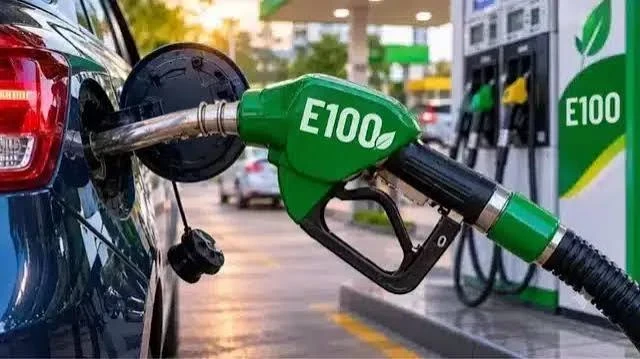
India Amends Motor Vehicle Rules for E100 Flex-Fuel Vehicles
India has updated its vehicle regulations to recognise E100 fuel for compatible flex-fuel vehicles, marking a step forward in the country’s efforts to expand alternative fuels in the transport sector.
The amendment to the Central Motor Vehicles Rules provides a regulatory basis for vehicles engineered to operate on E100, a fuel consisting of nearly pure ethanol. The change is relevant to automakers developing flex-fuel technology, which allows specially designed engines to use petrol and different ethanol blends.
The move forms part of India’s broader strategy to diversify its transport-energy mix, promote domestically produced biofuels and reduce exposure to international crude oil prices. However, regulatory recognition does not mean that every petrol vehicle can use E100 or that the fuel is available at every petrol pump.
What Is E100 Fuel?
E100 refers to fuel made up of almost 100% ethanol, with the precise composition depending on applicable fuel specifications and permitted denaturants. Ethanol is an alcohol-based fuel that can be produced from agricultural feedstocks, including sugarcane and certain grains.
Unlike conventional petrol engines designed for standard gasoline, vehicles running on high ethanol concentrations require compatible fuel-system components, engine calibration and suitable materials. Ethanol has different combustion characteristics and lower energy content per litre than petrol, which can affect vehicle performance and fuel economy.
Flex-fuel vehicles are engineered to accommodate varying proportions of petrol and ethanol. Sensors and engine-management systems can adjust operation according to the fuel mixture, allowing a compatible vehicle to run on different approved blends.
The amended rules therefore apply to vehicles designed and approved for the relevant fuel, rather than giving blanket permission to use E100 in all existing cars.
Why the Rule Change Matters
India has been expanding ethanol blending in petrol as part of its efforts to lower reliance on imported crude oil and increase the use of domestic renewable fuel sources.
Allowing E100 in compatible vehicles could create additional opportunities for ethanol producers, fuel suppliers and automobile manufacturers. It may also encourage research and investment in engines and components designed for high-ethanol fuels.
For policymakers, the change offers another option in the transition towards a more diverse transport-energy system. Ethanol can be produced domestically, potentially supporting agricultural supply chains and creating additional demand for biofuel feedstocks.
The overall benefit, however, will depend on production capacity, sustainable feedstock availability, distribution infrastructure and the cost of supplying the fuel to consumers.
What It Means for Car Buyers
For motorists, the most important distinction is between regulatory approval of E100-compatible vehicles and general availability of E100 fuel.
Owners should use only the fuel blends approved by their vehicle manufacturer. Putting high-concentration ethanol into a car that is not designed for it could cause compatibility problems involving fuel-system components, seals and engine operation.
Consumers considering a flex-fuel vehicle will need to assess its purchase price, fuel availability, expected mileage and maintenance requirements. Because ethanol contains less energy per litre than petrol, a vehicle may travel fewer kilometres on the same volume of fuel, even if the price per litre is lower.
Widespread adoption will also depend on whether fuel retailers can supply E100 reliably and whether the cost savings, if any, outweigh differences in fuel efficiency.
Challenges Ahead for India’s Ethanol Transition
Expanding the use of high-ethanol fuel requires more than a regulatory change. Automakers must develop and certify compatible vehicles, while fuel producers and distributors need to meet applicable quality and safety standards.
India will also need to consider the sustainability of ethanol production. Feedstock requirements, water use, agricultural priorities and the economics of biofuel production can influence how quickly supply expands.
Ethanol’s environmental impact depends on how it is produced and transported, so its climate benefits should be assessed across the fuel’s lifecycle rather than assumed from its renewable origin alone.
A Further Step Towards Alternative-Fuel Mobility
The amendment recognising E100 for compatible flex-fuel vehicles creates an additional regulatory option for India’s automobile and energy industries. It complements existing ethanol-blending initiatives while opening the door to vehicles capable of using much higher ethanol concentrations.
The next phase will depend on manufacturers bringing approved vehicles to market, fuel suppliers building dependable distribution networks and consumers having clear information about compatibility and running costs.