
Delhi Protest: Abhijeet Dipke Arrested, Neha Bora Released

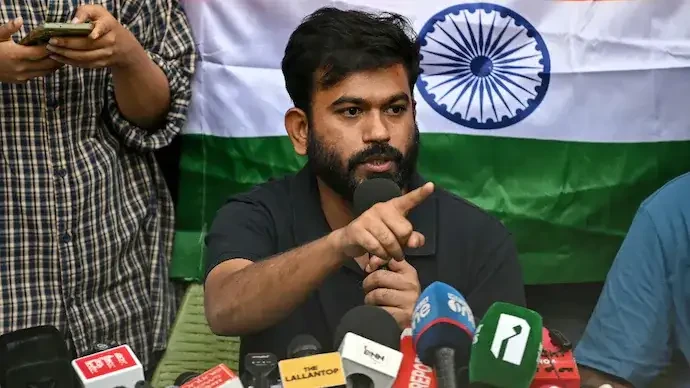
Delhi Police placed Cockroach Janata Party (CJP) founder Abhijeet Dipke under preventive arrest and released All India Students’ Association (AISA) president Neha Bora following their detention ahead of the Lehra Do Tiranga protest march in New Delhi. The developments unfolded on October 16 and 17, 2026, amid heightened security and political tensions surrounding the planned demonstration.
According to reports, both leaders were taken into preventive custody on Friday evening over concerns about a possible breach of peace. Bora was released early Saturday after the required detention formalities were completed, while Dipke remained in custody and was scheduled to be produced before a Special Executive Magistrate (SEM) court.
The police action has drawn attention to the handling of political protests in the national capital and the growing prominence of youth-led movements in demonstrations against the government.
Why Were Abhijeet Dipke and Neha Bora Detained?
The detentions took place ahead of the Lehra Do Tiranga march planned around Connaught Place in central Delhi. The demonstration was associated with the Cockroach Janata Party and its campaign over alleged electoral irregularities, including demands for accountability from Chief Election Commissioner Gyanesh Kumar.
Police took preventive action, citing concerns about a possible breach of peace. Dipke faced action under Sections 126 and 170 of the Bharatiya Nagarik Suraksha Sanhita (BNSS), while Bora was detained under Section 65 of the Delhi Police Act.
Preventive action is intended to avert an anticipated disturbance rather than necessarily punish an offence already established in court. The circumstances and legal basis of each person's detention remain important to assessing the police action.
The march took place against a backdrop of disputes over permission for demonstrations, security arrangements and the right to assemble peacefully in central Delhi.
Neha Bora Released After Preventive Detention
AISA president Neha Bora was released early on Saturday, October 17, after the authorities completed the required detention formalities under Section 65 of the Delhi Police Act.
Bora has become a prominent face in recent opposition-led demonstrations and student activism. Her participation in events alongside senior Congress leaders, including Rahul Gandhi, has also attracted considerable political and media attention.
Her release, however, did not mark the end of the wider controversy surrounding the protest. Questions about police restrictions, preventive detention and the treatment of demonstrators continued to feature in the discussion.
Reports also highlighted allegations by protesters concerning police conduct and access to legal assistance. Such allegations should be distinguished from independently established findings.
Abhijeet Dipke to Be Produced Before SEM Court
Unlike Bora, CJP founder Abhijeet Dipke remained under preventive arrest following Friday's police action.
According to reports, Dipke was to be produced before a Special Executive Magistrate's court. CJP legal head Ratna Singh also posted on social media that Dipke had been arrested and that his location was not yet known to the legal team at the time of her statement.
The planned court appearance was expected to provide a formal opportunity to address the preventive action and the applicable legal procedures.
Dipke's detention has become a focal point for supporters of the CJP movement, which has mobilised young demonstrators around electoral accountability and broader political concerns.
What Is the Lehra Do Tiranga Protest About?
The Lehra Do Tiranga march was part of a wider wave of demonstrations involving student activists and opposition supporters in Delhi.
The campaign has raised questions about electoral processes and alleged irregularities in voter lists, with protesters calling for accountability from election authorities. The Election Commission's actions and the allegations surrounding voter verification have become subjects of political debate.
The CJP, founded by Dipke, has attracted attention through its youth-led activism and unconventional public identity. What began as a satirical political movement has increasingly featured in demonstrations and campaigns challenging government decisions.
Police authorities, meanwhile, have cited public-order concerns and security requirements when restricting or managing some planned gatherings. The competing positions have renewed debate over the balance between maintaining public order and protecting the right to peaceful protest.
Neha Bora's Role in Congress-Led Protests Sparks Debate
Separately, Neha Bora's growing visibility at events involving Rahul Gandhi has reportedly caused dissatisfaction among some office-bearers of the Congress's student wing, the National Students' Union of India (NSUI).
A report by NDTV said a member renamed an official NSUI WhatsApp group “WE THE Chhotu” for three days, expressing frustration over the prominence given to Bora, who leads the separate AISA organisation. The report said the group name was changed back after NSUI office-bearers met Rahul Gandhi.
The episode highlights the organisational sensitivities that can emerge when student leaders from different political groups share platforms during opposition demonstrations.
However, NSUI president Vinod Jakhar denied that the organisation was resentful of Bora, according to the report. The account of internal dissatisfaction is therefore best understood as a reported dispute rather than an uncontested position held by the entire organisation.
What Happens Next?
The immediate focus remains on the legal proceedings concerning Dipke and the response of protest organisers to the police action.
The episode also places renewed attention on the management of demonstrations in central Delhi, where political rallies can involve significant security deployments and restrictions on public movement.
For student activists and opposition groups, the issue extends beyond the detention of individual leaders to broader questions about electoral accountability, freedom of assembly and the treatment of protesters.
As developments continue, the legal outcome of Dipke's preventive arrest and any further demonstrations are likely to shape the next phase of the dispute.