
Delhi Protests: Cockroach Janta Party Leaders Released as CJP Demands CEC’s Resignation

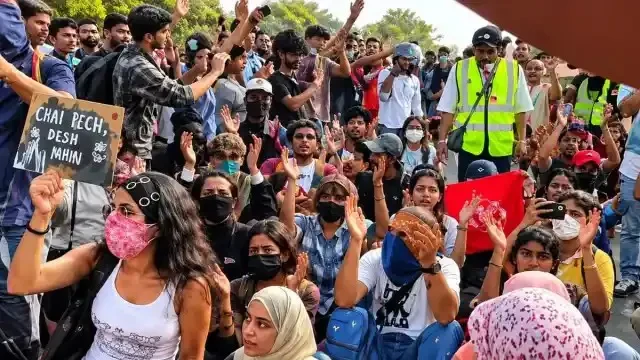
Delhi Protests: Cockroach Janta Party Leaders Released as CJP Renews Demand for Election Chief’s Resignation
Political tensions intensified in the national capital on Sunday as leaders of the Cockroach Janta Party (CJP) were released from detention, while fresh protests were planned against Chief Election Commissioner Gyanesh Kumar over alleged irregularities in India’s voter list revision process.
CJP founder Abhijeet Dipke and two senior party leaders, Saurav Das and Ashutosh Ranka, were detained after arriving in Delhi on Saturday ahead of a planned demonstration at Jantar Mantar. An executive magistrate court ordered their release on Sunday, according to reports by The Guardian and The Indian Express.
The developments came amid heightened security across the capital, following widespread detentions during Saturday’s demonstrations.
Why Are Delhi Protests Taking Place?
The protests centre on the Election Commission of India’s Special Intensive Revision (SIR) of electoral rolls, a process intended to verify and update voter lists.
Opposition parties and activists have raised concerns over the deletion of millions of names from electoral rolls, arguing that eligible voters could lose their right to participate in elections. They have also questioned whether the revision process disproportionately affects Muslim voters, other minorities and groups perceived to oppose the ruling Bharatiya Janata Party (BJP).
Election Commission data cited in media reports indicates that approximately 130 million names have been deleted during the verification exercise. The reasons include people relocating and individuals who could not be traced. However, the overall number of deletions does not, by itself, establish that all those affected were eligible voters wrongly removed.
The Election Commission has denied allegations of political favouritism, while the BJP has rejected claims that the process was manipulated to influence electoral outcomes.
CJP Demands Gyanesh Kumar’s Resignation
The Cockroach Janta Party has emerged as a prominent voice in the growing campaign against the voter list revision. The movement, which began as an online satirical campaign, has expanded into a youth-led protest platform focused on political accountability and electoral transparency.
The CJP is demanding the resignation of Chief Election Commissioner Gyanesh Kumar, who oversaw the revision exercise. The demand gained momentum following media reports that senior election officials had raised internal concerns about aspects of the process.
The Election Commission maintains that differing opinions during internal deliberations are normal and has rejected accusations of favouring any political party.
The controversy has also reached the Supreme Court, which has sought responses from the government and election authorities concerning allegations surrounding the electoral roll revision.
Heavy Security and Mass Detentions in Delhi
Saturday’s planned gathering triggered an extensive security operation across New Delhi. Police and paramilitary personnel were deployed near Jantar Mantar and other important locations, while barricades, traffic restrictions and temporary transport disruptions affected movement across parts of the capital.
Thousands of people were reportedly detained as authorities attempted to prevent large gatherings. Opposition politicians, student activists and supporters of the CJP were among those affected.
The restrictions drew criticism from opposition groups and civil society organisations, which questioned the response to peaceful political dissent. The United Nations human rights office also expressed concern about mass detentions and urged Indian authorities to respect the right to peaceful assembly.
India’s Ministry of External Affairs criticised the UN response as selective interference in the country’s internal affairs.
What Happens Next?
With CJP leaders released and the movement calling for further demonstrations, attention remains focused on the government’s response, police restrictions and the future of the voter list controversy.
The CJP has indicated that its campaign will continue until its demands for electoral reform and accountability are addressed. Meanwhile, authorities have maintained restrictions on organised gatherings in parts of central Delhi.
The central issue remains whether the voter verification process has adequately protected the rights of eligible citizens while ensuring accurate electoral rolls.
As the controversy develops, the Election Commission’s response to the allegations, judicial scrutiny and the authorities’ handling of protests are likely to shape the next phase of the political debate.
The Delhi protests have brought electoral transparency, the right to peaceful assembly and public confidence in India’s democratic institutions into sharp focus.