
Hyundai Bayon Launched at ₹9.99 Lakh in India; AI Features and CNG Model Coming in 2027

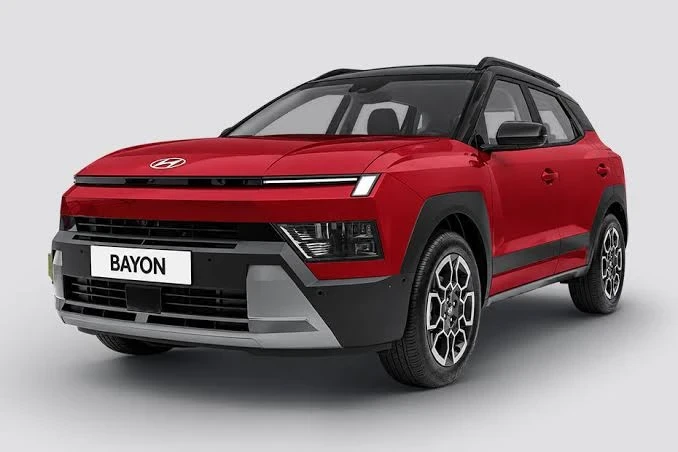
Hyundai Bayon Launched in India: Price, Features and Engine Details
Hyundai Motor India has expanded its SUV portfolio with the launch of the Hyundai Bayon, a new model aimed at buyers seeking modern styling, connected technology and everyday practicality. Introduced on October 26, 2026, the Bayon starts at an introductory ex-showroom price of ₹9.99 lakh.
The new SUV is positioned between Hyundai’s Venue and Creta in its broader product range, giving the company another offering in India’s competitive SUV market. It will be manufactured at Hyundai’s Chennai facility for domestic sales and exports to international markets.
The Bayon combines a naturally aspirated petrol engine with a choice of manual and automatic transmissions. Its key highlights include a generative AI-powered voice assistant, dual digital displays, connected-car functions and advanced driver-assistance systems.
Hyundai Bayon Price and Variants
The Bayon is offered in seven variants: HX2, HX3, HX3+, HX5, HX6, HX8 and HX10. A six-speed manual gearbox is available across the lineup, while the Intelligent Variable Transmission (iVT) automatic is offered on selected higher variants.
Bookings have opened in India, with an initial booking amount reported at ₹11,000. The final on-road price will vary depending on the city, insurance, registration charges and selected variant.
The Bayon enters a competitive segment that includes models such as the Kia Seltos, Tata Sierra, Maruti Suzuki Victoris and other established SUVs. Its combination of technology and safety equipment is central to Hyundai’s positioning for the new model.
Engine and Transmission Options
The Hyundai Bayon is powered by a 1.5-litre, four-cylinder naturally aspirated petrol engine producing 115 PS and 143.8 Nm of torque. Buyers can choose between a six-speed manual transmission and Hyundai’s iVT automatic.
The automatic version includes Dash Boost Mode for improved responsiveness during overtaking, along with Sporty Drive Tech and selectable Eco, Normal and Sport driving modes. Paddle shifters are also available on equipped variants.
The petrol iVT version has a claimed ARAI fuel-efficiency figure of 18.6 km per litre. Actual mileage may vary depending on traffic, road conditions, driving style and vehicle load.
Hyundai is not offering a turbo-petrol or diesel engine for the Bayon at launch.
Hyundai Bayon CNG Launch Expected in January 2027
Hyundai has confirmed plans to introduce a factory-fitted CNG version in January 2027, expanding the SUV’s appeal to buyers who prioritise running costs.
The CNG model is expected to use the same 1.5-litre naturally aspirated petrol engine in a modified configuration, although its power and torque figures are yet to be announced. Transmission availability, variant choices and pricing for the CNG version have also not been fully detailed.
An underbody CNG tank is expected, which could help preserve luggage space, but the final specification will need confirmation from Hyundai.
The planned CNG variant will bring the Bayon into closer competition with models offering petrol and CNG powertrains, including the Maruti Suzuki Victoris and Grand Vitara.
Interior, Infotainment and AI Technology
One of the Bayon’s main attractions is its digital cabin. The dashboard features two 12.3-inch curved displays, combining the digital instrument cluster with the touchscreen infotainment system.
The SUV introduces Hyundai Motor India’s first generative AI voice assistant. Developed using technology from Perplexity and SoundHound AI, the system is designed to respond to natural-language requests and provide assistance with information such as travel planning and navigation-related queries.
Other technology features include Hyundai Bluelink connectivity with more than 70 connected functions, over-the-air updates for supported vehicle controllers, wireless Android Auto and Apple CarPlay, and a Bose premium sound system.
Depending on the variant, equipment can include ventilated front seats, powered driver-seat adjustment, ambient lighting, wireless charging, rear air-conditioning vents and a panoramic sunroof.
Safety Features and SUV Design
The Bayon is built on Hyundai’s Global K Enhanced Platform. The company says the structure is engineered for five-star Indian safety standards, while formal crash-test results are expected later.
Six airbags, electronic stability control, hill-start assist and a tyre-pressure monitoring system are among the safety features provided across the range. Higher variants add Hyundai SmartSense Level 2 Pro ADAS with 23 driver-assistance functions, as well as a surround-view monitor and blind-spot view monitor.
The SUV measures 4,245 mm in length, 1,810 mm in width and 1,605 mm in height with roof rails. It has a 2,600 mm wheelbase and 205 mm of ground clearance.
Exterior highlights include LED projector headlamps, distinctive H-Edge daytime running lights, geometric wheel arches, roof rails and 17-inch diamond-cut alloy wheels. The design is intended to give the Bayon a modern SUV appearance while retaining dimensions suited to urban driving.
What the New Bayon Means for Hyundai
The Bayon gives Hyundai another option in India’s crowded SUV market, with a focus on digital features, driver assistance and a choice of petrol transmissions. The upcoming CNG version could broaden its appeal to buyers looking for an alternative fuel option.
Its market performance will depend on the final variant-wise pricing, real-world fuel economy, ownership costs and how customers value its technology against competing SUVs. With bookings underway and the CNG model planned for early 2027, the Bayon marks a new addition to Hyundai’s India product strategy.