•
•
•
•
•
•
•

Harappa, Mohenjo-daro, Dholavira and Rakhigarhi: what archaeology reveals about South Asia's first urban society
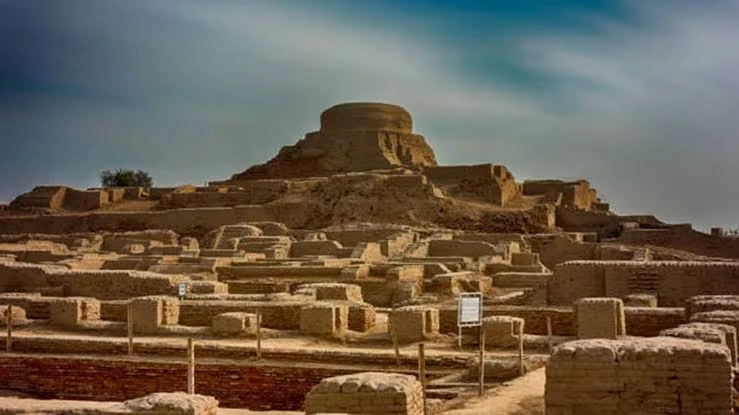
The Indus Valley Civilisation, also called the Harappan Civilisation, was one of the world's earliest urban societies, alongside ancient Mesopotamia and Egypt. It developed along the Indus river system and the seasonal Ghaggar-Hakra river in what is now Pakistan and northwest India. Its mature urban phase lasted roughly from 2600 to 1900 BCE, within a broader span of about 3300 to 1300 BCE.
Since then, more than a thousand sites have been identified, many of them in India.
The civilisation covered a larger area than Egypt and Mesopotamia combined, stretching from Baluchistan to western Uttar Pradesh and from Jammu to Gujarat.
| Site | Present location | Known for |
|---|---|---|
| Harappa | Punjab, Pakistan | Granaries, first excavated site |
| Mohenjo-daro | Sindh, Pakistan | Great Bath, planned grid |
| Dholavira | Kutch, Gujarat | Water reservoirs; UNESCO World Heritage Site (2021) |
| Lothal | Gujarat | Dockyard and bead-making |
| Rakhigarhi | Haryana | One of the largest Harappan sites |
| Kalibangan | Rajasthan | Ploughed field, fire altars |
| Banawali | Haryana | Fortifications |
| Chanhudaro | Sindh, Pakistan | Craft production, no citadel |
Thousands of small steatite seals carry animal motifs, including the famous "unicorn", bulls, elephants and tigers, alongside short inscriptions. The Indus script has around 400 distinct signs but remains undeciphered, largely because inscriptions are very short and no bilingual text has been found. Deciphering it is one of archaeology's greatest unsolved challenges.
The absence of grand palaces or royal tombs has led some scholars to suggest a relatively decentralised or egalitarian society, though this is debated. Artefacts such as the "Dancing Girl" bronze, the "Priest-King" figure, terracotta figurines and the "Pashupati" seal offer clues to beliefs and daily life.
The civilisation did not end in a single catastrophe. From around 1900 BCE, cities were gradually abandoned and populations shifted toward smaller rural settlements. Leading explanations include:
The once-popular theory of an "Aryan invasion" destroying the cities is not supported by archaeological evidence. Genetic studies, including research on remains from Rakhigarhi, have added new data to debates about ancestry and migration.
Many practices visible in Harappan sites, such as bead-making, certain farming methods, bullock carts, and possibly some religious symbols, show continuity with later South Asian cultures.
Because Harappa was the first site excavated, archaeologists name a culture after its first discovered site.
Rakhigarhi in Haryana is among the largest, and some estimates place it among the largest Harappan sites overall.
No. Despite many attempts, there is no widely accepted decipherment.
Dholavira in Gujarat, inscribed in 2021.
The Indus Valley Civilisation demonstrates remarkable planning, engineering and trade more than 4,000 years ago. Its undeciphered script and gradual decline keep it one of history's most intriguing puzzles.
