•
•
•
•
•
•
•

NASA has revised its Artemis Moon mission plans, bringing SpaceX Starship and Blue Origin Blue Moon into focus as the agency targets a crewed lunar landing in 2028.
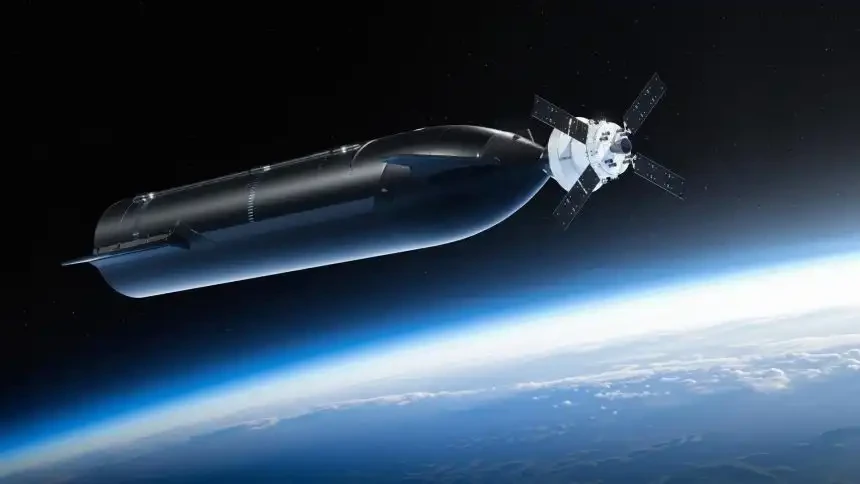
NASA has announced a major update to its Artemis Moon exploration program, reshaping the next phase of human spaceflight as it works toward returning astronauts to the lunar surface in 2028. The revised strategy places greater emphasis on testing spacecraft systems, simplifying mission operations and accelerating the development of commercial lunar landers.
At the centre of the plan are two competing lunar landing systems: SpaceX’s Starship Human Landing System and Blue Origin’s Blue Moon lander. Both companies are developing spacecraft intended to transport astronauts from lunar orbit to the Moon’s surface and back.
The latest changes also redefine the purpose of Artemis III. Rather than attempting a lunar landing, the mission is planned as a critical test flight in low Earth orbit in 2027. Astronauts will practise rendezvous and docking operations with test versions of both commercial landers, helping NASA verify that the spacecraft and their systems can work together safely.
The first crewed lunar landing under the revised plan is targeted for 2028, with Artemis IV expected to provide the first opportunity. NASA will determine which commercial lander is ready to support that mission based on development progress, testing and safety requirements.
The changes represent a significant adjustment in the Artemis program’s approach: proving essential technologies closer to Earth before committing astronauts to a complex lunar landing.
The Artemis program is NASA’s long-term initiative to return humans to the Moon, expand scientific exploration and establish the capabilities needed for future missions deeper into space.
Building on the legacy of the Apollo missions, Artemis aims to develop a more sustainable approach to lunar exploration. Its objectives include studying the lunar South Pole, testing advanced space technologies and creating a foundation for a longer-term human presence on the Moon.
The program relies on several major systems. NASA’s Space Launch System (SLS) rocket is designed to launch astronauts aboard the Orion spacecraft. Orion carries the crew through deep space, while commercial human landing systems are being developed to transport astronauts between lunar orbit and the surface.
International partners and commercial companies also contribute to the wider program through spacecraft, technology, research and other mission capabilities.
The new Artemis strategy is intended to improve coordination between these systems while reducing risks that could delay future missions. Instead of waiting until a complete lunar mission is ready, NASA plans to test crucial operations in stages, gathering engineering data before astronauts attempt a landing.
One of the most important changes is the revised role of Artemis III. The mission is planned for 2027 and will send four astronauts aboard Orion into low Earth orbit for an approximately 14-day test flight.
During the mission, Orion will conduct rendezvous and docking demonstrations with test versions of the Blue Origin Blue Moon and SpaceX Starship lunar landers. These operations will help engineers determine whether spacecraft built by different companies can approach, connect and operate together as required.
The mission will test several essential capabilities:
The planned sequence includes docking with Blue Origin’s test vehicle, followed by a separate docking demonstration with a SpaceX Starship test article. Astronauts are expected to enter the Blue Moon test vehicle for evaluations, while the Starship demonstration is focused on docking and related spacecraft operations.
These tests are important because a successful launch alone cannot prove that a spacecraft is ready for a crewed lunar landing. The systems must also operate reliably when connected, communicate correctly and support the procedures required to keep astronauts safe.
Artemis III is therefore designed to reduce technical uncertainty before NASA attempts the more demanding task of sending astronauts to the lunar surface.
SpaceX’s Starship Human Landing System is designed to support astronaut transportation between lunar orbit and the Moon’s surface. Its architecture depends on a major technological capability: transferring and storing cryogenic propellant in space.
Unlike a conventional rocket that carries all the fuel it needs at launch, the planned Starship lunar approach involves multiple launches to deliver propellant to low Earth orbit. Tanker Starships would transfer fuel to a depot spacecraft, which would then supply the lunar lander before its journey to the Moon.
This process, known as orbital propellant aggregation, is central to the mission design. It would allow the lander to carry the propellant required for its lunar journey without needing to launch with the entire supply from Earth.
Under NASA’s revised plan, the Starship lander is expected to meet Orion in Earth orbit. After docking, the spacecraft would travel together toward the Moon, with Starship performing the manoeuvre needed to enter low lunar orbit.
Two astronauts would then transfer to the lander and descend to the lunar surface for their mission. Following surface operations, they would return to Orion, where the remaining crew members would be waiting for the journey back to Earth.
The revised approach is intended to reduce the amount of propellant Starship needs to aggregate in space compared with the earlier mission architecture. It also aims to simplify the return journey from the lunar surface to Orion.
However, orbital refuelling remains a demanding technical challenge. SpaceX must demonstrate that propellant can be transferred and managed reliably in space, and NASA requires an uncrewed demonstration before a crewed lunar landing can proceed.
The Artemis III docking test will address part of this challenge, while additional demonstrations will be needed to establish that the complete landing system is ready.
Blue Origin is developing its Blue Moon Mark 2 lander as another option for transporting astronauts to the lunar surface. The spacecraft is part of the company's wider effort to support NASA’s long-term Moon exploration goals.
For the accelerated 2028 landing plan, Blue Origin intends to use a different approach from SpaceX. Rather than relying on the same orbital propellant-transfer architecture, the revised Blue Moon mission design uses three transfer stages to help deliver the lander to lunar orbit.
The stages would launch into low Earth orbit, followed by the lander. After the spacecraft connect, the transfer stages would propel the combined system toward an elliptical polar orbit around the Moon, separating as their propellant is used.
This orbital approach is intended to reduce the lander’s propellant requirements and make it easier for astronauts to return to Orion after completing surface activities.
The Blue Moon system is designed to carry two astronauts to the lunar surface, including the region near the Moon’s South Pole. After the astronauts complete their planned work, the lander would return them to Orion for the journey home.
Blue Origin will also need to demonstrate its system without a crew before NASA can certify it for astronaut missions. The company plans to use lessons from its earlier robotic lander work to inform development and testing.
The revised mission architecture gives NASA another route toward its 2028 target. Having two commercial landers in development could provide flexibility if one encounters technical difficulties or schedule delays, although both systems must meet demanding safety and performance requirements.
Both companies are working toward the same broad objective, but their proposed lunar transportation systems use different engineering approaches.
| Feature | SpaceX Starship | Blue Origin Blue Moon |
|---|---|---|
| Primary role | Lunar human landing system | Lunar human landing system |
| Key approach | Orbital propellant aggregation and transfer | Multiple transfer stages for the revised mission design |
| Planned Artemis III test | Docking demonstration with Orion | Docking and crew-system evaluations with a test vehicle |
| Lunar mission role | Transport astronauts between lunar orbit and the surface | Transport astronauts between lunar orbit and the surface |
| Major development challenge | Demonstrating orbital refuelling and integrated Starship operations | Demonstrating transfer stages, lander systems and integrated mission operations |
| Readiness requirement | Uncrewed demonstration and NASA certification | Uncrewed demonstration and NASA certification |
NASA has not assigned either company a guaranteed place as the first crewed lunar landing provider under the revised arrangement. The agency will assess readiness and determine which system is best prepared to safely support the mission.
This means the competition is not simply about which company can develop a spacecraft fastest. Each lander must demonstrate that it can perform its assigned tasks reliably and meet NASA’s requirements for astronaut safety.
The revised Artemis strategy reflects the complexity of returning humans to the Moon after decades without crewed lunar surface missions.
A lunar landing requires more than a powerful rocket. It involves coordinating launches, spacecraft navigation, docking, life-support systems, lunar descent, surface operations and the safe return of astronauts to orbit.
If any major element is delayed, the entire mission schedule can be affected. NASA’s updated plan aims to identify technical problems earlier by separating system demonstrations from the first crewed landing attempt.
Testing the landers in Earth orbit offers several practical benefits. Engineers can evaluate spacecraft interfaces and operating procedures closer to Earth, while mission controllers gain experience coordinating multiple vehicles and commercial partners.
The revised architecture also provides greater flexibility in how the landers reach and operate around the Moon. SpaceX and Blue Origin can pursue different approaches suited to their spacecraft, while NASA continues to use Orion and the SLS rocket for crew transportation.
This strategy does not eliminate risk, but it is designed to reduce uncertainty before astronauts undertake a lunar landing.
The lunar South Pole remains a major focus of NASA’s exploration plans because it offers opportunities for scientific research and future exploration infrastructure.
Some permanently shadowed regions near the poles are believed to contain water ice. If its presence, distribution and accessibility are confirmed and better understood, lunar water could support scientific studies and potentially help future missions produce drinking water, oxygen or rocket propellant.
The region also offers a challenging environment for testing equipment designed for long-duration operations beyond Earth. Surface exploration can help researchers understand lunar geology, environmental conditions and the practical difficulties of sustaining a human presence.
NASA’s early Artemis surface missions are expected to include collecting lunar samples, testing spacesuit capabilities and conducting planned moonwalks. These activities can help improve scientific knowledge while providing experience for future expeditions.
A sustained presence on the Moon would require much more than a successful landing. It would depend on reliable transport, power, communications, habitats, surface mobility and the ability to deliver equipment and supplies.
The Artemis program is intended to build these capabilities gradually, creating a foundation for more ambitious exploration and future human missions to Mars.
The revised plan establishes several major milestones that will determine how quickly NASA can proceed.
2027 — Artemis III: Four astronauts are expected to travel aboard Orion to low Earth orbit for docking demonstrations with test versions of the Blue Moon and Starship landers. The mission is intended to verify important technologies and operational procedures.
Before crewed lunar landings — Uncrewed demonstrations: Both companies must demonstrate their lander systems without astronauts and meet NASA’s safety and certification requirements.
2028 — Planned crewed lunar landing: NASA is targeting Artemis IV for the first crewed lunar surface mission under the updated plan. The lander selected for that mission will depend on technical readiness and the agency’s assessment of safety.
Future Artemis missions: NASA intends to build on the experience gained from early missions, expand lunar exploration and work toward a more sustained human presence on the Moon.
These dates are targets, not guarantees. Complex spacecraft development, testing results, launch readiness and safety reviews will all influence the final schedule.
NASA’s revised Artemis plans put spacecraft testing and mission readiness at the centre of its effort to return astronauts to the lunar surface in 2028.
The 2027 Artemis III mission will focus on testing how Orion works with the Blue Moon and Starship landers in Earth orbit. These demonstrations are intended to reduce risk before NASA attempts a crewed lunar landing under the planned Artemis IV mission.
SpaceX is pursuing a Starship architecture that depends on orbital propellant aggregation, while Blue Origin is developing a lander supported by a different transfer-stage approach. Both systems must complete uncrewed demonstrations and satisfy NASA’s safety requirements before carrying astronauts to the Moon.
For space exploration, the significance extends beyond a single landing. The revised approach could help establish more reliable methods for transporting astronauts, testing commercial spacecraft and supporting future lunar surface operations.
The 2028 target remains ambitious, and the success of the plan will depend on technical progress and careful testing. Nevertheless, the latest changes outline a clearer sequence of demonstrations and decisions as NASA prepares for the next major chapter in human spaceflight.
Sources
