•
•
•
•
•
•
•

Discover the OPPO Enco X4 earbuds, featuring Dynaudio-tuned audio and AI noise cancellation, alongside the OPPO Pad Mini vs iPad mini comparison covering displays, performance, battery life and price.
The premium technology market is becoming increasingly competitive, with consumers expecting more than impressive specifications from their devices. Better sound, smoother displays, longer battery life and useful artificial intelligence features are becoming important factors when choosing new gadgets.
OPPO is addressing these expectations through two different product categories: premium true wireless stereo earbuds and a compact Android tablet designed to compete with Apple's popular small-screen tablet.
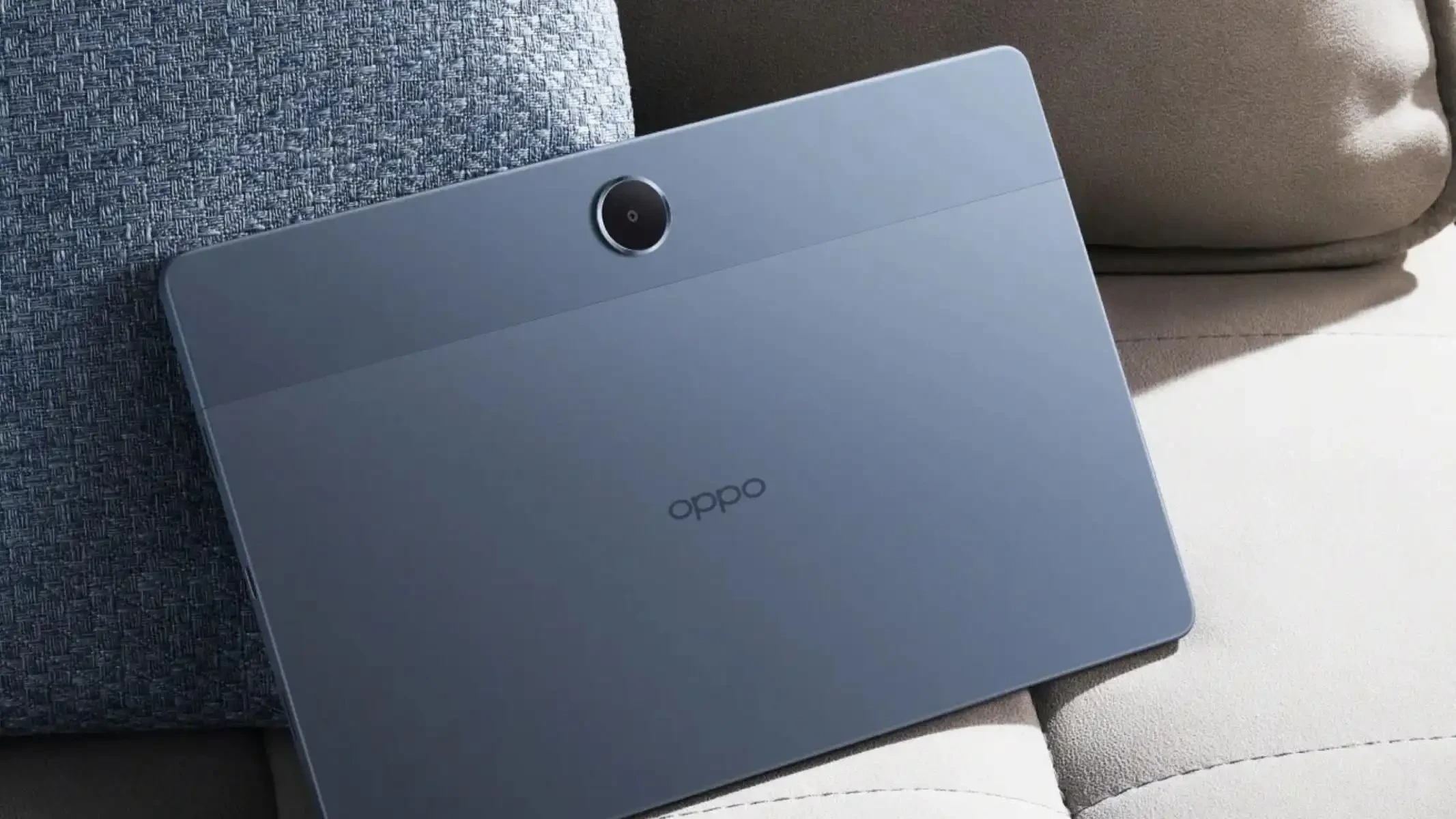
The OPPO Enco X4 focuses on high-quality audio, adaptive active noise cancellation and intelligent connectivity. Meanwhile, the OPPO Pad Mini aims to deliver a powerful tablet experience in a portable design, with an AMOLED display and flagship-class processing hardware.
Although these devices serve different purposes, they reflect a shared direction in consumer electronics: making everyday technology more capable without sacrificing portability. For students, professionals, commuters and entertainment enthusiasts, understanding their features can help determine whether either device deserves a place in their daily setup.
The OPPO Enco X4 is designed for listeners who want detailed music playback alongside practical features for travel, work and communication. Its Dynaudio co-tuned acoustic system builds on the companies' longstanding audio collaboration, with the goal of delivering natural sound reproduction across different listening preferences.
The earbuds use a dual-driver arrangement consisting of an 11mm TRF diaphragm woofer and a 6mm planar diaphragm tweeter. Each driver has a dedicated digital-to-analogue converter, allowing different frequency ranges to be processed independently.
In everyday listening, this architecture is intended to help deliver stronger bass alongside clearer high-frequency details. Five sound profiles also give users options for adjusting the listening experience to different music genres and personal preferences.
One of the most notable additions is lossless wireless audio support through LHDC Lossless when paired with compatible OPPO Find X10 Series smartphones. The earbuds support transmission rates of up to 2.3Mbps and playback at up to 24-bit/48kHz under the supported configuration. They are also Hi-Res Audio Wireless certified.
These specifications will appeal to listeners who care about audio quality, although the final experience depends on the source recording, device compatibility, fit and listening environment.
Noise cancellation is particularly useful for people who regularly travel by train, bus, taxi or aeroplane. Constant background noise can make music less immersive and phone conversations more difficult, especially in crowded environments.
The Enco X4 introduces AI-powered adaptive active noise cancellation that adjusts its behaviour according to surrounding conditions. OPPO says its overall noise cancellation performance is up to 100% stronger than the previous generation, while cancellation in the vocal frequency range improves by up to 30%. These are manufacturer-reported comparisons, rather than guarantees of the same results in every environment.
A triple-microphone system and bone-conduction voice pickup unit support clearer calls, while AI Clear Call is designed to reduce the effect of surrounding noise during conversations.
The earbuds also support spatial audio across Android, iOS and Windows devices, bringing a more immersive soundstage to compatible music and video content.
For people who work remotely, attend online meetings or frequently make calls while travelling, these features could make wireless earbuds more useful beyond music playback alone.
The Enco X4 combines audio improvements with features intended to simplify everyday tasks.
Bluetooth 6.1 support and dual-device connectivity allow users to connect the earbuds to compatible devices and switch between work and personal activities more conveniently. Certain smart connectivity features require compatible OPPO or OnePlus phones, so functionality may differ across devices.
AI Live Translation supports real-time translation and interpretation in more than 30 languages on supported OPPO devices and software versions. The earbuds also support voice activation for Google Gemini when connected to a compatible device, allowing hands-free access to assistance.
For content creators, Dolby-powered Clear Audio Recording is designed to capture immersive stereo sound, with its best experience optimised for compatible OPPO Find X series phones. A neck-monitoring feature also aims to make users more aware of prolonged poor posture.
Battery life is another important consideration. OPPO claims up to 13 hours of music playback from the earbuds and up to 53 hours with the charging case. These figures were measured under specified laboratory conditions with active noise cancellation turned off, so real-world battery life will vary.
The IP55 dust and water resistance rating provides additional protection for everyday use, including workouts and light exposure to dust or splashes. It does not make the earbuds waterproof, and they should not be charged while damp.
OPPO says the Enco X4 will gradually roll out across global markets. Local pricing and availability should be checked through official regional announcements.
The compact tablet segment appeals to people who want a larger screen than a smartphone without carrying a full-sized tablet or laptop. These devices can be useful for reading, note-taking, video streaming, casual gaming and productivity while travelling.
The OPPO Pad Mini enters this market with an 8.8-inch AMOLED display, while the Apple iPad mini offers an 8.3-inch Liquid Retina LCD panel. Both are designed for portability, but their specifications reflect different priorities.
The OPPO tablet supports a 144Hz refresh rate and a claimed peak brightness of 1,600 nits. The iPad mini uses a 60Hz display with a listed peak brightness of 500 nits. A higher refresh rate can make scrolling, animations and supported games appear smoother, while AMOLED technology can provide deep blacks and strong contrast.
The iPad mini, however, remains an appealing option for users who prefer Apple's ecosystem and established tablet software experience.
The OPPO Pad Mini is equipped with the Qualcomm Snapdragon 8 Gen 5 processor and runs Android 16 with ColorOS 16. The iPad mini uses Apple's A17 Pro chip and runs iPadOS.
Both platforms are capable of handling demanding applications, multitasking and entertainment, but they approach performance differently.
In the Geekbench 6 results reported for the comparison, the Apple A17 Pro achieved a higher single-core CPU score and GPU compute score, while the Snapdragon 8 Gen 5 recorded a higher multi-core CPU score. Benchmark results do not always translate directly into real-world performance, since software optimisation, thermal management and individual applications also matter.
For gaming, buyers should consider their preferred titles, graphics settings and compatibility rather than relying on a single benchmark. The iPad mini may appeal to users who prioritise its gaming performance and Apple's software ecosystem, while the OPPO Pad Mini offers competitive hardware for demanding multitasking and productivity.
Battery capacity and charging speed can make a significant difference for students, commuters and professionals who spend long periods away from a power outlet.
The OPPO Pad Mini has an 8,000mAh battery and supports 67W wired charging. The iPad mini has a 5,078mAh battery and supports wired charging at up to 20W according to the comparison.
A larger battery does not automatically guarantee longer runtime, because screen brightness, refresh rate, processor efficiency and software all influence power consumption. Nevertheless, the OPPO tablet's larger battery and higher charging wattage give it a strong advantage on paper.
Actual charging speeds may also depend on the power adapter, cable and charging conditions. Buyers should confirm which accessories are included with the device in their market.
The reported starting prices in India are ₹94,999 for the OPPO Pad Mini and ₹69,900 for the iPad mini. This creates a ₹25,099 difference, making the Apple tablet the more affordable option at these listed prices.
The OPPO Pad Mini may justify its premium for buyers who specifically want a 144Hz AMOLED display, a larger battery, faster charging and Android flexibility. However, those features will not matter equally to every user.
The iPad mini offers a lower entry price and access to Apple's software ecosystem, making it an attractive option for people who already use an iPhone, Mac or other Apple devices.
Before buying either tablet, consumers should compare current retailer prices, storage configurations, warranty terms and accessory costs. Styluses are not included with either tablet according to the reported comparison, so buyers who intend to take handwritten notes or draw should include that expense in their budget.
The Enco X4 and Pad Mini serve different needs, so the right choice depends on how each product fits into your routine.
The OPPO Enco X4 is worth considering if high-quality wireless audio, adaptive noise cancellation, clearer calls and long claimed battery life are priorities. Its advanced audio capabilities will be especially relevant to commuters, music enthusiasts and people who use earbuds throughout the working day.
The OPPO Pad Mini is aimed at users who want a compact but powerful Android tablet with a bright, high-refresh-rate display and fast charging. It may suit people who frequently read, stream video, take notes or use productivity applications while travelling.
The iPad mini is a practical alternative for shoppers who want a compact tablet at a lower starting price and prefer Apple's ecosystem. Its display specifications are less ambitious on paper, but price, software compatibility and personal workflow can matter more than raw specifications.
Ultimately, a premium gadget is a good purchase when its strengths solve real problems. Comparing the features that matter most to your routine is more useful than simply choosing the device with the longest specification list.
