•
•
•
•
•
•
•

India's SIM binding rule for WhatsApp, Telegram and other messaging apps is expected to take effect from January 1, 2027. Learn how it works, who may be affected and how to prepare.
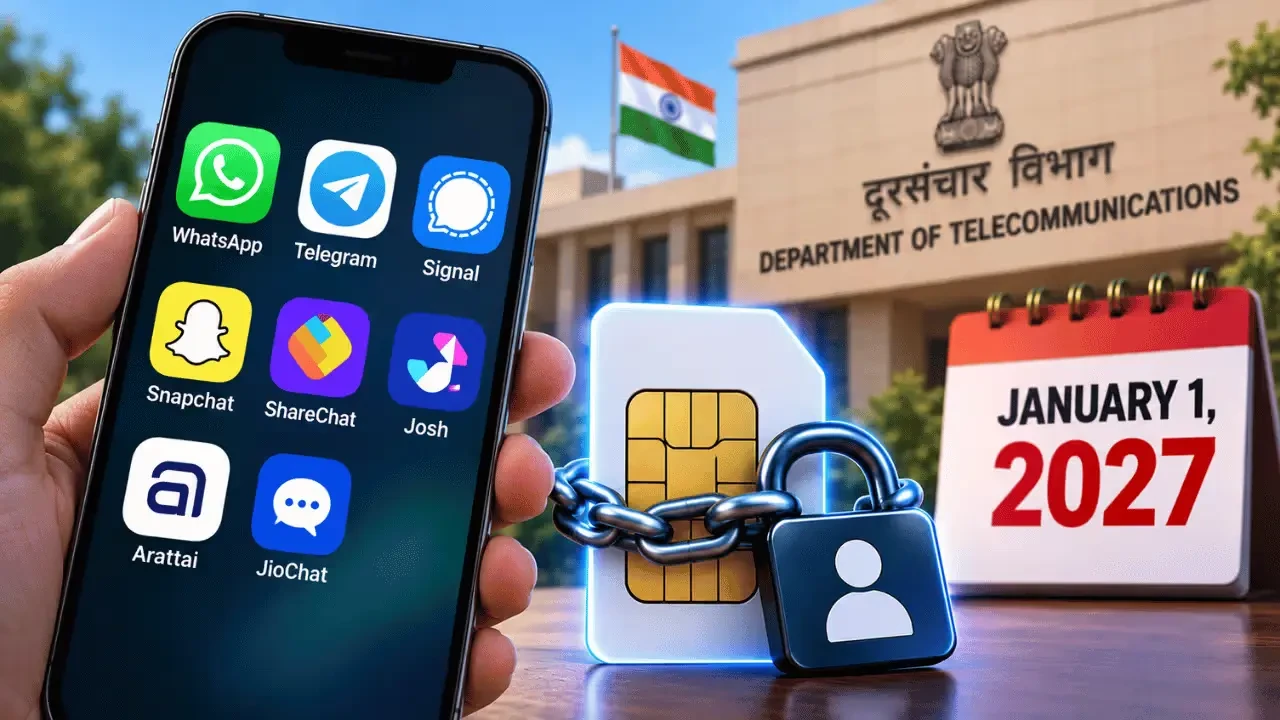
Millions of Indians rely on messaging apps such as WhatsApp and Telegram every day for personal conversations, office communication, online business, education and customer support. But a new government requirement could change how some people access these platforms, particularly those who use messaging accounts without keeping their registered SIM card inside their phone.
India's Department of Telecommunications (DoT) has directed covered app-based communication services to implement SIM binding, a system that links a messaging account to the active SIM associated with the mobile number used to register it. The reported compliance deadline is December 31, 2026, with the requirements expected to become operational from January 1, 2027.
The change is intended to make it harder for cybercriminals to operate messaging accounts using Indian mobile numbers after removing or relocating the associated SIM card. It could also affect people who use Wi-Fi-only phones, keep their registered SIM in a separate device or depend on linked devices for work.
However, the headline concern that WhatsApp will stop working on particular phone models needs clarification. The key issue is whether the registered SIM is present and can be verified—not whether a phone is old or new.
SIM binding is a security requirement that connects a digital communication account to the specific SIM card associated with its registered mobile number.
Currently, users can register a messaging account using a mobile number and, depending on the platform's features, continue using the account on a device even if the original SIM is subsequently removed. Linked devices and web sessions can also allow access without requiring the SIM to be physically present in every device.
Under the SIM binding requirement, covered services must continuously link their app access to the relevant active SIM installed in the device. The intention is to make it more difficult to operate an account independently of the mobile number used to establish the account's identity.
For example, suppose a user registers WhatsApp using a particular mobile number and later removes that SIM from the phone. Under the new system, the app may be unable to continue operating normally unless the registered SIM is available and the platform can verify it.
The precise user experience will depend on how each messaging service implements the requirement. Users should therefore watch for official in-app instructions and updates as the deadline approaches.
The DoT originally issued its SIM binding directions in November 2025. Following implementation challenges and changes to the compliance timeline, the deadline was extended to December 31, 2026.
The new requirements are expected to become operational from January 1, 2027. This means users have time to review their device arrangements and understand whether they rely on a setup that could be affected.
The rollout should not be confused with a sudden ban on specific smartphone brands or operating systems. The requirement concerns the relationship between a messaging account and its registered SIM.
Users should also distinguish between the SIM binding requirement and the rules governing web or desktop sessions. The government revised its earlier blanket proposal for six-hour automatic logouts, replacing it with a risk-based approach to session termination.
As a result, it would be inaccurate to assume that every WhatsApp Web user must automatically log in again every six hours under the revised framework.
The rule could affect both Android phones and Apple iPhones, depending on how messaging platforms implement SIM verification.
The most relevant question is whether the device running the messaging app contains the registered SIM associated with the account.
People who use WhatsApp or Telegram on a phone after moving the registered SIM to another handset may experience access restrictions if the app cannot verify the required SIM.
For instance, someone might register an account on one device, move the SIM to a second phone and continue trying to use the original phone over Wi-Fi. This arrangement could become more difficult under SIM binding.
Some users keep an older phone at home for messaging, entertainment or work while relying entirely on Wi-Fi connectivity.
If the registered SIM is not installed in that phone, access could be affected under the new requirement. Connecting to Wi-Fi alone may not satisfy the SIM verification condition.
People who use separate personal and professional phones should review how their messaging accounts are configured.
The precise impact on companion devices will depend on the platform's implementation and the applicable requirements. Users should not assume that every secondary device will automatically stop working, but they should check official guidance before relying on a particular setup.
There is no confirmed blanket list of phone models that will lose WhatsApp access simply because they are older.
The relevant factor is SIM availability and verification, rather than a particular brand, price category or device age. Platform compatibility and software support may still matter for other reasons, but those are separate from the core SIM binding requirement.
The rule is designed to prevent covered messaging services from being used on a device without the specific active SIM associated with the registered number.
This could affect users who previously relied on a phone's internet connection alone to keep an account running after removing its SIM.
Consider a common situation: a person registers WhatsApp using a mobile number, later transfers that number's SIM to another handset, and continues using the original phone over Wi-Fi. Under SIM binding, the original phone may no longer meet the required conditions for access.
However, the exact handling of SIM removal, replacement, device transfers and temporary verification failures will depend on the service's implementation.
Users should not delete their accounts or purchase new smartphones based only on alarming headlines. Instead, they should keep their registered number active, maintain access to the SIM and follow official instructions from their messaging platform.
The main objective is to reduce cybercrime involving messaging apps and the misuse of Indian mobile numbers.
Fraudsters can use messaging platforms to impersonate government officials, contact victims with false investment opportunities, distribute phishing links and conduct so-called digital arrest scams. Such schemes often rely on making victims believe that a message or call comes from a legitimate person or organisation.
According to the government's stated rationale, accounts that remain operational after their associated SIM has been removed or moved elsewhere can be misused by people operating remotely. This can complicate efforts to trace the individuals responsible for fraudulent communications.
SIM binding is intended to strengthen the connection between a verified mobile number and the device using the associated account.
The government has cited cyber-fraud losses exceeding ₹22,800 crore in India during 2024 in explaining the need for stronger telecom security measures.
The expected benefits include improved traceability, additional barriers against account misuse and reduced opportunities for criminals to operate messaging services independently of the registered SIM.
However, SIM binding is not a complete solution to online fraud. Criminals may still exploit stolen credentials, social engineering, fraudulent SIM registrations and other weaknesses. User awareness, platform security and effective law enforcement will remain important.
The government's original directions covered several app-based communication services that use Indian mobile numbers to identify users or provide services.
These included:
The final impact on individual services may depend on subsequent directions, exemptions and implementation decisions. Users should verify the latest official information rather than assuming that every platform will introduce identical features at exactly the same time.
WhatsApp and Telegram have received particular attention because of their large user bases and widespread use for personal and professional communication.
The requirement is not limited to casual messaging. It may also matter to businesses that use messaging apps for customer service, appointment management, order updates and team coordination.
WhatsApp Web and desktop access are especially important for office workers, students, customer support teams and businesses that handle many conversations from a computer.
The original SIM binding directions also proposed periodic logout of web sessions, with a maximum interval of six hours and QR-code relinking. The government subsequently revised the blanket logout requirement and moved to a risk-based approach.
Under the revised framework, users should not assume that every web session will automatically end after six hours. Session termination may instead depend on risk-based checks and the applicable implementation.
SIM binding and web-session management are related security measures, but they are not the same thing. The former concerns the link between an account and its registered SIM; the latter concerns access from linked web or desktop sessions.
Businesses that rely on shared computers, multiple workstations or linked devices should review their account security practices and keep backup procedures ready in case a platform changes how verification works.
Most people who keep their registered SIM in their everyday smartphone may need to make few changes, depending on the platform's final implementation. Others should review their setup before the deadline.
Here are practical steps users can take:
Keep the registered SIM available. Check which mobile number is linked to your account and whether its SIM is installed in the device where you use the app.
Maintain an active mobile number. Avoid allowing the registered number to lapse if you still rely on it for account access and verification.
Review linked devices. Check your account's linked-device settings and remove sessions you no longer recognise or use.
Update messaging apps. Install updates from official app stores and follow any legitimate instructions relating to SIM verification.
Plan for device changes. If you are moving to a new phone or replacing a damaged SIM, follow the platform's official account-transfer and verification process.
Be careful with scam messages. Do not share one-time passwords, verification codes or account PINs with anyone claiming to be a government official or customer support representative.
Avoid unnecessary panic. There is no confirmed universal list of older phones that will lose WhatsApp access solely because of their model. The central concern is compliance with SIM binding.
Travellers and people who use messaging apps across multiple devices may need to pay particular attention to the implementation.
The government has stated that the directions do not affect cases where the relevant SIM remains in the handset while the user is on roaming. This distinction matters because roaming allows a SIM to connect to a foreign network while remaining associated with the same mobile number.
People who remove their registered SIM before travelling, leave it in another phone or depend entirely on Wi-Fi access may face a different situation.
The exact experience will depend on the platform's verification system and the user's device configuration. Travellers should check their account arrangements before departure and make sure they can access the registered number if verification is required.
International users of Indian mobile numbers should also follow official guidance as the compliance date approaches.
SIM binding may improve accountability by making it harder to operate an account without access to its registered SIM. It could also add friction for people who legitimately use multiple devices or keep their SIM separate from their primary messaging phone.
That trade-off has prompted broader discussion about convenience, privacy, security and how messaging services should verify users.
The measure should not be interpreted as a guarantee that all conversations will become visible to the government or that messaging apps will stop using encryption. SIM binding is primarily a requirement concerning account access and the registered mobile number. It is not, by itself, a declaration that private message content will be accessible to third parties.
Users should continue to apply good security practices, including enabling available account protections, checking linked devices and verifying suspicious requests through trusted channels.
India's SIM binding requirement is expected to change how covered messaging apps verify account access from January 1, 2027, following the December 31, 2026 compliance deadline.
The measure aims to prevent misuse of Indian mobile numbers and reduce cyber fraud by ensuring that messaging accounts remain linked to their registered, active SIM cards. It could affect people who use WhatsApp or Telegram on Wi-Fi-only phones, move their SIM between devices or rely on secondary handsets.
However, the rule should not be mistaken for a ban on older smartphones. The key issue is SIM availability and verification, and the precise experience will depend on each platform's implementation.
Users can prepare by keeping their registered SIM accessible, reviewing linked devices, updating their apps and following official instructions. These steps can help minimise disruption while supporting safer use of India's increasingly important digital communication services.
