•
•
•
•
•
•
•

How energy markets and government borrowing costs shape inflation, mortgages and public budgets
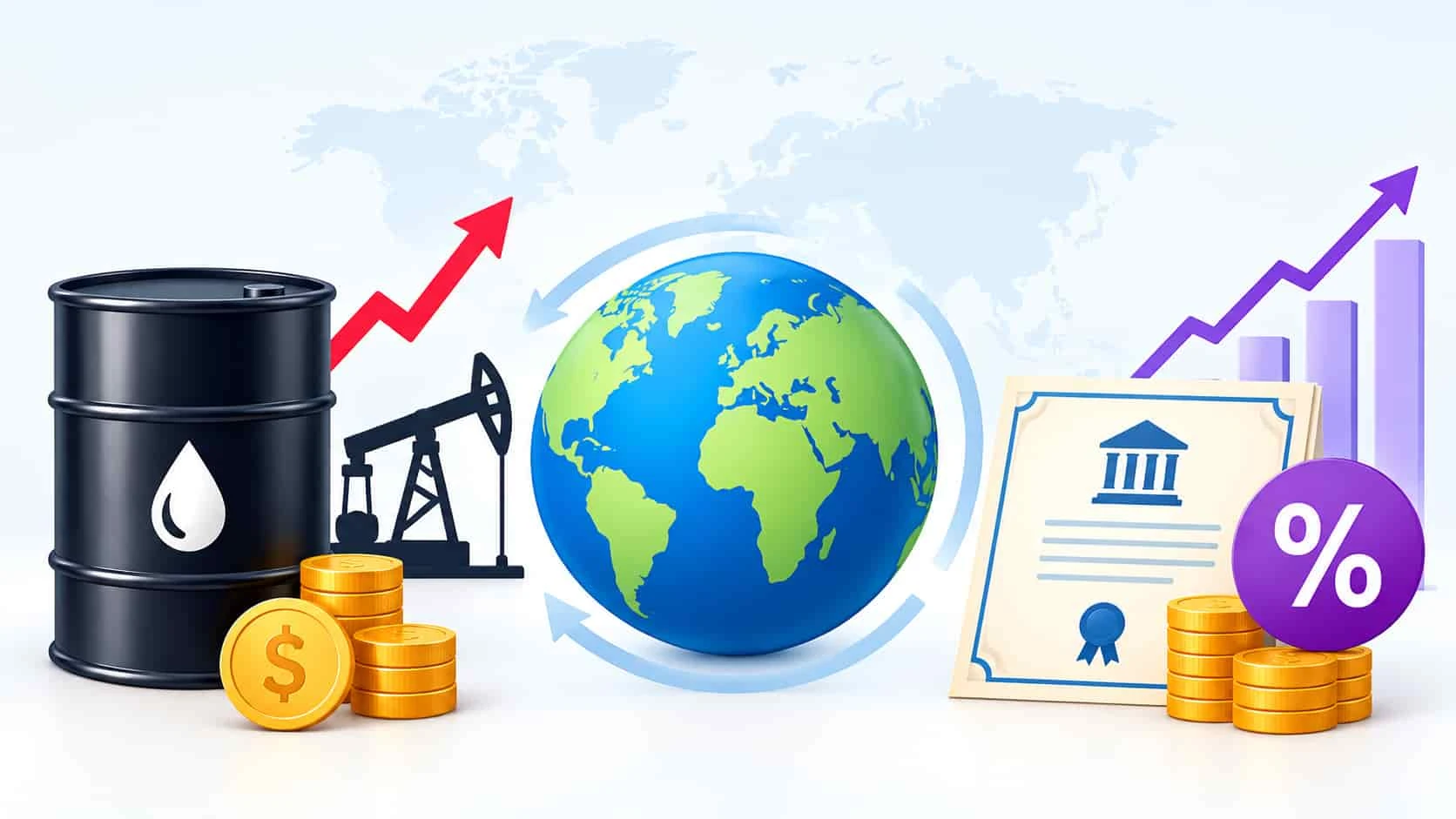
Headlines about crude oil and government bond yields can sound like jargon for traders, but both shape everyday life: what you pay for fuel and groceries, how much a mortgage costs and how much governments can spend. This week's market news is a good example. Reuters reported Brent crude falling deeper below $100 a barrel on 6 October, with U.S. crude around $87.60 in an AP update, while Treasury yields kept rising and European bond yields sat near multi-decade highs. This guide explains how these pieces connect.
Oil is a basic input for transport, manufacturing, farming and plastics, so changes in its price spread widely.
When crude rises, petrol, diesel and jet fuel generally follow, raising delivery and travel costs. Those costs often get passed on in the price of goods.
Energy is a major part of consumer price indexes. A sustained jump in oil can push overall inflation up, while a sustained fall can ease it. Central banks watch this closely when deciding on interest rates.
Oil-exporting countries and energy companies benefit from higher prices. Importing countries, airlines and heavy industry usually suffer. Falling prices reverse that pattern.
A government bond is a loan to the government. The yield is the return investors earn, and it moves opposite to the bond's price: when demand for bonds falls, prices drop and yields rise.
Yields matter because they act as a benchmark for borrowing costs across the economy. Mortgage rates, business loans and corporate bonds are all priced relative to government yields.
It might seem that cheaper oil should lower yields, since it reduces inflation pressure. But the link has weakened recently. Analysts quoted in market coverage this week pointed to several other forces:
In Europe, yields recently reached multi-decade highs on inflation, government borrowing and fiscal worries. France drew particular attention because of its debt burden and political gridlock. On 6 October, the gap between French and German 10-year yields narrowed as investors reconsidered whether France's risk premium had risen too fast.
| Change | Possible effect |
|---|---|
| Higher bond yields | Higher mortgage and loan rates |
| Lower oil prices | Cheaper fuel, easing inflation pressure |
| Higher government borrowing costs | Less room for public spending or tax cuts |
| Market volatility | Swings in pension and investment values |
| Stronger or weaker currency | Changes in import prices and travel costs |
These effects depend on timing and on how long a move lasts. A single day's swing rarely changes anything for households, but sustained trends do.
Central banks such as the U.S. Federal Reserve adjust interest rates to keep inflation stable and support employment. Their decisions influence bond yields, though yields also reflect market expectations about future rates, inflation and government debt. That is why investors pay close attention to speeches by central bank officials and to government bond auctions, both on this week's calendar.
Brent is a global benchmark for oil prices, drawn from North Sea crude. U.S. crude, often called WTI, is another widely quoted benchmark.
Not necessarily. Rising yields can reflect strong growth, inflation, heavy borrowing or reduced demand for bonds. Economists look at the full picture.
Higher yields raise the cost of borrowing, which makes servicing national debt more expensive.
Often, but not immediately. Retail prices lag wholesale prices, and taxes and other costs also affect what you pay.
Oil prices and bond yields are two of the most important numbers in the global economy, and they do not always move together. Oil affects inflation and costs of living, while yields influence borrowing costs for households, businesses and governments. When following market news, focus on trends, understand the drivers behind each move, and use trustworthy sources. Market figures change daily, so check current data before drawing conclusions.
