•
•
•
•
•
•
•

One treaty seeks to stop the spread of nuclear weapons; the other seeks to ban them outright. Here is how they differ, who has signed, and where India stands.
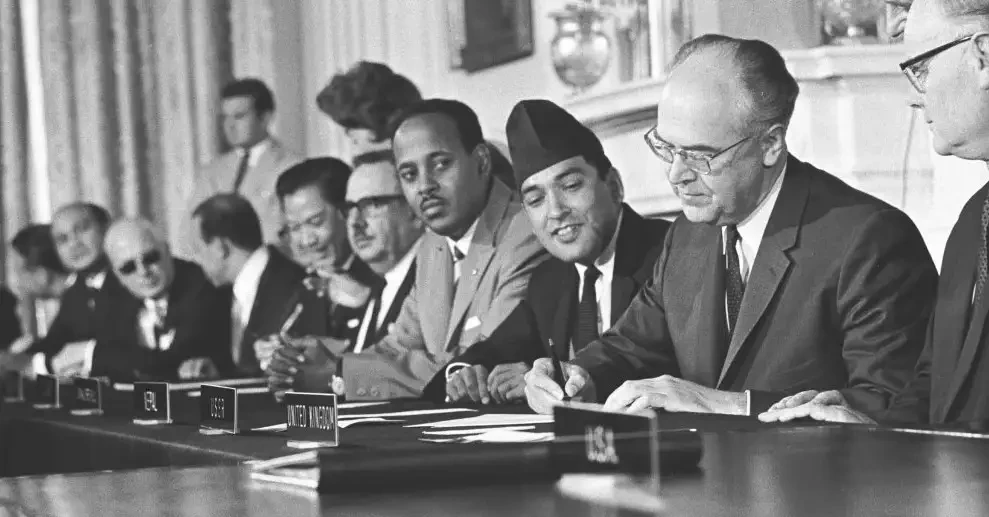
The United Nations marks the International Day for the Total Elimination of Nuclear Weapons on 26 September, and the General Assembly is holding a high-level meeting on the theme on 29 September 2026. At the centre of the global debate are two very different treaties: the NPT and the TPNW.
Understanding the difference between them is essential for anyone following international relations — and for competitive exam aspirants.
The NPT rests on three pillars:
The NPT recognises five states that tested nuclear weapons before 1 January 1967: the United States, Russia, the United Kingdom, France and China — also the five permanent members of the UN Security Council.
The TPNW prohibits states parties from developing, testing, producing, acquiring, possessing, stockpiling, using or threatening to use nuclear weapons, and from allowing nuclear weapons to be stationed on their territory.
| Feature | NPT | TPNW |
|---|---|---|
| Main goal | Stop spread, pursue disarmament gradually | Outright ban |
| Nuclear-armed members | 5 recognised nuclear-weapon states | None |
| Membership | 191 states | 70+ states |
| Approach | Step-by-step, security-based | Humanitarian, norm-setting |
| Verification | IAEA safeguards | Builds on safeguards; disarmament verification still to be developed |
No nuclear-armed state has joined the TPNW. They argue that:
Supporters counter that the NPT's disarmament promise has moved too slowly and that stigmatising nuclear weapons is necessary to create change.
Other nuclear-armed states outside the NPT include Pakistan and Israel (which has not officially confirmed its arsenal). North Korea announced its withdrawal from the NPT in 2003.
No. Treaties bind only their states parties.
India considers it discriminatory, as it permanently recognises only five nuclear-weapon states.
The International Atomic Energy Agency verifies that nuclear materials in non-nuclear-weapon states are not diverted to weapons.
26 September each year.
The NPT and the TPNW represent two philosophies: gradual, security-based control versus a clear, humanitarian ban. How the world reconciles them will shape whether nuclear weapons remain a permanent feature of international politics.
Sources: United Nations Office for Disarmament Affairs; treaty texts; UN General Assembly High-Level Week 2026 programme; Ministry of External Affairs, India.