•
•
•
•
•
•
•

Sunday, 11 October 2026 — the first day of Sharad Navratri
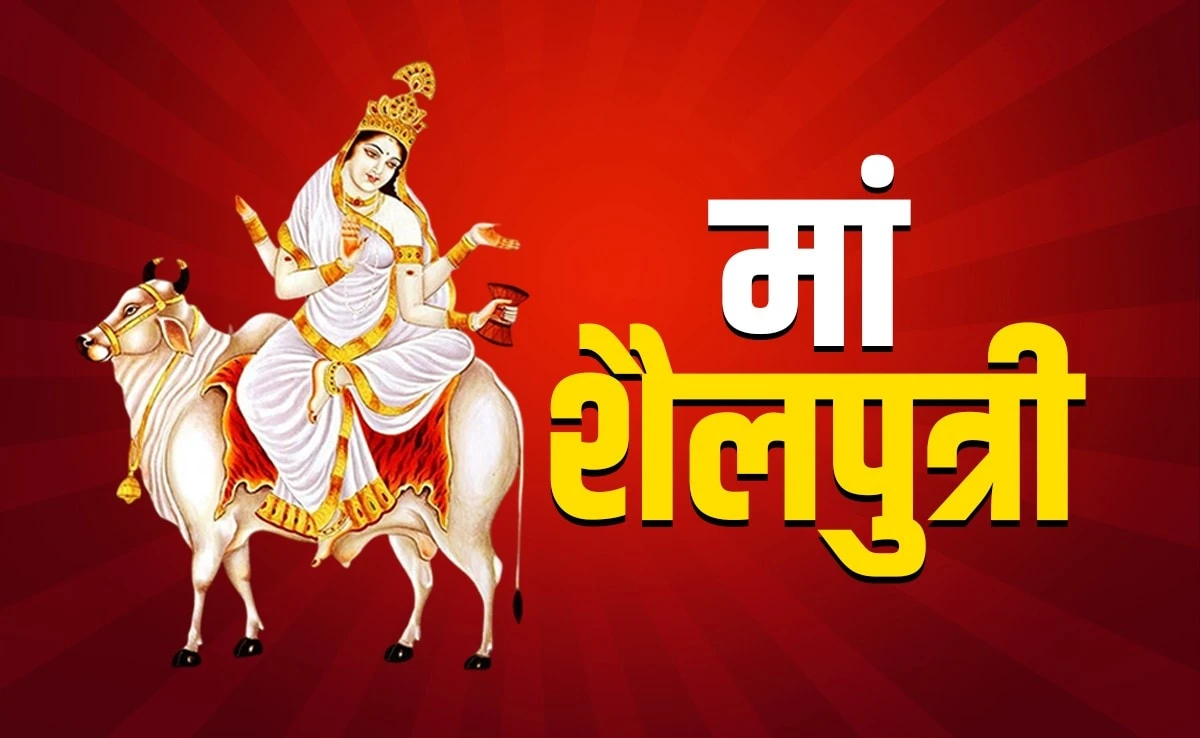
Navratri Day 1 falls on Sunday, 11 October 2026, the opening day of Sharad Navratri. The day is dedicated to Maa Shailputri, the first of the nine forms of Goddess Durga (Navadurga), and it begins with Ghatasthapana, the installation of the sacred kalash that anchors the next nine days of worship. The colour of the day in the commonly published 2026 sequence is orange.
For the full nine-day calendar, see our Navratri 2026 guide to all 9 days, goddesses and colours.
| Detail | Day 1 |
|---|---|
| Date | Sunday, 11 October 2026 |
| Tithi | Ashwin Shukla Pratipada |
| Goddess | Maa Shailputri |
| Colour of the day | Orange |
| Main ritual | Ghatasthapana (Kalash Sthapana) |
| Vahana (mount) | Nandi, the bull |
| Traditional bhog | Pure cow's ghee or ghee-based sweets |
The name Shailputri comes from shaila (mountain) and putri (daughter): she is the daughter of the mountain king Himavan, the personified Himalaya. She is also known as Parvati, Hemavati and Sati Bhavani.
According to the Puranic tradition, the goddess was first born as Sati, daughter of King Daksha, and married Lord Shiva against her father's wishes. When Daksha organised a great yagna and deliberately insulted Shiva by not inviting him, Sati attended anyway. Unable to bear the humiliation of her husband, she gave up her life in the sacrificial fire.
She was then reborn as the daughter of Himavan and Queen Mena, and once again became the consort of Shiva. Shailputri is therefore the form in which the goddess returns — a story of continuity, devotion and renewal that makes her a fitting beginning for the nine nights.
| Feature | Description |
|---|---|
| Hands | Two |
| Right hand | Trishul (trident) |
| Left hand | Lotus flower |
| Head | Crescent moon on her crown |
| Mount | Nandi, the bull — which is why she is also called Vrisharudha |
The trident is read as protection and power over the three gunas, while the lotus stands for purity. Riding Shiva's bull, Nandi, links her directly to her consort.
Ghatasthapana (also called Kalash Sthapana) is the most important ritual of Day 1. A kalash filled with water is installed and treated as the seat of the goddess for the nine days, and barley (jau) is sown in a bed of soil beside it. The sprouts that grow by Navami are seen as a sign of prosperity.
Muhurat: Ghatasthapana is traditionally done in the first third of the day after sunrise during Pratipada. One panchang computed for New Delhi gives a morning window of roughly 6:19 AM to 10:12 AM, with the Abhijit Muhurat (about 11:44 AM to 12:30 PM) as an alternative. Timings shift with your city's sunrise, so confirm with a local panchang or your temple priest before you begin.
Rituals vary by region and family; follow the customs you have inherited where they differ.
Beej / name mantra:
ॐ देवी शैलपुत्र्यै नमः॥
Om Devi Shailaputryai Namah
Dhyana shloka:
वन्दे वाञ्छितलाभाय चन्द्रार्धकृतशेखराम्।
वृषारूढां शूलधरां शैलपुत्रीं यशस्विनीम्॥
Meaning: "I bow to the illustrious Shailputri, who wears the half-moon on her head, rides the bull and holds the trident, for the fulfilment of my wishes."
Many devotees chant the name mantra 108 times on a rudraksha or tulsi mala.
By popular tradition, pure cow's ghee is offered to Maa Shailputri, either on its own or in sweets prepared with ghee. The belief is that the offering brings good health. Many families later distribute the bhog as prasad.
Orange is associated with energy, warmth and enthusiasm, which suits the first day of the festival. The colour sequence starts with orange in 2026 because Day 1 falls on a Sunday, the day traditionally linked with the Sun. Wearing the colour is a popular custom, not a religious requirement.
Many devotees begin a fast today. Common fasting foods include fruit, milk, sabudana, kuttu (buckwheat) and singhara (water chestnut) flour, and sendha namak (rock salt). Drink enough water through the day. If you are pregnant, elderly or managing a health condition, consult your doctor before fasting.
Sunday, 11 October 2026, on Ashwin Shukla Pratipada.
Maa Shailputri, the daughter of the Himalaya and the first form of Navadurga.
Orange, in the commonly published 2026 sequence.
Pure cow's ghee or sweets made with ghee, according to popular tradition.
The preferred window is the morning. If it is missed, many priests recommend the Abhijit Muhurat around midday. Check your local panchang.
Day 1 of Navratri 2026, on 11 October, honours Maa Shailputri and begins with Ghatasthapana. Install the kalash in the morning muhurat, offer ghee as bhog, chant her mantra and, if you like, wear orange. Tomorrow, Day 2 is dedicated to Maa Brahmacharini.
