•
•
•
•
•
•
•

The stories behind Vijayadashami, from the Ramayana to the Mahabharata
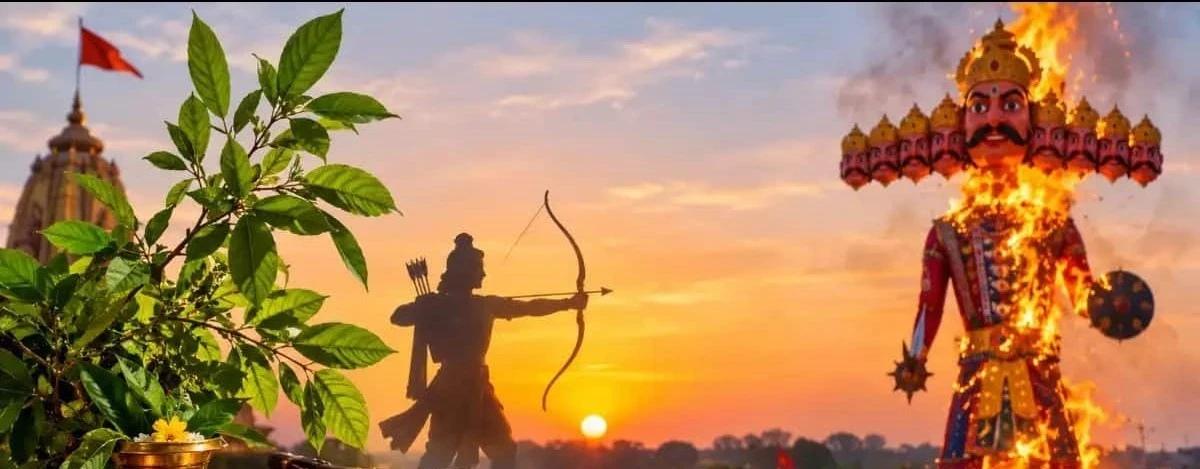
Dussehra is celebrated across India, but not everyone remembers it for the same reason. Three traditions are especially well known, and each one adds meaning to the day. This guide summarises them, noting that retellings differ slightly between regions and texts.
| Legend | Source | Where it is most emphasised | Key idea |
|---|---|---|---|
| Rama defeats Ravana | Ramayana | North and central India | Dharma over arrogance |
| Durga defeats Mahishasura | Devi Mahatmya and Puranic tradition | Bengal, Odisha, Assam, south India | Divine feminine power |
| Pandavas and the Shami Tree | Mahabharata | Parts of Maharashtra, Karnataka and beyond | Patience and renewal |
In the Ramayana, Ravana, the king of Lanka, abducts Sita, the wife of Prince Rama. Rama, with the help of Hanuman, Lakshmana and an army of vanaras, travels to Lanka and fights a long war. On Dashami, according to tradition, Rama defeats Ravana and brings Sita home.
This story is performed in Ramlila plays across north India in the days before Dussehra. The festival is then marked by burning Ravana's effigy. The lesson usually drawn is that power without humility leads to downfall.
Mahishasura was a demon who had received a boon making him nearly invincible against any man. He terrorised the heavens and the earth. The gods combined their energies to create Durga, a warrior goddess who rode a lion and carried the weapons of many deities.
According to the tradition, Durga fought Mahishasura for nine days and nights and defeated him on the tenth. This is why Navratri and Durga Puja culminate in Vijayadashami, and why Durga idols are immersed in rivers or lakes on that day.
The Mahabharata tells that the Pandavas, after twelve years in the forest, had to spend a thirteenth year in disguise. Before entering it, they hid their weapons in a shami tree. When the year ended, they retrieved the weapons and went on to defend their rights, leading to the great war.
Because of this, the shami tree is worshipped on Dussehra in several regions, and weapon or tool worship (Shastra Puja) is a part of the festival.
In Maharashtra and neighbouring areas, people exchange leaves of the apta tree on Dussehra and call them "sona" (gold). The custom is associated with a story of the sage's student Kautsa, who needed gold coins as a teacher's fee, and the king Raghu, whose prayers are said to have caused gold to rain from the tree. The exchange symbolises goodwill and prosperity.
Which story is the real origin of Dussehra?
There is no single official answer. Different regions emphasise different traditions, and all of them are part of the festival's meaning.
Why do Ramlila performances end on Dussehra?
Ramlila retells the Ramayana, and the story reaches its climax with Ravana's defeat on Vijayadashami.
Why is Durga immersed on Dussehra?
The immersion symbolises the goddess returning to her heavenly home after her visit to earth during Durga Puja.
These accounts summarise well-known traditions. Details vary by region, language and text, and the article is meant as a general introduction rather than a scriptural commentary.
