•
•
•
•
•
•
•

Rhinos, tigers, conservation success and a safari guide for the 2026-27 season
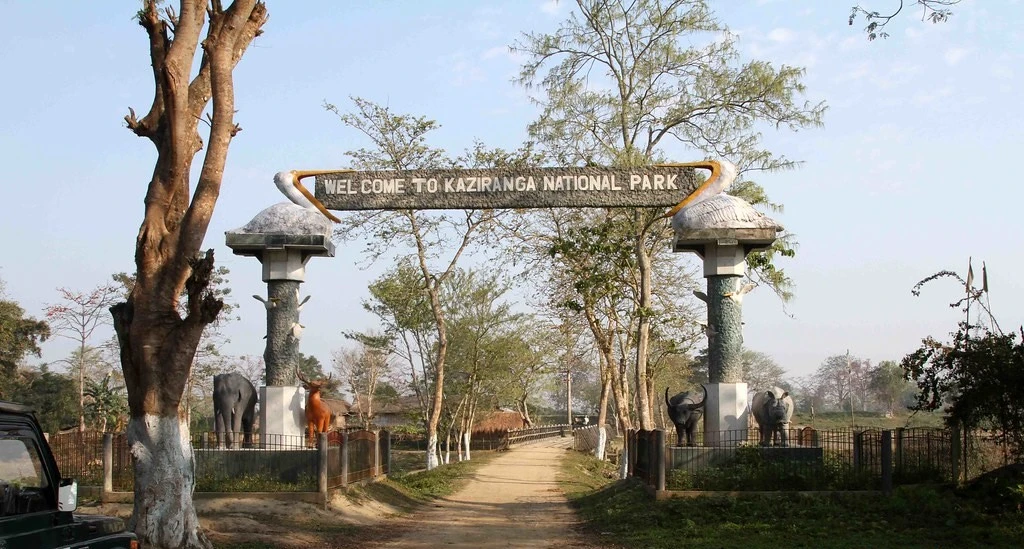
Kaziranga National Park in Assam is one of the world's great conservation success stories. Its tall grasslands, wetlands and forests shelter the largest population of greater one-horned rhinoceros on Earth, plus tigers, elephants and thousands of birds. With the park reopening for the 2026-27 season and all four of Assam's tiger reserves now internationally accredited, Kaziranga is trending among wildlife lovers. This guide explains its history, wildlife, conservation story and how to plan a safari.
Kaziranga's story is one of recovery. By 1900, the Indian rhinoceros had declined to only about a dozen animals in the area. Protection began in the early 1900s, the area became a national park in 1974, and it was later inscribed as a UNESCO World Heritage Site because it is the world's primary stronghold for the Indian rhino.
Population records show how far it has come. UNESCO documents note about 1,195 rhinos in 1984, and the 14th Rhino Population Estimation in March 2022 recorded 2,613 inside the park, the highest count in the census's history.
Kaziranga sits on low-lying floodplains, about 40 to 80 metres above sea level, on the south bank of the Brahmaputra. Annual rainfall reaches around 2,500 mm, falling mainly between May and October. Floods can submerge a very large share of the core area, sometimes as much as 90%, and wildlife move to higher ground outside the park until waters recede. These floods are essential to the ecosystem because they refresh wetlands and grasslands, but severe floods also cause animal deaths.
Rhino poaching was once a serious problem, with 37 animals illegally killed in 1983 alone. Today, officials report zero rhino poaching incidents throughout 2025 and 2026, and park authorities credit conservation initiatives by the Assam government and its partners.
International recognition has followed. On October 8, 2026, Nameri Tiger Reserve received CA|TS Approved status under the Conservation Assured | Tiger Standards framework. That means all four of Assam's tiger reserves, Kaziranga, Manas, Orang and Nameri, are now CA|TS approved. The framework assesses wildlife protection, habitat management, monitoring, administration and community participation.
| Zone | Also Known As | Notes |
|---|---|---|
| Kohora | Central | Most popular zone, near the main entrance; jeep and elephant safaris |
| Bagori | Western | Known for wildlife and birdlife; jeep and elephant safaris |
| Agaratoli | Eastern | Good for birds and quieter safaris |
| Burapahar | Southwestern hill range | More remote, with jeep safaris |
Jeep safaris run in two daily slots, 7:30 am to 10:00 am and 1:30 pm to 3:00 pm. Elephant safaris are limited to the Central and Western zones and run in the morning. For the 2026-27 season, officials said jeep safaris resumed on reopening and elephant safaris were expected to follow, with reports varying on the exact date.
Tips for visitors:
Kaziranga reopened on October 3, 2026, with Assam's Environment and Forest Minister Jayanta Mallabaruah marking the occasion at Kohora Range. Officials said tourism growth would help local communities, including safari operators, guides and hospitality workers, and that the departments are exploring new tourism circuits linking Kaziranga with nearby destinations. Manas National Park reopened on October 2, and Pobitora Wildlife Sanctuary is scheduled to open on October 13.
Where is Kaziranga National Park?
In Assam, northeast India, along the Brahmaputra River.
When is the best time to visit?
November to April.
How many rhinos are in Kaziranga?
Officials cite 2,613 rhinos in the park, out of 2,895 in Assam.
Is Kaziranga open now?
It reopened on October 3, 2026, for the 2026-27 season.
Kaziranga proves that determined protection can bring a species back from the edge. A safari here offers more than rhino sightings. It is a chance to see how floods, grasslands and community-backed conservation sustain one of the planet's richest wildlife landscapes.
