•
•
•
•
•
•
•

A tour of Vijayadashami customs across north, south, east and central India
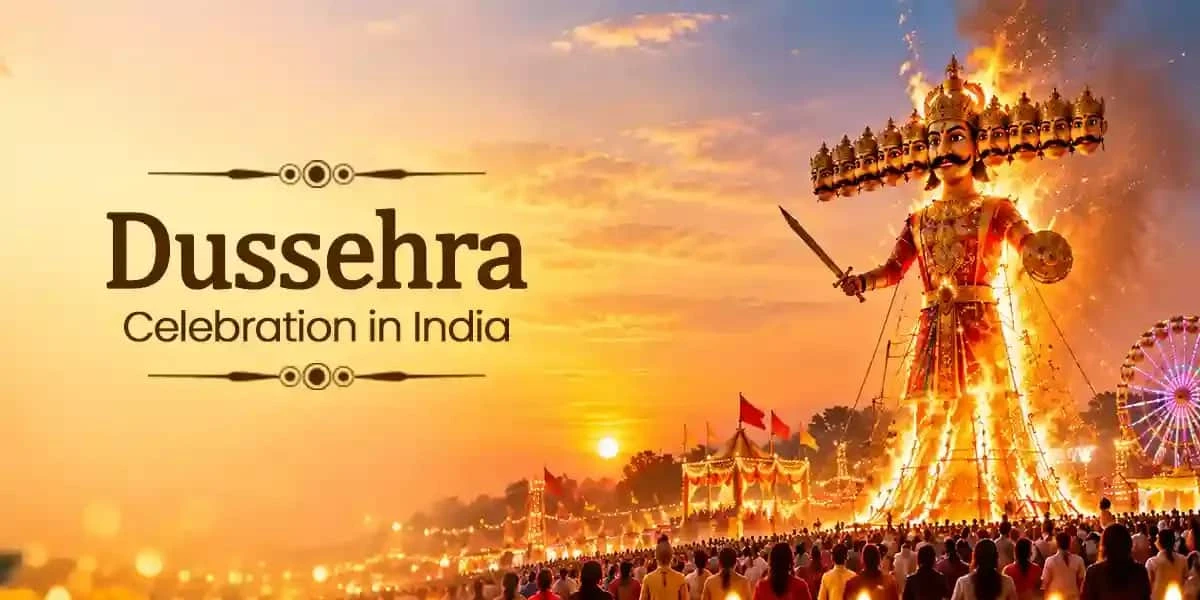
On Vijayadashami, the same day is celebrated in strikingly different ways across India. In some places crowds watch giant effigies burn at dusk, while in others elephants, chariots and deities lead processions that last days or even weeks. Here are some of the best-known traditions.
| Region | Celebration | Highlights |
|---|---|---|
| Delhi, Uttar Pradesh, Haryana, Punjab | Ramlila and Ravan Dahan | Effigies of Ravana, Kumbhakarna and Meghnad burned after sunset |
| Karnataka (Mysuru) | Mysuru Dasara | Ten-day state festival with a grand Vijayadashami procession |
| Himachal Pradesh (Kullu) | Kullu Dussehra | Begins on Vijayadashami and continues for about a week |
| Chhattisgarh (Bastar) | Bastar Dussehra | One of the longest festivals in India, lasting roughly 75 days |
| West Bengal, Odisha, Assam | Bijoya Dashami | Durga idol immersion and sindoor khela |
| Gujarat | Garba and festive food | Navratri dancing and jalebi-fafda on Dussehra morning |
| Maharashtra | Apta leaf exchange | People exchange leaves as symbols of gold |
In cities such as Delhi, Ramlila performances re-enact the Ramayana in the days before Dussehra. On the evening of Vijayadashami, tall effigies of Ravana, often with Kumbhakarna and Meghnad, are filled with fireworks and set alight before large crowds. The burning stands for the destruction of evil and ego.
Mysuru Dasara is the state festival of Karnataka and has a history stretching back centuries, associated with the Vijayanagara and later Wadiyar rulers. The palace is lit by thousands of lights, and the festival culminates on Vijayadashami with the Jamboo Savari, a procession in which the idol of Goddess Chamundeshwari is carried through the city on a decorated elephant.
Kullu's Dussehra starts on the day when many other places end their celebrations. Deities from villages across the valley are brought in palanquins to the Dhalpur Maidan, and Lord Raghunath's chariot is pulled by devotees. The festival is known for its devotional atmosphere and large fair. Ravana is not burned on the first day, with the symbolic burning of Lanka held on the final day.
Bastar's Dussehra is unusual because it is not centred on Ravana. It honours Goddess Danteshwari, the local deity, and includes rituals, chariot processions and tribal community participation over about 75 days, making it one of the longest festivals in the world.
In Bengal, Odisha and Assam, Dussehra marks the end of Durga Puja. Devotees bid farewell to the goddess with processions to rivers and lakes for immersion. Married women apply vermilion on each other in sindoor khela, and people visit friends and relatives to exchange "Bijoya" greetings and sweets.
Which city has the biggest Dussehra celebration?
There is no single answer. Mysuru, Kullu, Delhi and Bastar are all famous for very different reasons.
Is Ravana worshipped anywhere?
In a few communities and locations, Ravana is regarded with respect, and some have local traditions that do not burn his effigy.
Customs vary by town and community, and events can change from year to year. Confirm timings with local organisers before travelling.
