•
•
•
•
•
•
•

Willett Distillery’s Old Bardstown Bottled in Bond wins the 2026 IWSC Bourbon Trophy with 98 points. Discover what makes this affordable Kentucky bourbon stand out and why finding a bottle may be difficult.
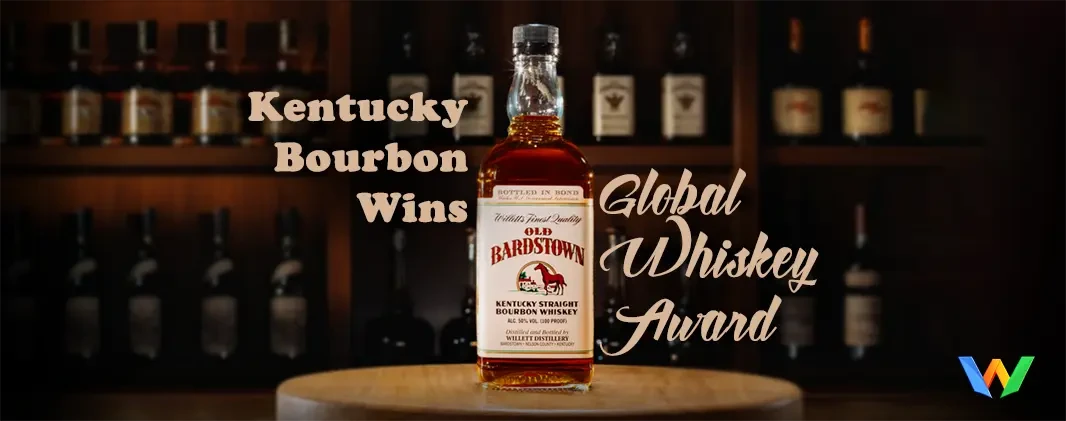
In a whiskey market where limited-edition releases, long-aged spirits and luxury packaging frequently command hundreds of dollars, an affordable Kentucky bourbon has emerged as one of the standout winners of 2026.
Old Bardstown Bottled in Bond, produced by Willett Distillery, earned the Bourbon Trophy at the International Wine & Spirit Competition (IWSC), one of the established international competitions recognising excellence in wine and spirits.
The four-year-old Kentucky straight bourbon received 98 points out of 100 and a Gold Outstanding medal before securing the competition’s top bourbon distinction. Its typical US retail price of around $25 makes the result particularly noteworthy, especially when compared with premium bottles that cost several times more.
The achievement highlights an important point for whiskey enthusiasts: price, age and exclusivity do not automatically determine quality. A carefully produced bourbon can earn international recognition without relying on an expensive presentation or an extended maturation period.
For Willett Distillery, the award also brings fresh attention to Old Bardstown, a label with longstanding connections to Kentucky’s bourbon-making heritage.
Old Bardstown combines a traditional Kentucky bourbon profile with a production approach designed to deliver consistency and character.
The whiskey is made using a grain recipe, commonly called a mash bill, consisting of 72% corn, 15% malted barley and 13% rye. Corn provides the familiar sweetness associated with bourbon, while rye can contribute spice and malted barley supports fermentation and adds complexity.
The resulting spirit is aged for at least four years and bottled at 100 proof, equivalent to 50% alcohol by volume.
These specifications are important because the whiskey carries the federally regulated bottled-in-bond designation. Established through the Bottled-in-Bond Act of 1897, this designation requires the spirit to be produced by one distiller at one distillery during a single distilling season, aged for at least four years in a federally bonded warehouse and bottled at 100 proof.
The designation offers consumers specific assurances about how the whiskey was produced. It does not guarantee a particular flavour or automatically make one bourbon better than another, but it provides a useful framework for understanding the spirit's production standards.
In Old Bardstown’s case, the combination of these requirements and its award-winning tasting profile has helped distinguish it in a competitive market.
The IWSC judging panel highlighted Old Bardstown’s grain-forward aromas, balanced dry palate and distinctive combination of flavours.
Tasting notes included marmalade, brioche and delicate floral characteristics, alongside well-integrated oak. The judges also praised its lingering finish, describing a whiskey that combines character with balance rather than relying on overwhelming sweetness or wood influence.
These characteristics help explain why the bourbon performed strongly despite its relatively modest price.
Bourbon flavour is shaped by several factors, including the grain recipe, fermentation, distillation, barrel conditions, maturation time and bottling strength. Each influences the finished spirit, and the relationship between them can be as important as the number of years spent in a barrel.
A younger bourbon may preserve more of its grain-derived character, while extended ageing can develop deeper oak, spice and caramel notes. Neither approach guarantees superiority: the final result depends on how well the individual elements work together.
Old Bardstown’s award suggests that the judges valued its particular balance of grain, fruit-like sweetness, floral notes and oak.
Its performance also demonstrates why independent spirits competitions can attract attention to bottles that might otherwise receive less publicity than highly allocated or collectible releases.
Willett Distillery was established in 1936 by Thompson Willett in Bardstown, Kentucky, a town widely associated with American bourbon production.
The family-owned distillery has developed a strong following among whiskey enthusiasts, particularly for its Willett Family Estate releases. Some of these bottles command substantial prices because of their age, scarcity, reputation or demand among collectors.
Old Bardstown occupies a different position in the portfolio. Rather than depending on the appeal of a rare, high-priced release, the Bottled in Bond expression offers a comparatively accessible entry point into the distillery’s range.
Willett’s production history has also included a significant transition. The distillery ceased its own distilling operations during the 1970s and spent a period sourcing and bottling whiskey. It resumed distilling in 2012, and a renewed version of Old Bardstown Bottled in Bond made with Willett-produced whiskey was introduced in 2016.
The award therefore represents more than a win for a budget-friendly bottle. It also places renewed attention on a family distillery with a long history and an evolving role in Kentucky’s whiskey industry.
The bourbon’s price is one of the most striking aspects of its success.
Premium American whiskey can become expensive for several reasons: prolonged maturation ties up inventory, evaporation reduces the amount of liquid remaining in barrels, and limited releases can attract intense demand. Branding, distribution costs and collector interest may further influence retail prices.
However, a high price is not a direct measure of sensory quality.
Old Bardstown’s award challenges the assumption that consumers must spend heavily to find a well-regarded bourbon. Its result could encourage whiskey drinkers to explore less expensive bottles and evaluate them based on flavour, production standards and personal preference rather than reputation alone.
The distinction is particularly relevant in a market where some limited releases are purchased as collectibles as much as for drinking. Scarcity can raise prices independently of whether a bottle suits an individual's taste.
Nevertheless, one competition result should not be treated as a universal verdict on every bourbon. Judges assess spirits according to their tasting experience and competition criteria, while individual preferences differ. Some drinkers may prefer older, oak-forward whiskeys, while others favour younger spirits with brighter grain character.
The award establishes Old Bardstown as the IWSC's 2026 Bourbon Trophy winner, not as an objectively superior choice for every consumer.
Despite its relatively low retail price, Old Bardstown Bottled in Bond has a geographic availability limitation.
The specific award-winning expression is officially distributed in Kentucky, according to the reported coverage. Other products carrying the Old Bardstown name may be available elsewhere, but they should not be confused with this particular Bottled in Bond release.
For consumers outside Kentucky, that distinction matters. The approximate $25 price reflects the typical US retail cost, not a guarantee that the bottle can be purchased at that price in every state or country.
Availability can also change with retailer inventory and distribution arrangements. Buyers should verify the exact expression, bottle size and current price rather than assuming that every Old Bardstown product carries the same specifications.
The award could increase interest in the bourbon, potentially making it more difficult to find in its established market. Whether wider distribution follows remains a separate question.
For visitors to Kentucky’s bourbon country, however, the recognition gives whiskey enthusiasts another bottle to look for when exploring the region’s distilleries and retailers.
Old Bardstown was not the only Kentucky whiskey to receive major recognition in the 2026 IWSC results.
Bardstown Bourbon Company won the competition’s American Whiskey Trophy for its Lochs of Jura Barrel 10-Year-Old American Whiskey, demonstrating the range of styles being produced in the region.
Together, the awards highlight Bardstown’s continuing significance in American whiskey. The area’s distilleries combine established production traditions with experimentation in maturation, blending and finishing.
Kentucky bourbon is closely linked to the state's agricultural resources, particularly corn, as well as its distilling heritage and barrel-ageing traditions. Its influence extends beyond the domestic market, with American whiskey attracting consumers and collectors internationally.
Recognition at international competitions can help producers reach new audiences, reinforce brand visibility and encourage interest in the broader category.
For smaller or less expensive expressions, such awards can be especially valuable because they create a reason for consumers to look beyond familiar premium labels.
Old Bardstown Bottled in Bond’s victory offers a useful reminder that finding an enjoyable whiskey does not necessarily require chasing the oldest or rarest bottle.
Its 98-point score, Gold Outstanding medal and Bourbon Trophy place it among the notable award-winning spirits of 2026. Its four-year age statement, 100-proof bottling strength and regulated bottled-in-bond production requirements also give consumers concrete details to consider when evaluating the whiskey.
Still, the award should be viewed in context. Taste remains subjective, retail availability varies, and competition recognition does not eliminate the differences between individual preferences.
For the bourbon industry, the result provides a compelling example of how an accessible product can attract global attention through quality rather than luxury positioning.
The bottom line: Willett Distillery’s Old Bardstown Bottled in Bond has earned international recognition at a typical US retail price of around $25. Its success challenges the idea that great bourbon must be expensive, while its Kentucky-focused distribution presents a practical obstacle for enthusiasts hoping to find a bottle. The award reinforces a simple lesson for whiskey consumers: production standards, balance and flavour deserve as much attention as age statements and price tags.
