•
•
•
•
•
•
•

Discover what an ice cream float is, how this nostalgic soda-and-ice-cream drink originated, its most popular variations and easy ways to make one at home.
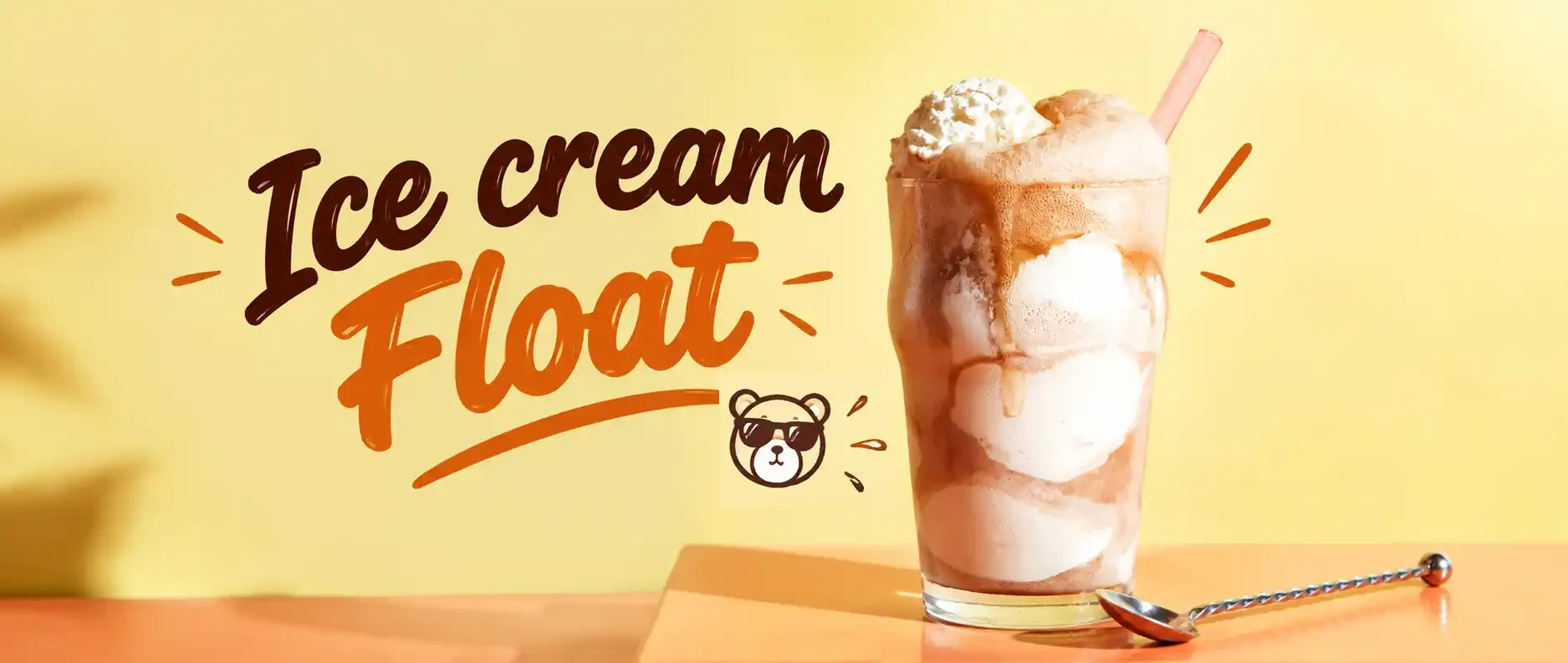
An ice cream float is one of those simple food-and-drink combinations that somehow feels more special than the ingredients suggest.
At its most basic, the recipe requires only two things: ice cream and a fizzy drink.
A scoop or two of ice cream is placed into a tall glass before carbonated soda is slowly poured over it. The interaction between the cold ice cream and sparkling drink creates a foamy layer, while the ice cream gradually melts into the soda, producing a creamy, sweet and fizzy mixture.
That combination is what makes an ice cream float different from an ordinary soft drink or milkshake. It can be enjoyed as a refreshing beverage, a dessert or a combination of both.
The classic version is strongly associated with vanilla ice cream and root beer, commonly known as a root beer float. A cola-based version is often called a Coke float.
But there is no single formula.
Today, ice cream floats can be made with lemonade, cream soda, fruit-flavoured sodas, sparkling drinks and even more unusual combinations.
The story of the ice cream float goes back to 19th-century Philadelphia.
Robert McCay Green is traditionally credited with creating the ice cream soda in 1874 during the Franklin Institute's semicentennial celebration. According to the traditional account, Green ran out of ice while selling flavoured drinks on a particularly hot day.
Instead of stopping, he used vanilla ice cream obtained from a nearby vendor.
The unexpected combination of ice cream and soda proved popular.
Green's own later account offered a slightly different explanation. He said he was looking for a new attraction to compete with another vendor who had a larger and more impressive soda fountain. After experimenting, he combined ice cream with flavoured soda and offered customers a choice of 16 different syrups.
The drink quickly became associated with American soda fountains.
As the popularity of soda fountains grew, so did the number of variations. What began as a relatively simple combination eventually became an important part of American food culture.
However, the exact history of the root beer float is less straightforward. Several people have been credited with creating it, including Fred Sanders, Philip Mohr and George Guy. Frank J. Wisner is traditionally credited with creating the first root beer float in 1893.
So while the broader ice cream soda has a commonly accepted origin story, the history of specific float variations remains somewhat debated.
The name itself comes from the way the ice cream initially sits at the surface of the fizzy drink.
When carbonated soda meets ice cream, bubbles form around the ice cream and the mixture begins to foam. As the ice cream melts, some of it mixes into the soda, creating a creamy texture.
The result changes as you drink it.
At first, you get the sharp fizz of the soda alongside a cold scoop of ice cream. As the ice cream melts, the drink becomes smoother and creamier.
This changing texture is part of the appeal.
An ice cream float therefore isn't simply soda with ice cream added to it. It is a small experience that changes from the first sip to the last spoonful.
When people think about an ice cream float, one of the first versions that comes to mind is the root beer float.
The classic combination uses:
The rich vanilla flavour balances the distinctive sweetness and spice of root beer.
The result is creamy, fizzy and intensely nostalgic.
The root beer float is traditionally associated with American food culture and has also been known by names such as black cow or brown cow, depending on the region and ingredients used.
For people trying an ice cream float for the first time, this remains one of the easiest versions to understand because the vanilla-and-root-beer combination is relatively straightforward.
The terms ice cream float and ice cream soda are sometimes used interchangeably, but there can be a distinction.
In the United States, an ice cream soda traditionally refers to ice cream combined with soda water and flavoured syrup, while a float more commonly means ice cream added directly to a carbonated soft drink.
The terminology can also change from country to country.
In Australia and New Zealand, for example, the drink is often called a "spider." The name is linked to the web-like appearance created when carbonation interacts with the ice cream.
In the UK and Ireland, ice cream float or simply float is the more familiar terminology.
Different names, however, describe essentially the same basic idea: something creamy floating in something fizzy.
One of the best things about making an ice cream float is that there are almost no limits to flavour combinations.
The traditional root beer version is only the beginning.
A cola float combines cola with vanilla ice cream.
The sweetness and caramel-like notes of cola work particularly well with the creamy flavour of vanilla.
For a simple homemade version, add one or two scoops of vanilla ice cream to a tall glass and slowly pour chilled cola around it.
If you prefer something lighter and more refreshing, a lemonade float is an excellent choice.
A fruity or raspberry lemonade can be paired with vanilla ice cream. Add whipped cream and a cherry for a retro dessert-style presentation.
M&S also highlights raspberry lemonade with vanilla ice cream as a simple, nostalgic float combination.
For a more sophisticated flavour, sparkling elderflower combined with raspberry ripple ice cream creates a fruity and floral drink.
The berry flavour brings sweetness, while elderflower provides a lighter aromatic character.
A little raspberry coulis or fruit garnish can make the drink look particularly attractive when served at a gathering.
Pistachio lovers can take the float in a completely different direction.
One creative combination uses lemon-and-lime soda with pistachio ice cream, finished with fresh mint and chopped pistachios.
The citrus adds freshness, while pistachio provides a richer nutty flavour.
In Japan, a popular style of ice cream float uses melon soda and vanilla ice cream, often finished with a maraschino cherry.
The bright green soda, white scoop of ice cream and red cherry make this version especially recognisable.
It is a great example of how the basic ice cream float concept can be adapted to local tastes and ingredients.
The Purple Cow is another colourful variation made using vanilla ice cream and purple grape soda.
The combination produces a striking purple-and-white appearance while maintaining the familiar sweet and creamy float experience.
The best part about an ice cream float is that you don't need complicated equipment.
For a basic homemade ice cream float, you need:
Use a tall glass that leaves enough room for the soda, ice cream and foam.
A larger glass also makes the float easier to serve without overflowing.
Place one or two generous scoops of ice cream into the glass.
Vanilla is the easiest starting point, but chocolate, pistachio, strawberry, raspberry ripple or sorbet can work depending on the soda.
This is the important part.
Slowly pour your chilled soda into the glass rather than pouring it all at once.
The carbonation will react with the ice cream and create foam. Pouring too quickly can cause the drink to fizz over the top.
M&S recommends adding the ice cream first and then slowly pouring the chosen soda over it.
Once the foam settles slightly, add your favourite toppings.
You can use:
Then serve immediately with both a straw and spoon.
The straw is ideal for the fizzy drink, while the spoon makes it easier to enjoy the melting ice cream.
A great float doesn't require professional soda-fountain equipment, but a few simple tricks can improve the result.
Cold soda produces a more refreshing drink and helps keep the ice cream firm for longer.
The combination of carbonation and ice cream creates a lot of foam. A slow pour gives you more control.
If you're experimenting with flavours, vanilla ice cream is one of the most versatile choices because it works with cola, root beer, lemonade and fruit sodas.
You don't always need dairy ice cream.
Fruit sorbets can create lighter floats, particularly when paired with sparkling fruit drinks.
If both the soda and ice cream are extremely sweet, the final drink can become heavy.
Using a sharper citrus soda, sparkling drink or fruit-based beverage can provide better balance.
Absolutely.
Although ice cream floats are strongly associated with summer drinks and nostalgic soda fountains, the basic idea can be adapted for different occasions.
M&S, for example, presents both classic non-alcoholic combinations and more grown-up cocktail-inspired floats, including raspberry rosé, espresso martini and mango mojito variations.
For everyday occasions, however, the traditional non-alcoholic version remains the easiest choice.
A lemonade float can work as a fun party drink, a cola float can become a quick dessert after dinner, while a fruit-and-sorbet combination can make an attractive option for summer gatherings.
The enduring appeal of the ice cream float comes from its simplicity.
It combines two familiar favourites — ice cream and fizzy drinks — without requiring a complicated recipe.
There is also an unmistakable nostalgic element.
The drink is associated with classic American soda fountains, retro diners and old-fashioned summer treats. Yet the basic recipe is flexible enough to accommodate modern flavours and presentation styles.
That combination of nostalgia, simplicity and customisation helps explain why ice cream floats continue to appear in restaurants, cafés, food trends and home kitchens.
The ice cream float may look like a simple combination of soda and ice cream, but its history and global variations make it much more interesting.
From its roots in 19th-century Philadelphia to the classic American root beer float and colourful international versions such as Japan's melon soda float, the concept has travelled far beyond its original soda-fountain setting.
And making one at home could hardly be easier.
Choose a cold fizzy drink, add a couple of scoops of your favourite ice cream, pour slowly and finish with toppings. Whether you prefer root beer, cola, lemonade, raspberry, citrus or pistachio, the basic formula remains the same.
Sometimes, the simplest combinations are the ones that last.
