•
•
•
•
•
•
•

How people catch avian influenza, the symptoms, and why scientists watch every case
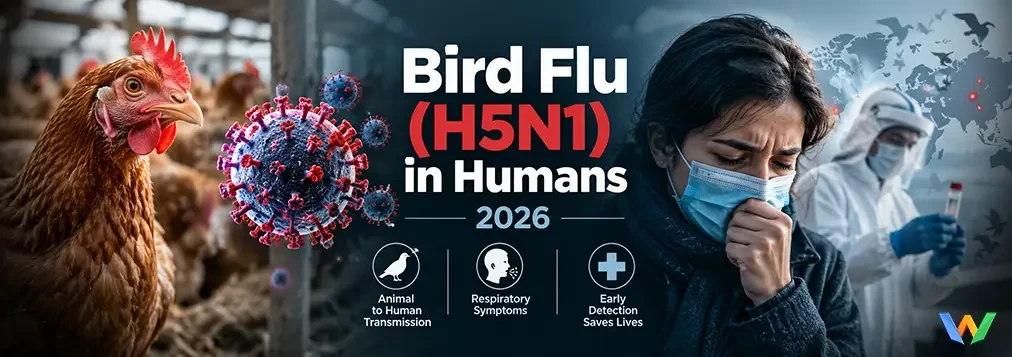
On 28 September 2026, Cambodia reported a new human case of avian influenza A(H5N1): a 49-year-old poultry farmer in Oddar Meanchey province who had contact with sick and dead poultry that tested positive. It is Cambodia's sixth human case in 2026. In 2025, the country reported 18 cases and 9 deaths, according to the UK Health Security Agency's outbreak summary. Human H5N1 infections remain rare and are almost always linked to direct contact with infected birds. There is no evidence of sustained human-to-human spread, so the risk to the general public is low.
H5N1 is a subtype of influenza A that mainly infects birds. It is called "highly pathogenic" because it kills many poultry. Since 2020, a strain of H5N1 has spread widely among wild birds worldwide and has infected mammals, including seals, foxes and, in the United States since 2024, dairy cattle.
Most human infections happen through:
H5N1 does not spread easily between people. Scientists watch for genetic changes that could make it transmit more easily.
Symptoms usually appear 2–8 days after exposure and can include:
Anyone with these symptoms after contact with sick birds or animals should seek medical care immediately and mention the exposure. Antiviral drugs such as oseltamivir work best when started early.
| Detail | Information |
|---|---|
| Reported | 28 September 2026 |
| Patient | 49-year-old poultry farmer |
| Location | Oddar Meanchey province |
| Exposure | Sick and dead poultry that tested positive |
| 2026 total (Cambodia) | 6 human cases |
| 2025 total (Cambodia) | 18 cases, 9 deaths |
Authorities isolated and treated the patient. They also traced contacts, investigated the source and offered oseltamivir to close contacts.
Influenza viruses mutate and can swap genes. Each human infection gives the virus a chance to adapt to people. Public health agencies track:
This is part of global pandemic preparedness, alongside vaccine stockpiles and antiviral supplies.
No sustained human-to-human transmission of H5N1 has been confirmed. Almost all cases are linked to contact with infected animals.
Yes, when properly cooked. Cooking to normal safe temperatures kills influenza viruses.
Some H5 vaccines have been developed and stockpiled by governments for preparedness, but they are not part of routine vaccination for the general public.
Severe cases can be fatal, and historically a high share of reported cases have died. Many mild infections may go undetected, so the true fatality rate is uncertain.
Cambodia's latest H5N1 case is a reminder that bird flu remains a steady, low-level risk where people live closely with poultry. The risk to the general public is low, but continued surveillance, fast response and basic hygiene are the main protections against a more dangerous turn.
