•
•
•
•
•
•
•

The Bundibugyo Ebola outbreak in DR Congo spreads to a new country
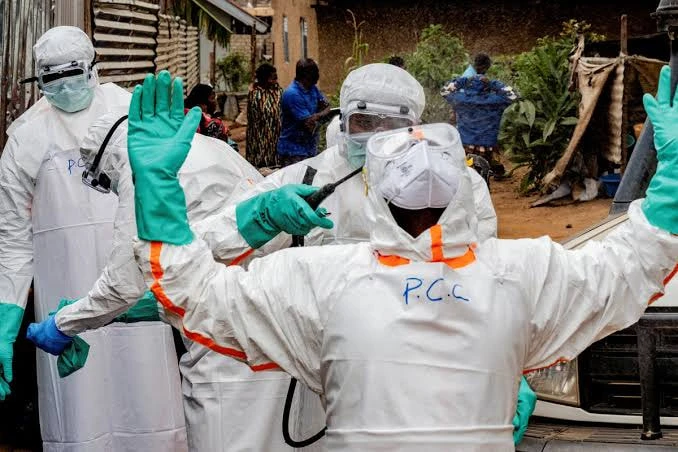
On 6 October 2026, Kenya confirmed its first-ever case of Ebola disease. The patient was a Kenyan national who had lived in the Democratic Republic of the Congo (DRC) for seven years. He travelled by road to Kampala, Uganda, flew to Nairobi on 3 October, and died on 5 October. Health officials identified 28 close contacts and are tracing 23 passengers and four crew members from his flight. The case is linked to the large Bundibugyo virus outbreak in the DRC.
The DRC declared the outbreak on 15 May 2026. The WHO declared it a public health emergency of international concern on 17 May. As of 4 October, the UK Health Security Agency summary of official data reported:
| Measure | Figure |
|---|---|
| Confirmed cases (DRC) | 8,603 |
| Confirmed deaths (DRC) | 4,148 |
| Provinces affected | 7 (64 health zones) |
| Worst-hit province | Ituri (6,450 cases) |
| Rising hotspot | North Kivu (1,729 cases) |
| Uganda | 20 cases, 2 deaths; declared over on 27 August |
It is the largest Bundibugyo outbreak ever recorded and the second-largest Ebola outbreak to date. The WHO has warned the epidemic is "far from over" and could surpass the 2014–2016 West Africa outbreak, which killed more than 11,000 people.
Four imported cases among responders have been treated in Europe (in the Netherlands, Germany and France).
Ebola disease is caused by several related viruses. Bundibugyo virus was first identified in Uganda's Bundibugyo district in 2007. It is different from the Zaire ebolavirus, which caused the West Africa epidemic and most DRC outbreaks. The licensed vaccine Ervebo and the approved antibody treatments were developed against Zaire ebolavirus, so responding to Bundibugyo is harder. Al Jazeera reported that the DRC has begun vaccine trials for frontline health workers.
Ebola spreads through direct contact with blood or body fluids of a person who is sick with or has died from the disease, or through contaminated objects. It is not airborne like flu or measles.
Common symptoms appear 2–21 days after exposure:
Early supportive care, such as rehydration and treating symptoms, improves survival.
The UK assessed the risk to the general public there as low. WHO rates the risk as very high in the DRC, high for neighbouring countries and low globally.
The WHO advises against travel and trade restrictions on Kenya, the DRC and Uganda. Restrictions can push travel underground and make tracing harder. Its recommendations focus on screening, isolation, contact tracing and community engagement.
The next 21 days are key. If none of the Nairobi contacts develop the disease within that period, Kenya can be confident there was no local spread. Watch for:
Kenya has confirmed one imported case, a man who died in Nairobi on 5 October 2026. As of the latest reports there was no confirmed local transmission, and contacts were being monitored.
WHO has not recommended travel restrictions. Travellers should follow official health guidance and avoid contact with anyone who is ill.
The licensed Ebola vaccine targets the Zaire strain. Candidate vaccines for Bundibugyo are being trialled.
Between 2 and 21 days.
Kenya's first Ebola case shows how far the DRC's Bundibugyo outbreak can reach. Quick isolation and contact tracing give Kenya a good chance of preventing local spread. The bigger challenge is stopping transmission in eastern DRC, where cases are still rising.
