
Syria Reclaims Its Lost Heritage: US Returns 36 Ancient Artifacts as Damascus Reunites Artists Divided by War

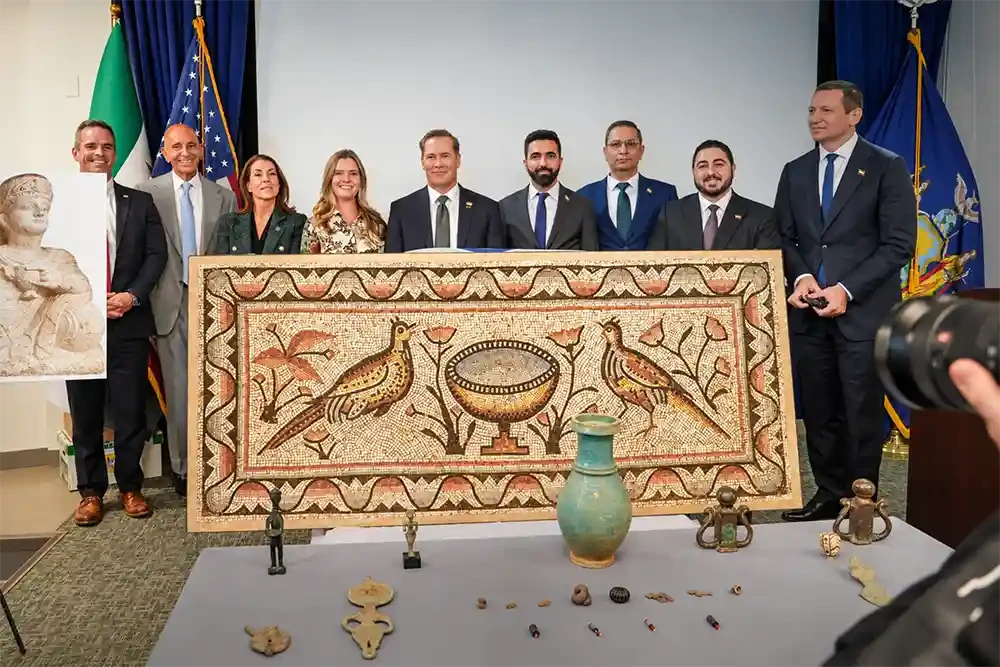
US Returns 36 Ancient Syrian Artifacts Worth More Than $5 Million
The United States has returned 36 ancient Syrian artifacts valued at more than $5 million, marking a significant development in efforts to recover cultural objects removed from their countries of origin through illicit trafficking. The collection includes a monumental stone relief from the ancient city of Palmyra, 14 Roman mosaics and other archaeological objects linked to Syria's rich historical legacy.
The repatriation, announced on September 23, 2026, represents more than the return of valuable antiquities. It brings historically significant objects closer to the communities and landscapes from which they originated, at a time when Syria's archaeological sites and cultural institutions have endured years of conflict and destruction.
Palmyra Stone Relief Among the Returned Treasures
One of the most notable objects is a limestone funerary relief from Palmyra, dating to the late second century CE. The sculpture depicts a reclining man alongside a woman and three children and weighs more than 1,000 pounds.
Investigators determined that the relief had been removed from a burial chamber and smuggled through Dubai before entering the international art market. Its recovery is especially significant because Palmyra, a UNESCO World Heritage Site, suffered extensive damage during the Syrian conflict, including destruction carried out by the Islamic State group between 2015 and 2017.
The returned collection also contains 14 mosaics taken from a Roman villa in Syria. Another important piece is a third-century BCE mosaic depicting the mythological wedding of Telete and Eros. Made from hundreds of small coloured stone pieces known as tesserae, it illustrates the craftsmanship and artistic traditions of the ancient Mediterranean world.
Together, these objects offer a glimpse into the artistic, religious and social life of communities that flourished in the region thousands of years ago.
Metropolitan Museum of Art Linked to 13 Seized Antiquities
Thirteen of the 36 returned Syrian antiquities were seized from the Metropolitan Museum of Art in New York as part of investigations into the origins and ownership histories of objects in major collections.
The seizures form part of wider efforts by US law enforcement agencies to investigate the movement of potentially looted cultural property through dealers, private collectors and museums. Four additional objects in the latest return came from the collection of American collector Michael Steinhardt. His 2021 agreement with authorities resulted in the recovery of approximately 180 antiquities valued at around $70 million and included a lifetime ban on acquiring antiquities.
Investigators have also linked 31 antiquities in the latest repatriation to objects allegedly trafficked into New York by Lebanese antiquities dealer Georges Lotfi, who has been the subject of an arrest warrant and an Interpol Red Notice. The allegations remain subject to legal process.
The case highlights a persistent challenge in the global art market: establishing whether ancient objects were excavated legally, exported with proper permission and transferred through legitimate ownership channels.
Why the Return of Cultural Artifacts Matters
The illegal antiquities trade can deprive countries of archaeological objects while also destroying valuable information about where and how those objects were discovered. When artifacts are removed from their original settings without proper documentation, researchers may lose essential evidence about ancient burial practices, settlement patterns and cultural exchange.
Returning such objects can help countries preserve their heritage, strengthen museum collections and reconnect historical objects with their places of origin. For Syria, where war has placed many archaeological sites at risk, recovering cultural treasures carries particular historical and symbolic importance.