
Japan's MMX Mission: Historic Journey to Mars' Moon to Bring Samples Back to Earth

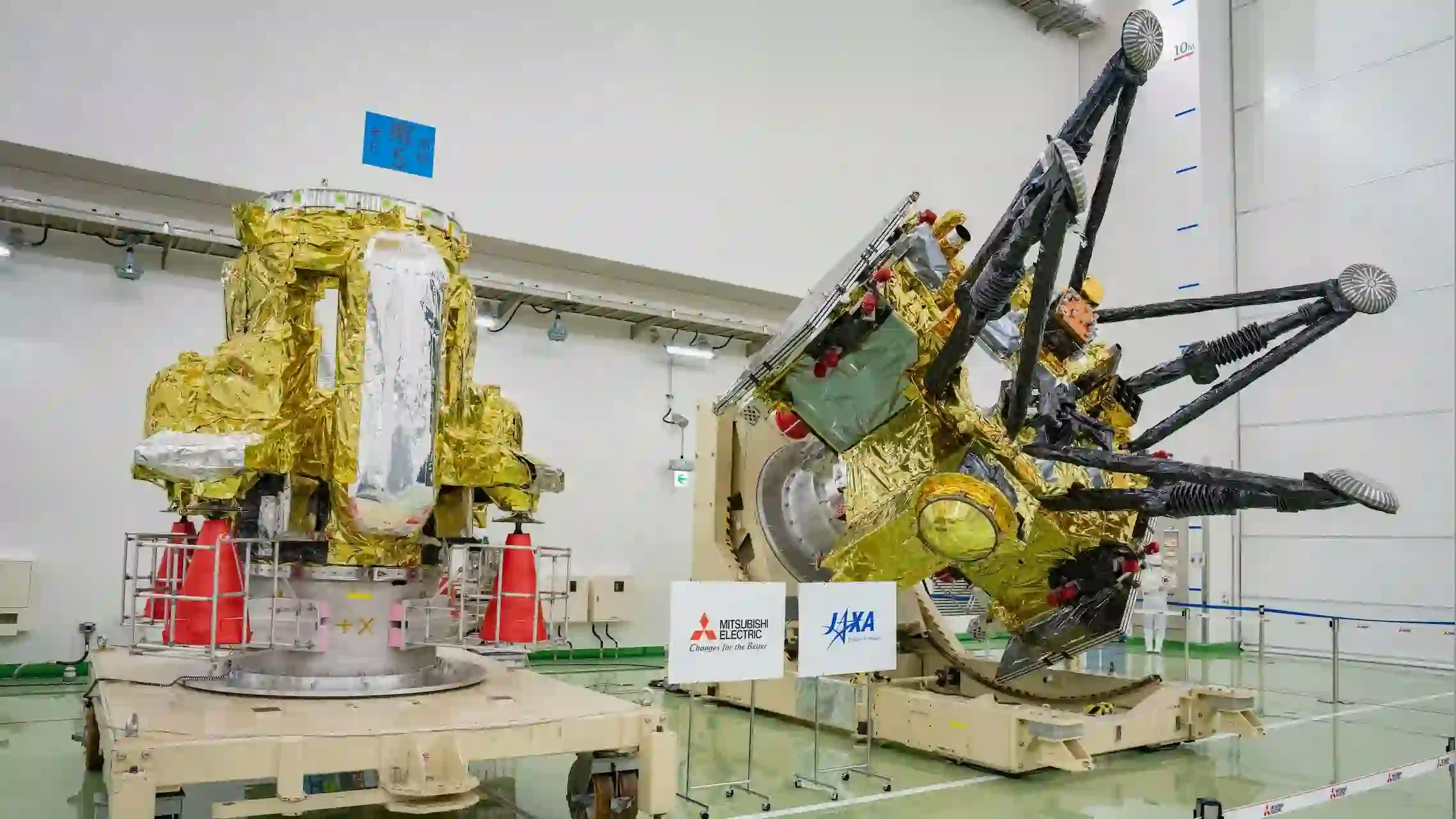
Japan's MMX Mission: Historic Journey to Mars' Moon to Bring Samples Back to Earth
Japan is preparing to make space exploration history with its Martian Moons eXploration (MMX) mission, an ambitious project designed to collect material from one of Mars' moons and bring it back to Earth for scientific analysis.
The spacecraft is scheduled to launch aboard Japan's H3 rocket from Tanegashima Space Center on October 20, 2026. Led by the Japan Aerospace Exploration Agency (JAXA), the mission aims to collect at least 10 grams of surface material from Phobos, the larger of Mars' two moons, and return it to Earth in 2031.
The five-year mission could help scientists answer fundamental questions about the origins of Mars' moons, the early Solar System and the conditions that may have supported the development of life.
Unlike missions that send spacecraft to Mars but leave them there, MMX is designed to complete a journey to the Martian system and return physical samples to Earth.
What Is Japan's MMX Mission?
The Martian Moons eXploration mission is a robotic space expedition developed to study Phobos and Deimos, the two small moons orbiting Mars.
After launch, the spacecraft is expected to take approximately one year to reach the Martian system. It will then spend several years studying the moons, with detailed observations and sample collection focused on Phobos.
The spacecraft will carry scientific instruments to examine the moon's surface, composition and geological characteristics. A small exploration rover, named IDEFIX, will also help investigate Phobos' terrain and conditions.
JAXA plans to collect at least 10 grams of material during two planned surface-contact operations. The samples will be sealed inside a return capsule designed to separate from the spacecraft and re-enter Earth's atmosphere.
The capsule is expected to land in Australia's Woomera region in 2031, where scientists will recover the material for laboratory analysis.
Why Is Phobos Important to Scientists?
One of the biggest mysteries in planetary science is how Mars' moons formed.
Scientists have two leading explanations. Phobos and Deimos may be asteroids captured by Mars' gravity, or they may have formed from debris produced by a major collision involving Mars and another celestial body.
Studying material collected directly from Phobos could help researchers determine which explanation better fits the evidence.
If Phobos is a captured asteroid, its composition could reveal information about the primitive objects that travelled through the early Solar System. If it formed from a collision, its samples might contain material originating from Mars itself.
Such findings could provide clues about the geological evolution of Mars and the distribution of water and other ingredients associated with habitability in the early Solar System.
However, the mission is not a direct search for living organisms. Its primary objective is to investigate the moons' origins and evolution while improving scientists' understanding of the Martian environment.
How Will Japan Bring Samples Back to Earth?
Returning material from a distant celestial body is one of the most technically demanding parts of space exploration.
The MMX spacecraft must travel to Mars, navigate the gravitational environment around Phobos, conduct close observations, collect samples and preserve them for the journey home.
Phobos has extremely weak gravity, which makes landing and operating near its surface very different from landing on Earth or Earth's Moon. Its surface conditions also remain insufficiently understood, requiring careful site selection and detailed observations.
Following its scientific operations, the spacecraft is expected to leave the Martian system around 2030 and begin its journey back to Earth.
A dedicated return capsule will carry the collected material through Earth's atmosphere. Once recovered, researchers will analyse the samples using laboratory techniques capable of identifying minerals, chemical compounds and traces of the processes that shaped the moon.
The mission builds on Japan's experience with earlier asteroid sample-return projects, including Hayabusa and Hayabusa2.
International Collaboration and Future Mars Exploration
Although JAXA leads the MMX mission, the project involves international cooperation, including contributions from NASA and European space agencies.
The scientific findings could complement existing Mars exploration missions and help researchers better understand the planet's history. The mission will also observe Deimos during part of its journey, expanding knowledge of both Martian moons.
Beyond its scientific objectives, MMX will test technologies needed for future deep-space missions. Navigating the Martian system, operating near a small moon and returning samples could provide valuable experience for more complex expeditions.
The mission may also help scientists and engineers understand some of the challenges associated with future crewed missions to Mars. However, it will not resolve every challenge involved in landing humans on Mars or returning them safely to Earth.
What Happens Next?
The immediate milestone is the planned launch from Tanegashima Space Center on October 20, 2026. If the launch proceeds as scheduled, the spacecraft will begin its long journey towards Mars, with arrival expected approximately one year later.
The mission's success will depend on a series of demanding operations, including spacecraft navigation, observations of Phobos, surface contact, sample collection and the safe return of the capsule.
If successful, Japan's MMX mission will deliver the first samples collected from a moon of Mars to Earth, opening a new chapter in planetary science.
The material could help resolve a long-standing mystery about the origins of Mars' moons while offering a closer look at the ancient building blocks of the Solar System. For scientists, the most significant discoveries may begin only after the samples arrive in laboratories on Earth in 2031.
The launch and return dates are planned milestones and may change depending on mission conditions and operational requirements.