
Flydubai Hijack Attempt: Security Failures Emerge as Omani Co-Pilot Was Reportedly Cleared to Fly to Israel

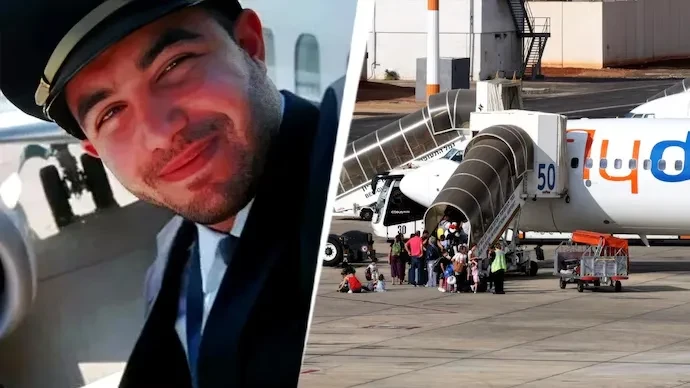
Flydubai Flight FZ1073 Turns Into Mid-Air Emergency
A routine Flydubai flight from Dubai to Tel Aviv became a near-disaster on September 30 when the co-pilot allegedly attacked the aircraft's captain inside the cockpit.
The Boeing 737 MAX 8, carrying more than 170 people, experienced a dramatic descent after the confrontation. According to Reuters, the aircraft plunged about 16,000 feet in roughly 30 seconds before control was restored.
The UAE Attorney General has described the incident as a terrorist attack, saying the co-pilot attempted to take control of the aircraft.
The Indian captain, Smit Machchhar, was seriously injured but managed to open the cockpit door. Passengers and crew then intervened and subdued the attacker, allowing reserve pilots aboard the aircraft to regain control.
The aircraft was diverted to Tabuk, Saudi Arabia, where it made an emergency landing. All passengers survived.
Co-Pilot Had Previously Been Barred From Flying
The investigation has now shifted toward a critical question: How did the alleged attacker pass through multiple layers of aviation security and become a commercial airline co-pilot?
The Wall Street Journal reported that the co-pilot, identified by multiple reports as Hamam al-Hammami, had previously worked with Oman's national airline.
People familiar with the case told the newspaper that Oman had concerns about his online activity and alleged extremist views. He was reportedly removed from flying duties and placed in an administrative role following a deradicalisation process.
Despite that history, al-Hammami was later hired by Flydubai. The WSJ reported that the airline conducted a criminal-background check but did not contact Oman to verify his previous employment history.
The case has therefore raised questions about international pilot background checks, intelligence sharing and aviation security coordination.
Why Was He Allowed to Fly to Israel?
The security questions become more significant because the destination was Israel.
Israel has security arrangements concerning pilots and crews from countries with which it does not maintain diplomatic relations. Oman and Israel do not have formal diplomatic relations.
Yet al-Hammami was able to serve as co-pilot on a flight carrying passengers to Tel Aviv.
According to regional officials cited by AP, the United Arab Emirates had shared the flight's passenger and crew information with Israeli authorities before departure, including nationalities. That has raised further questions about whether the information was properly reviewed and why the Omani co-pilot was not flagged.
Israeli authorities have since ordered tighter security checks for pilots flying into the country. The government said authorities would increase scrutiny of both Israeli and foreign airlines operating flights to Israel.
Was It a Lone-Wolf Attack?
Another major question is whether the co-pilot acted independently or was part of a wider terrorist network.
Early Israeli investigative assessments reportedly indicate that al-Hammami likely acted alone. CBS reported that investigators had not found evidence at that stage of a broader organization behind the incident.
The Times of India similarly reported that the Israeli probe had so far found no evidence connecting the incident to a wider terrorist organization or conspiracy.
However, the investigation remains in its early stages. Officials have not ruled out other possibilities, and investigators in the UAE, Israel, Saudi Arabia and other countries are examining the suspect's background, motives and possible contacts.
The distinction is important: the UAE has classified the incident as a terrorist attack, but that does not establish that a terrorist organization directed the alleged attacker.
Major Aviation Security Failures Under Scrutiny
The incident has exposed what could become a broader international aviation security debate.
Investigators and security experts are examining several points where the system may have failed:
- Previous concerns about the co-pilot reportedly remained within Oman.
- Flydubai reportedly did not contact Oman when assessing his background.
- The co-pilot was assigned to a sensitive international route.
- Israel reportedly received passenger and crew information before the flight.
- Questions remain over how the relevant intelligence was assessed.
- Authorities are examining whether international aviation databases and security protocols were adequately used.
The Wall Street Journal described the case as involving multiple security and intelligence failures across Oman, the UAE and Israel, although investigations are still underway and responsibility for individual failures remains contested.
Captain Smit Machchhar and Passenger Intervention
The survival of everyone aboard the aircraft depended heavily on the response of the captain, crew and passengers.
Despite being attacked and seriously injured, Captain Machchhar managed to unlock the cockpit door. This gave others access to the cockpit and allowed them to restrain the co-pilot.
The aircraft's rapid descent was eventually stopped, and reserve pilots took over the controls before the emergency landing in Saudi Arabia.
The incident has since drawn international attention to the risks posed by insider threats in commercial aviation, where an individual with legitimate cockpit access can potentially bypass many conventional airport security measures.
What Happens Next?
The UAE is leading the investigation, with authorities in Israel, Saudi Arabia and other countries examining different aspects of the case.
Flydubai has also suspended its flights to Israel amid the investigation, while Israel has announced additional scrutiny of pilots operating international flights into the country.
The central questions now concern the co-pilot's motive, his previous history, the extent of his alleged radicalisation and whether anyone else was involved.
For the global aviation industry, the case could also trigger renewed examination of pilot vetting, intelligence sharing and security checks for foreign airline crews.
The Flydubai incident ultimately highlights a difficult security challenge: protecting commercial aircraft does not depend only on screening passengers and luggage. It also requires governments, airlines and intelligence agencies to identify potential insider threats before those individuals reach the cockpit.