•
•
•
•
•
•
•

Sixteen launches in a year, rising DMZ tensions and the regional response
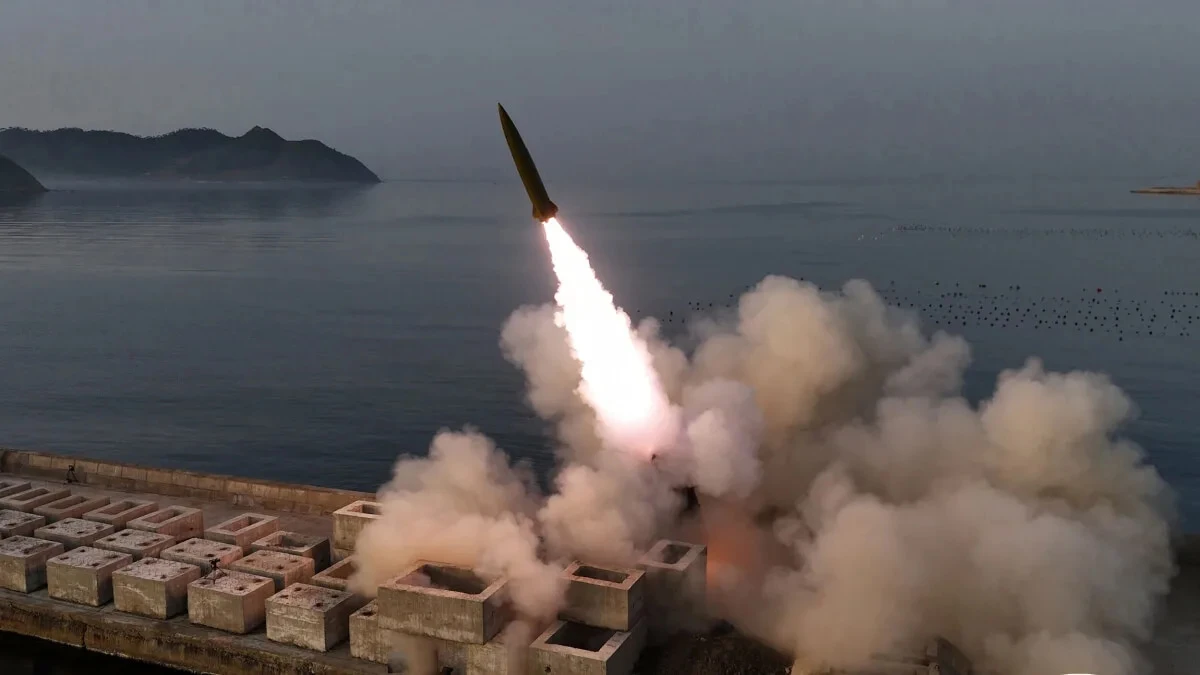
North Korea has stepped up its missile testing in 2026. On 3 October, it fired a ballistic missile from the Wonsan area of Gangwon Province at around 6:30 a.m. The missile flew more than 700 km before falling into the sea. It was Pyongyang's 16th launch of the year, according to South Korea's Joint Chiefs of Staff as reported by The Pioneer. On 12 October, North Korea fired multiple ballistic missiles toward the East Sea (Sea of Japan), and South Korea's presidential office convened an emergency national security briefing, according to SBS News.
| Date (2026) | Event |
|---|---|
| 20 September | Ballistic missile launch |
| 3 October | Missile from Wonsan area, 700+ km flight; 16th launch of 2026 |
| 12 October | Multiple ballistic missiles fired toward the East Sea |
The 3 October launch came shortly after a landmine blast in the Demilitarised Zone (DMZ) injured South Korean soldiers. Seoul's presidential office cited it when convening an emergency security review with the Defence Ministry and the Joint Chiefs of Staff.
South Korea condemned the launches as a violation of UN Security Council resolutions and called them "a grave act that is entirely unhelpful for managing the current situation". It urged Pyongyang to stop immediately.
The United States and South Korea say they are maintaining a combined defence posture, monitoring closely and sharing information. Japan is coordinating with both.
Analysts usually point to several motives:
A series of UN Security Council resolutions since 2006 bans North Korea from launching ballistic missiles and developing nuclear weapons. In practice, new sanctions are hard to pass because China and Russia have blocked further measures in recent years. Russia and North Korea have also deepened military ties since 2023.
The 3 October launch was reported as its 16th launch event of 2026, with further launches on 12 October.
They fell into the East Sea (Sea of Japan), outside Japan's territory based on available reports.
To develop weapons technology, strengthen deterrence and send political messages, particularly to the US and South Korea.
They violate UN Security Council resolutions banning North Korea's ballistic missile activity.
North Korea's frequent launches, together with incidents at the DMZ, have made the Korean Peninsula one of the world's most tense regions in 2026. With international attention focused elsewhere and the UN Security Council divided, the risk of escalation or miscalculation remains high.
