•
•
•
•
•
•
•

A guide to the 3 November elections, the battleground states and the issues driving voters
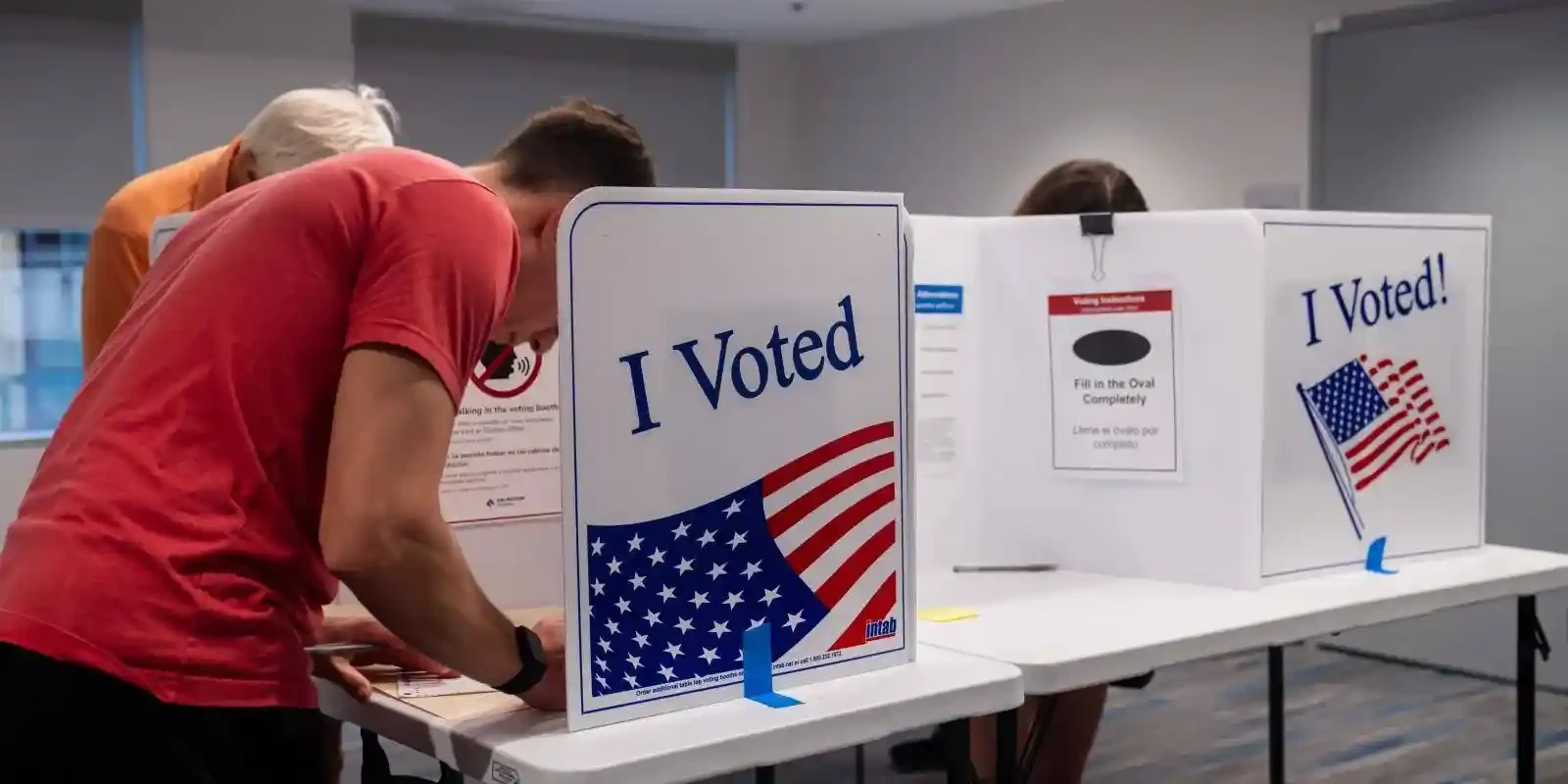
The US midterm elections take place on Tuesday, 3 November 2026. Voters will elect all 435 members of the House of Representatives and 35 of the 100 Senate seats, plus many governors and state officials. Republicans currently control both chambers. They hold 53 Senate seats to 47 (including two independents who caucus with Democrats) and have a narrow House majority. To take control, Democrats need a net gain of four Senate seats and about six House seats, according to Fox Television Stations' election guide.
Midterms come halfway through a president's four-year term and are often seen as a referendum on the White House. Control of Congress determines:
Historically, the president's party usually loses seats in midterm elections.
| Chamber | Republicans | Democrats | Seats up in 2026 | Democrats need |
|---|---|---|---|---|
| Senate | 53 | 47 (incl. 2 independents) | 35 | Net +4 |
| House | 218 | 212 (plus 1 independent, 4 vacancies) | 435 | Net +6 (approx.) |
Former Governor Roy Cooper (D) faces Michael Whatley (R) for the seat Senator Thom Tillis is leaving. It is one of Democrats' best pickup chances.
Senator Susan Collins (R) faces Troy Jackson (D). Democrats see Maine as their best opportunity to flip a seat.
Senator Jon Ossoff (D), the only Democratic incumbent running in a state Trump won in 2024, faces Representative Mike Collins (R), who has Trump's endorsement.
Abdul El-Sayed (D) faces Mike Rogers (R) for the seat of retiring Senator Gary Peters.
State Representative James Talarico (D) faces Attorney General Ken Paxton (R).
Former Senator Sherrod Brown (D) faces Senator Jon Husted (R).
Josh Turek (D) faces Representative Ashley Hinson (R) in a seat Democrats hope to flip.
Senator Dan Sullivan (R) faces former Representative Mary Peltola (D). Sullivan is favoured, but Peltola is seen as a strong challenger.
Results in close races, especially those with many mail ballots, can take days to finalise.
Tuesday, 3 November 2026.
35 of the 100 seats.
A net gain of four seats, which would give them a majority.
It depends on the state. Fox reported that 36 states request or require some form of voter ID at the polls.
With narrow Republican majorities and several competitive Senate races, the 2026 midterms could reshape the second half of President Trump's term. Inflation, energy costs and health care are likely to decide many races, with effects well beyond the United States.
