
PHP Security Update 2026: Two Critical Vulnerabilities Rated 9.2

PHP Security Alert: Two Critical Flaws Put Websites at Risk as Emergency Patches Approach
Website administrators, developers and cybersecurity teams are preparing for an urgent PHP security update after the PHP development team announced two critical vulnerabilities that could put a wide range of online services at risk.
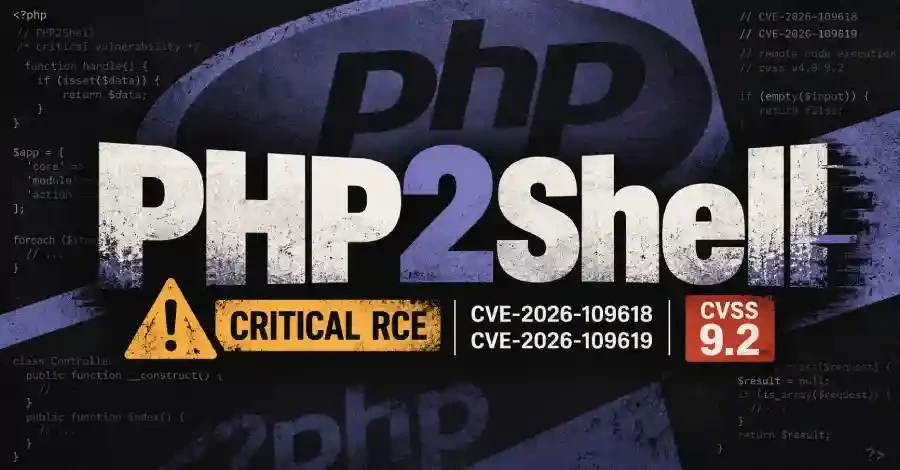
Both flaws have received a CVSS v4.0 severity score of 9.2 out of 10, placing them in the “Critical” category. The PHP security team scheduled the release for October 21 at 14:00 UTC, equivalent to 11 p.m. Japan Standard Time. At the time of the announcement, the team was urging users to prepare to install the fixes as soon as they became available.
The alert is significant because PHP powers a substantial portion of the internet, including content management systems, business websites, online stores and web applications. A vulnerability in the underlying programming language can affect more than a single website or software product, particularly when systems are exposed directly to the internet.
Two Critical PHP Vulnerabilities Raise Cybersecurity Concerns
The upcoming security release is intended to address two serious flaws in PHP. The vulnerabilities have been associated in external security advisories with the identifiers CVE-2026-109618 and CVE-2026-109619.
According to the European Union’s cybersecurity advisory, the vulnerabilities could potentially allow remote code execution (RCE). This type of weakness can enable an attacker to execute malicious commands on a vulnerable system over a network. Depending on the flaw and the server’s configuration, a successful attack could lead to unauthorised access, website defacement, data theft or a broader compromise of the affected environment.
However, detailed technical information, confirmed affected versions and the definitive fixes were still pending formal publication in the initial advisory. The potential impact should therefore be taken seriously without assuming that every PHP installation is equally exposed or that widespread exploitation has been confirmed.
Why the PHP Security Alert Matters Worldwide
PHP is a server-side programming language used to build dynamic websites and web applications. It processes requests, interacts with databases and generates content that visitors see in their browsers.
The language underpins widely used platforms such as WordPress, Drupal, Joomla and Magento, as well as custom-built websites, e-commerce services and internal business systems. Industry usage data cited in the security coverage indicates that PHP is used by roughly seven in ten websites whose server-side programming language is identifiable.
This broad adoption increases the potential reach of a serious vulnerability. A weakness in PHP may affect a website even if its owner does not directly manage the underlying code, particularly when the site runs on a hosting platform or software package maintained by another provider.
Organisations should therefore consider more than their main public-facing website. Legacy applications, staging environments, hosting control panels and third-party products may also rely on PHP. \<Cite refs={["turn579159view1","turn579159search1","turn744217news8"]}/>
CVSS 9.2 Explained: What Does the Critical Rating Mean?
The Common Vulnerability Scoring System, or CVSS, provides a standardised way to assess the severity of software security weaknesses.
A score of 9.2 under CVSS version 4.0 indicates a critical-level vulnerability that deserves urgent attention. The score helps security teams prioritise remediation, but it does not independently establish whether a particular system is exploitable or whether an attack has already occurred.
Remote code execution is especially concerning because it can allow an attacker to move beyond simply viewing a webpage or submitting a form. If a vulnerable service can be exploited, malicious code may run with the permissions available to that service, potentially exposing application files, credentials or connected resources.
The actual consequences depend on the vulnerability’s technical requirements, the PHP version in use, server permissions, network exposure and additional security controls.
Which PHP Versions Could Be Affected?
The initial warning did not provide a definitive, officially confirmed list of affected versions. The European Union cybersecurity advisory cited external information indicating that PHP 5 and later versions could be affected, but the precise scope was awaiting confirmation from the PHP project.
This uncertainty makes it important for administrators to identify where PHP is running rather than assume that a particular version is safe.
Organisations should review their server inventories, hosting dashboards, application dependencies and vendor documentation. They should also check whether PHP is embedded in third-party products or infrastructure components, where its presence may not be immediately obvious.
Administrators using managed hosting should contact their provider or monitor its security announcements to establish when the relevant fix will be deployed.
What Website Owners and Developers Should Do Now
Cybersecurity authorities are urging organisations to prepare for rapid remediation once the official patches are published.
Recommended steps include:
- Inventory PHP systems: Identify websites, applications, servers and services that use PHP, including older or infrequently maintained projects.
- Prepare to patch immediately: Monitor official PHP security announcements and apply the appropriate supported update as soon as it becomes available.
- Back up critical data: Ensure recent, recoverable backups of website files, databases and essential configurations are available before making production changes.
- Coordinate with hosting providers: Confirm who is responsible for updating the PHP runtime and whether managed services require action from the customer.
- Review security monitoring: Watch for suspicious activity, unexpected file changes, unusual server processes and abnormal application behaviour.
- Reduce exposure if necessary: If a system is believed to be vulnerable and cannot be patched promptly, consider temporarily restricting public access or isolating it from external networks, following a risk assessment.
The European cybersecurity advisory specifically recommends preparing systems for immediate patching and considering isolation of internet-facing applications if remediation cannot be completed in time. Such measures should be planned carefully to protect essential services and avoid unnecessary disruption.
Is There Evidence of Active Exploitation?
At the time of the initial official warnings, cybersecurity authorities had not confirmed active exploitation of the two vulnerabilities. Reports about possible attack techniques and the potential for remote code execution had nevertheless increased concern about the risks.
The distinction is important: a critical vulnerability can demand urgent action before widespread attacks are confirmed. Once technical details or working exploit code become publicly available, attackers may be able to develop or adapt attacks quickly.
The PHP security team also reserved the option to release the update earlier than planned if details became public or evidence of active exploitation emerged. Administrators should therefore avoid treating the announced release time as a reason to delay preparation.
Organisations should continue monitoring official advisories for changes to the release schedule, affected versions and recommended mitigation measures.
What Happens Next?
The immediate priority is the publication of the official PHP security release and confirmation of the affected versions and fixed releases. Developers and system administrators should verify their installed versions against the final advisory, test updates where operationally necessary and deploy fixes without avoidable delay.
For businesses, the incident is also a reminder that website security depends on maintaining the software beneath the visible application. Regular patch management, accurate asset inventories, reliable backups and effective monitoring are essential for reducing the impact of newly disclosed vulnerabilities.
Two critical PHP vulnerabilities, each rated CVSS 9.2, have triggered an emergency security response. Because PHP supports a large ecosystem of websites and applications, administrators should identify PHP-based systems now, monitor official updates and prepare to install the appropriate patches as soon as they are released. The initial warning did not confirm widespread exploitation, but the potential severity makes prompt preparation essential.