
Elon Musk vs Mukesh Ambani: Why Musk's X Posts on Starlink Have Sparked a Row in India

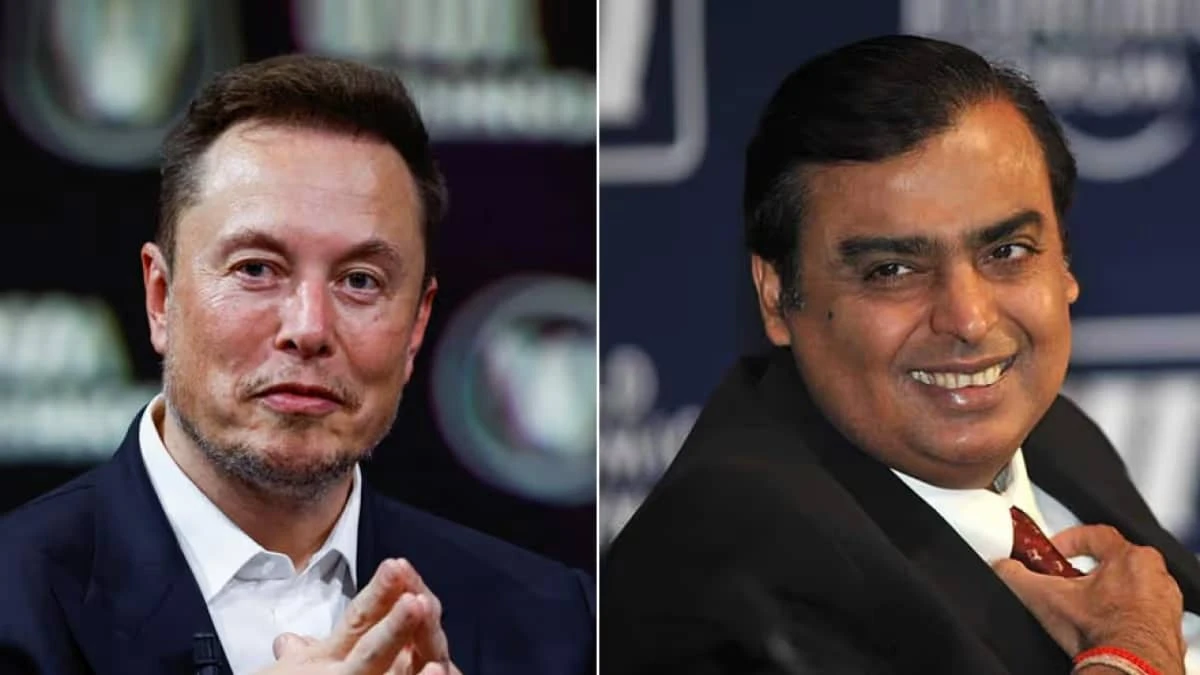
Elon Musk vs Mukesh Ambani: Why Musk's X Posts on Starlink Have Sparked a Row in India
New Delhi | 10 October 2026
Elon Musk has turned the long delay in Starlink's Indian launch into a public fight. Across three days of posts on X this week, the SpaceX chief accused unnamed "oligarchs" of blocking his satellite internet service, then pointedly named Reliance chairman Mukesh Ambani. India's government has rejected the allegation, saying the delay comes from unfinished spectrum pricing and security clearances that apply equally to every operator.
What Musk Posted, Day by Day
Wednesday, 7 October — "A crime against the people of India"
Musk reshared a post arguing India needs Starlink — it cited official data showing more than 11,000 villages still without 4G coverage and rural internet density far below urban levels. He added that Starlink was being blocked by "certain oligarchs" protecting a "monopolistic chokehold," calling it a crime against Indians. He named no one, saying only that readers could guess who they were.
Thursday, 8 October — "Is Ambani the real boss of India?"
After the government dismissed his claim, Musk said Starlink is licensed in over 165 countries and has spent five years meeting every Indian requirement, then asked directly whether Ambani is "the real boss of India."
The post drew a reply from Leader of Opposition Rahul Gandhi, who wrote "Welcome to India, Elon. Wait till you discover the other guy." Musk responded that the situation was "indeed troubling," turning the business dispute into a political talking point.
Friday, 9 October — "Dear Prime Minister Ambani"
Musk escalated with a sarcastic open letter addressed to "Prime Minister Ambani," apologising for not realising he was India's "real boss" and asking whether he would allow Starlink to compete. He argued that areas without internet deny children education and small businesses access to global markets, and in follow-up posts said Starlink has proved its value during natural disasters.
How the Government Responded
The Ministry of Communications called any suggestion that India's framework is unfair or discriminatory "baseless and misconceived."
Communications Minister Jyotiraditya Scindia said on Friday that three companies already hold satellite communication (satcom) licences:
| Company | Status |
|---|---|
| Starlink (SpaceX) | Licensed, awaiting launch clearances |
| Jio Satellite Communications (Reliance) | Licensed, awaiting launch clearances |
| Eutelsat OneWeb (Bharti-backed) | Licensed, awaiting launch clearances |
| Amazon Leo (formerly Kuiper) | Still in the licensing process |
According to the minister, none of them can start commercial service until two things happen:
- The telecom regulator (TRAI) and the Department of Telecommunications (DoT) finalise satellite spectrum pricing — Scindia said a decision is close.
- The Home Ministry signs off on each company's security compliance.
Bharti Airtel chairman Sunil Mittal has separately said OneWeb is also still waiting on approvals — a point that undercuts the idea that only Starlink is being held back. Reliance, Airtel and SpaceX have not issued formal responses to Musk's posts, according to Bloomberg.
Background: A Five-Year Road
- 2021: DoT ordered Starlink to stop taking pre-bookings in India because it held no licence; customers were refunded.
- Late 2024: Ambani argued that satellite spectrum should be auctioned; Musk opposed this. India chose administrative allocation, a win for Starlink.
- March 2025: Starlink signed deals with both Jio and Airtel to distribute its equipment in India.
- June 2025: Starlink received its telecom operator licence after a roughly three-year wait.
- July 2026: Space regulator IN-SPACe granted an approval industry executives described as the last major one needed.
- Since then: The hold-up has centred on security, particularly concerns that foreign operators could route traffic outside Indian gateways.
The Jio partnership has also become a rivalry. Reliance is reportedly weighing its own constellation of roughly 1,600 satellites and plans to lease capacity from global providers in the meantime.
Why It Matters
- For rural India: Satellite broadband could reach villages where laying fibre or building towers is uneconomical. Every month of delay postpones that.
- For competition: Jio and Airtel together control more than 80% of India's telecom market, which is why Musk's monopoly framing has resonated with some users.
- For national security: India wants control over where satellite data lands and how it can be monitored — a concern raised repeatedly by officials and analysts.
- For India–US ties: The spat comes as bilateral trade talks have reportedly stalled, adding another irritant to the relationship, as Bloomberg noted.
What Happens Next
The immediate trigger to watch is the spectrum pricing decision from TRAI and DoT, followed by Home Ministry security clearances. If both arrive, Starlink, Jio and OneWeb could launch around the same time — testing whether the delay was procedural, as the government says, or something more, as Musk alleges. Musk has given no sign of toning down his posts, so further exchanges are likely.
Frequently Asked Questions
Is Starlink licensed in India?
Yes. Starlink received its operator licence in 2025, but it cannot begin commercial service until spectrum pricing and security clearances are finalised.
What exactly did Elon Musk say about Mukesh Ambani?
He first blamed unnamed "oligarchs," then asked whether Ambani is the "real boss of India," and finally addressed him sarcastically as "Prime Minister Ambani" in a post on 9 October.
What did the Indian government say?
The Ministry of Communications called the claims baseless. Minister Jyotiraditya Scindia said all licensed satcom players face the same pending steps.
Has Reliance responded?
As of publication, Reliance has not publicly responded to Musk's posts.
When will Starlink launch in India?
No date is confirmed. The launch depends on the spectrum pricing decision and Home Ministry security approval.
Conclusion
Musk's posts have pulled a slow regulatory process into the public spotlight and drawn in India's richest businessman, the opposition and the government. The facts on record show Starlink is licensed but not cleared — alongside its rivals. Whether this week's pressure speeds things up or hardens positions will become clear once the spectrum and security decisions are announced.
Sources: Teslarati, Forbes, Bloomberg, South China Morning Post, The Hindu, and Elon Musk's posts on X.