
Elon Musk vs Ambani: Starlink India Launch Delayed Amid Licence Row

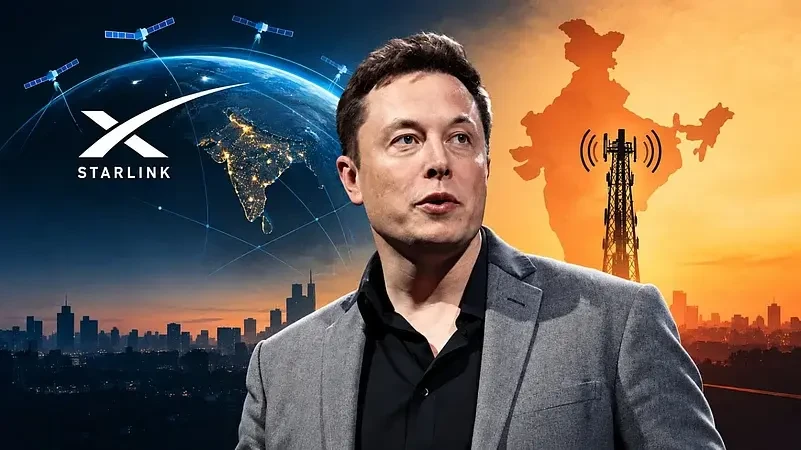
Elon Musk Accuses ‘Oligarchs’ of Blocking Starlink in India
A growing dispute between Elon Musk and India’s telecom sector has brought the delayed launch of Starlink satellite internet into the spotlight. Musk, the CEO of SpaceX, has accused unnamed powerful business interests of obstructing Starlink’s entry into India to protect their market dominance.
In posts on X, Musk questioned why Starlink had not received final clearance despite years of regulatory engagement. He later directly referenced Reliance Industries chairman Mukesh Ambani, asking whether Ambani was the “real boss of India.”
The remarks have intensified debate over competition, telecom regulation and the future of satellite broadband in one of the world’s largest internet markets.
Why Has Starlink Not Launched in India?
Starlink, SpaceX’s satellite internet service, aims to provide broadband connectivity through satellites, including in remote areas where traditional mobile networks and fibre-optic infrastructure are limited.
Although Starlink has secured important regulatory approvals in India, it is still awaiting the remaining security clearances and spectrum allocation required to begin commercial operations.
Musk has argued that the prolonged process is unfair and could prevent underserved communities from accessing reliable internet. He says Starlink has spent five years complying with Indian laws and government requirements.
However, the Ministry of Communications has rejected allegations of discriminatory treatment, stating that all three satellite communication operators—Starlink, Reliance Jio and Bharti-backed Eutelsat OneWeb—are at broadly the same stage of the security assessment process.
Reliance Jio, Airtel and the Satellite Internet Competition
India’s satellite broadband market has attracted major players, including Musk’s Starlink, Reliance Jio and Eutelsat OneWeb, backed by Bharti Enterprises.
Reliance Jio and Airtel already have established telecom networks and are pursuing satellite connectivity opportunities of their own. Starlink, meanwhile, operates a large satellite constellation designed to deliver internet access without relying entirely on conventional ground-based networks.
Musk’s allegations have raised questions about whether established telecom companies could benefit from delays affecting a potential competitor. However, there is no publicly established evidence that Ambani, Airtel or another named company caused the licensing delay. The government maintains that regulatory and security requirements apply to all operators.
What Could Starlink Mean for Indian Internet Users?
If Starlink receives final approval, satellite broadband could expand connectivity in rural villages, remote regions, islands and areas with limited mobile coverage.
Potential benefits include internet access for households, schools, healthcare facilities, businesses and emergency services in locations where building conventional broadband infrastructure is difficult.
However, satellite internet availability, pricing, equipment costs and service quality will influence how widely it is adopted. Starlink has not yet begun full commercial operations in India, so Indian consumers cannot assume that the service is immediately available.
Rahul Gandhi Responds to Musk’s Remark
The dispute has also entered India’s political debate. Congress leader Rahul Gandhi responded to Musk’s comments about Ambani with a pointed post on X, adding another dimension to the controversy.
The exchange has drawn attention to the relationship between major corporations, government regulation and competition in India’s digital economy.
What Happens Next?
Starlink’s India launch now depends on completing the required security assessments and obtaining spectrum allocation. The government says the process is non-discriminatory, while Musk continues to question the delay.
The outcome could shape India’s satellite internet market, increase competition in broadband services and influence connectivity in underserved regions. Until final approvals are granted, however, the dispute remains unresolved.