
Deepinder Goyal’s Temple Wearable: Can You Swim With It and How Does the Brain-Tracking Device Work?

What Is Deepinder Goyal’s Temple Device?
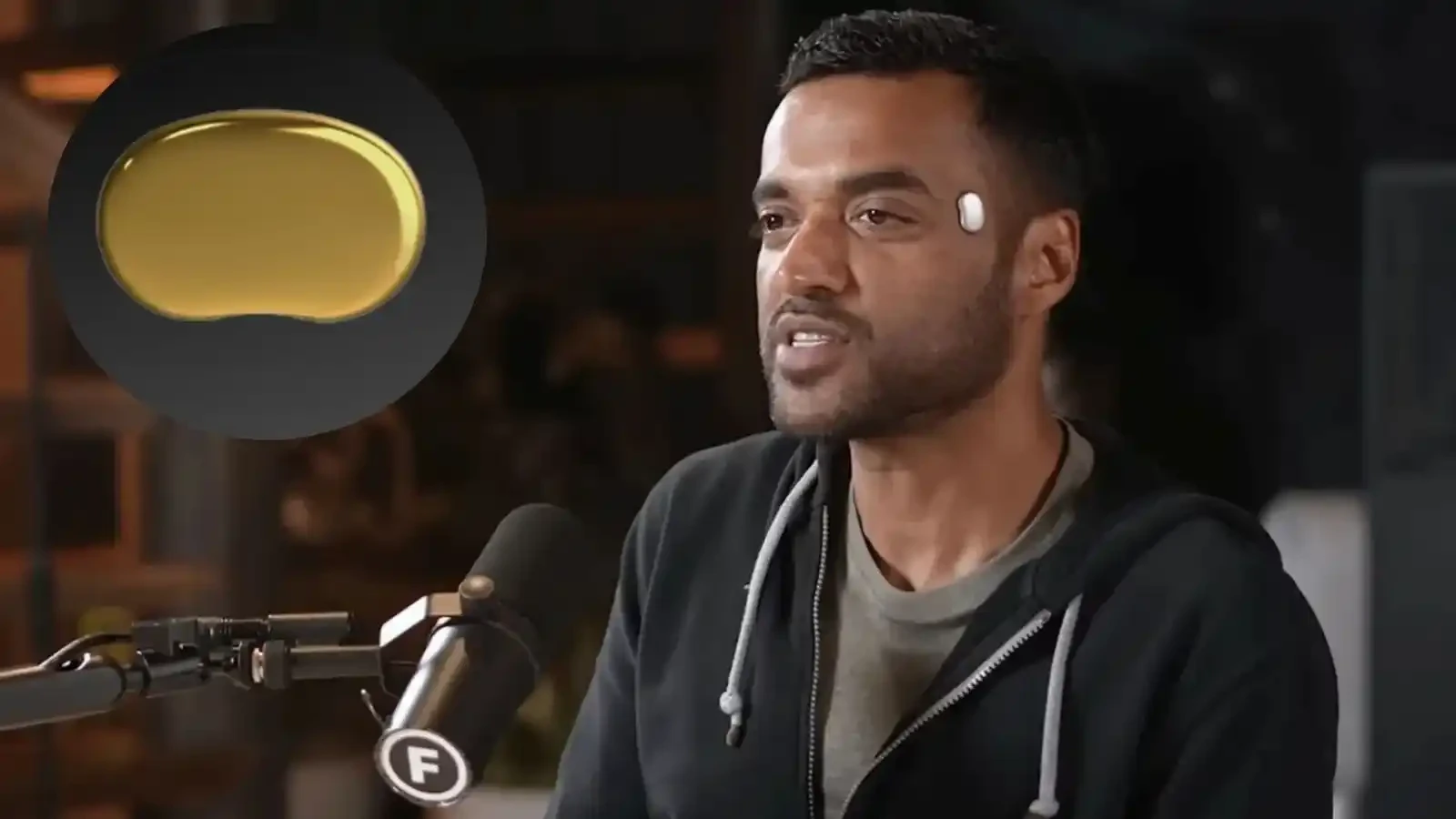
Temple is a small wearable developed by Eternal founder Deepinder Goyal through his research venture, Continue Research.
Unlike conventional fitness trackers worn on the wrist, Temple sits on the side of the head, between the forehead and ear. The company says its technology is designed to continuously monitor changes associated with blood flow in the brain.
The device has generated significant curiosity because it combines wearable technology with research into brain health, ageing, metabolism and cognitive performance.
Goyal has also described a proprietary metric called Entropy, which is intended to represent the body's real-time physiological demand. According to his earlier explanations, the number changes in response to factors including exercise, sleep, stress, caffeine and meditation.
Does Temple Stick to the Skin?
One of the biggest practical questions surrounding the unusual wearable has been how it actually stays attached.
Goyal recently explained that Temple uses specially designed, single-use adhesive “Grips” that function like medical-grade tapes.
According to him, the Grips are included with the device and are designed to keep Temple firmly positioned without making the user constantly aware of the wearable.
Goyal said developing the right adhesive was itself a major part of the product's development. He also claimed that the current Grip design works comfortably for the vast majority of intended users.
Can You Shower or Swim While Wearing Temple?
The answer from Goyal is yes.
He said Temple can remain attached while users run, jump, shower, swim and use a sauna. The only major exception he mentioned was scuba diving, which he attributed to a limitation of the device rather than its adhesive.
Users can also reportedly wash their face, follow skincare routines and even apply makeup while wearing Temple.
However, the Grip itself is not reusable. If users remove the device, they are expected to apply a fresh Grip before wearing it again.
Although some users may keep one Grip on for several days, Goyal recommends replacing it approximately every two to three days.
Six Colours Revealed Ahead of Temple Launch
The upcoming launch edition of Temple is expected to be offered in six colours.
The options are:
- True Gold
- Rose Gold
- Dark Mirror
- Real Jade
- Deep Blue
- Purple Funk
Goyal has indicated that pre-orders could open soon, with people on the early-access waitlist expected to receive priority.
The exact final pricing and launch details have been evolving, although previous reports have placed the device in the premium wearable category.
What Does Temple Actually Measure?
The most important part of Temple is not its small size or unusual appearance but its BrainFlow technology.
According to information shared by Goyal and reports about the device, Temple is designed to detect changes related to cerebral blood flow using a non-invasive sensor positioned near the temple.
Goyal has also shared validation research suggesting that Temple's BrainFlow signal correlates with changes in brain blood volume. A September study compared the system with time-domain near-infrared spectroscopy, a technique capable of distinguishing signals from deeper brain tissue and superficial scalp layers.
The company has positioned the technology as a potential way of continuously studying physiological changes that conventional medical tests cannot capture throughout everyday life.
Temple’s “Entropy” Metric Explained
Another unusual feature is Entropy, the proprietary metric developed by the Temple team.
Goyal describes Entropy as a real-time measurement of the body's physiological demand or the “cost of being alive.”
The score is designed to change depending on what the body is doing. Exercise, stress, sleep, caffeine and meditation can all influence the measurement, according to Goyal.
The concept is particularly ambitious because the company hopes the metric could eventually provide insights into fitness, recovery and ageing.
However, this is where the distinction between experimental technology and established medical science becomes important.
Doctors Raise Questions About Scientific Validation
Temple's claims have attracted significant interest, but they have also faced criticism from medical professionals.
AIIMS-trained neurosurgeon Dr Arun L. Naik has argued that Temple should not be considered a replacement for conventional clinical investigation. He has questioned whether measurements taken near the temple can provide the same information as direct clinical measurements of deeper brain structures.
Other medical experts have similarly questioned the amount of publicly available evidence behind some of Temple's broader health claims.
India Today reported that neurologists have cautioned that early correlations and preliminary research do not automatically establish Entropy as a clinically validated biomarker for metabolism, ageing or health outcomes. Independent replication, peer review and further validation remain important.
This does not necessarily mean the technology has no value. Rather, experts are distinguishing between an interesting research signal and a measurement that has been sufficiently validated for medical diagnosis or treatment decisions.
Temple Is Not a Medical Diagnostic Device
That distinction is particularly important for potential buyers.
Temple may provide users with continuous physiological data, but such data should not automatically be interpreted as evidence of a neurological condition, brain injury or disease.
The technology is still being researched, and Goyal's team has said that additional studies and scientific publications are planned.
For consumers, the safest interpretation is therefore to view Temple as an experimental health and wellness wearable, rather than a replacement for medical testing.
Why Temple Is Creating So Much Buzz
Temple represents an unusual intersection of wearable technology, brain monitoring, longevity research and consumer health tech.
Its tiny form factor and ability to remain attached during everyday activities make it different from traditional health trackers. At the same time, its claims about cerebral blood flow and Entropy are considerably more ambitious than conventional fitness metrics such as heart rate or step counting.
That combination has generated both excitement and scepticism.
The upcoming launch will therefore be closely watched not only by technology enthusiasts but also by researchers interested in non-invasive brain monitoring and wearable health technology.
What Happens Next?
With pre-orders expected soon and six launch colours already revealed, Temple is moving closer to becoming a consumer product rather than simply a research prototype.
The bigger test, however, will be scientific.
If independent studies and peer-reviewed research validate Temple's BrainFlow measurements and its proposed physiological metrics, the device could represent an interesting development in brain-focused wearable technology.
Until then, consumers should separate Goyal's product claims from established clinical evidence.
Temple may be one of the most unusual wearables to enter the market, but its ultimate impact will depend not simply on how small the device is or how well it sticks to the skin — it will depend on whether its ambitious health measurements stand up to independent scientific scrutiny.