
Apple iPhone Duo Demand Surges as $1,999 Foldable Phone Faces Months of Delays

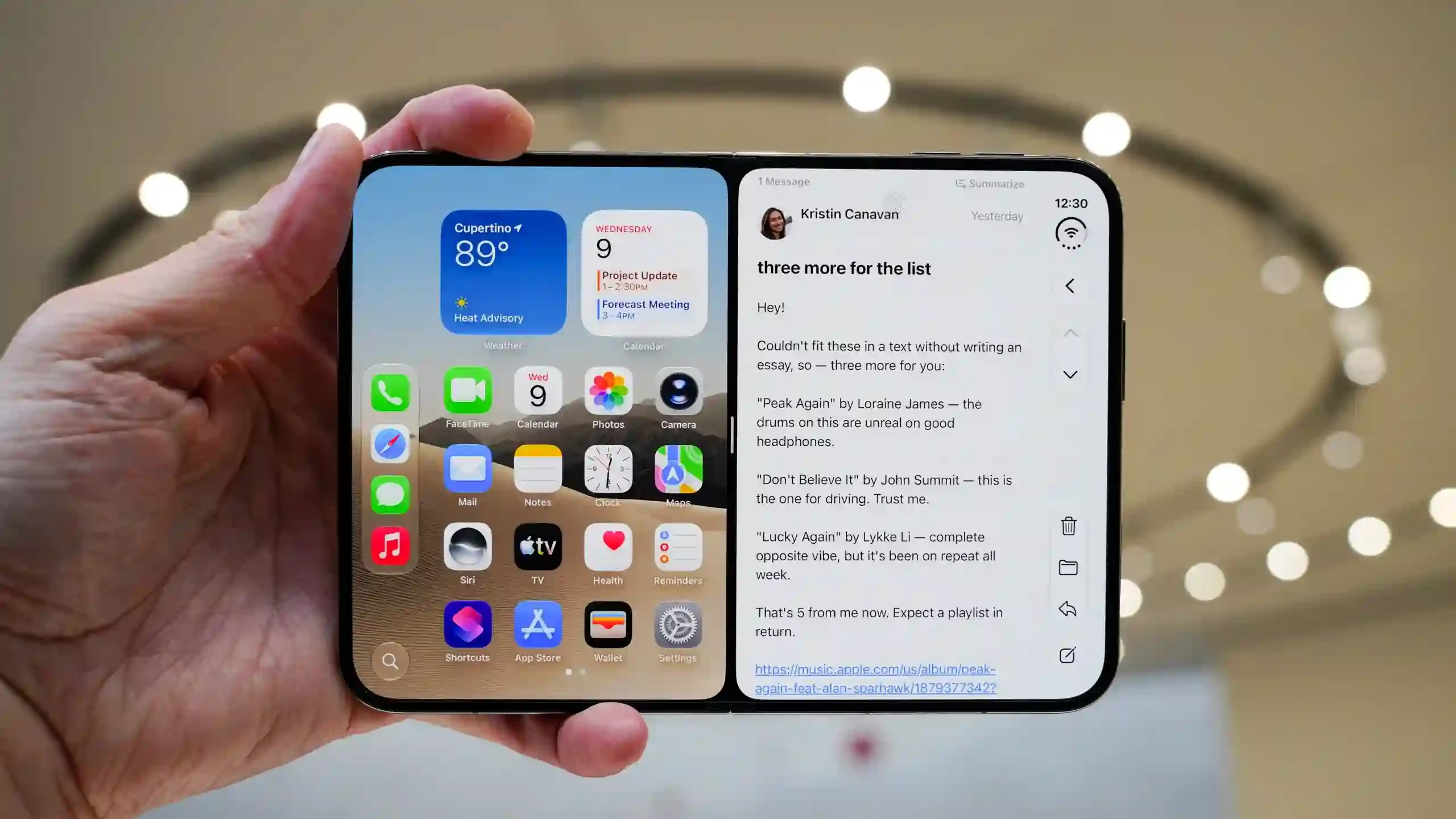
Apple iPhone Duo Pre-Orders Exceed Expectations
Apple’s first foldable smartphone has made a strong debut, with demand for the iPhone Duo quickly outpacing the initial supply available for pre-orders. Within hours of orders opening on October 16, delivery estimates on Apple’s website reportedly moved from the planned October 23 launch date to late January 2027.
The company described pre-order demand as “nothing short of extraordinary” and said it was working to get the new device to customers as quickly as possible.
The delays have drawn attention because Apple is known for its tightly managed global supply chain. Although new iPhone launches can experience temporary shortages, delivery estimates extending several months beyond launch are unusual.
The strong initial response suggests that Apple’s entry into the foldable smartphone market has generated considerable interest, even with a starting price that places the device firmly in the premium segment.
iPhone Duo Price: Why Is Apple’s Foldable Phone So Expensive?
The iPhone Duo starts at $1,999 in the United States and ₹2,99,900 in India for the 256GB model. Higher storage configurations push the price considerably further, with the top-end 2TB version reaching $3,199 in the US and ₹4,49,900 in India.
The premium pricing reflects Apple’s new foldable design and its positioning as a high-end device for customers seeking a larger screen without carrying a conventional tablet.
The phone features a 5.4-inch external display that unfolds into a 7.6-inch internal screen. This design aims to combine the portability of a smartphone with additional space for watching videos, gaming, reading and multitasking.
For Apple, the launch represents more than another annual iPhone upgrade. It introduces a different form factor intended to encourage customers with older devices to consider switching to a newer model.
However, the high price may limit its appeal to enthusiasts, early adopters and buyers willing to pay more for new technology. Sustained demand will depend on whether customers consider the foldable experience worth the premium.
Supply Chain Challenges Add to iPhone Delivery Delays
Strong demand is not the only factor affecting availability. Apple and other consumer electronics manufacturers have also been dealing with component supply constraints, particularly shortages involving memory chips.
These shortages can complicate production planning, limit the number of devices available at launch and make it harder for manufacturers to respond quickly when demand exceeds forecasts.
In the iPhone Duo’s case, the combination of substantial early interest and restricted supply has contributed to longer estimated delivery times. Apple continues to accept orders, but customers placing new orders may have to wait until 2027 in affected markets.
It remains unclear how quickly the company will work through the backlog. Delivery estimates can change as manufacturing output improves, so the current timelines should not necessarily be treated as final delivery dates for every order.
The situation also highlights a challenge for premium smartphone makers: introducing a new design can generate excitement, but production must scale quickly enough to turn that interest into completed sales.
Apple’s Foldable iPhone Could Strengthen Its Premium Strategy
Apple’s iPhone Duo arrives as the company looks for new ways to encourage upgrades and differentiate its smartphones from competing devices.
Traditional smartphones have matured significantly, with yearly releases often bringing incremental improvements in cameras, processors, displays and software. A foldable design offers a more visible change that could give customers a stronger reason to replace older devices.
The company’s latest iPhone 18 Pro models have also reportedly performed well in key markets, including China and India, according to industry research cited by the Financial Times. This suggests Apple is benefiting from interest across both its conventional flagship range and its new foldable category.
At the same time, the global smartphone market has faced broader contraction, making premium devices and customer upgrades particularly important to manufacturers.
The iPhone Duo could help Apple expand its reach among consumers interested in larger displays and mobile productivity. Its success, however, will depend on production capacity, pricing, customer experience and the ability to maintain interest after the initial launch period.
Apple Intelligence and China Add Another Growth Opportunity
Apple is also working to expand its artificial intelligence services in major international markets.
According to the Financial Times, Apple’s Apple Intelligence features, developed in China in collaboration with Alibaba, received regulatory approval in the country. The development could help the company bring its AI features to Chinese customers after a prolonged delay.
China is an important market for Apple, both as a source of consumer demand and as a major centre of competition among smartphone manufacturers.
The availability of AI features, alongside new hardware designs, could become another factor influencing purchasing decisions. However, the impact will depend on the features offered, their regional availability and how customers respond to the experience.
The foldable iPhone and Apple Intelligence represent different parts of the company’s broader strategy: making its hardware more distinctive while expanding the software and services available to users.
What the iPhone Duo Launch Means for Apple
The iPhone Duo’s early pre-order performance offers an encouraging signal for Apple, but it does not yet establish how many units the company will ultimately sell.
Delivery delays indicate that initial demand has exceeded available supply, but they do not reveal total sales, long-term customer satisfaction or profitability. Apple will need to increase availability and demonstrate that the foldable format can attract buyers beyond the first wave of enthusiasts.
For consumers, the immediate question is whether the device’s larger internal display and new design justify its premium price—and whether they are prepared to wait for delivery.
For Apple, the launch is an important test of its ability to introduce a major hardware redesign in a mature smartphone market.
As the October 23 availability date approaches, attention will turn to actual deliveries, production capacity and whether demand remains strong once the initial pre-order rush passes.
The early response suggests that Apple has generated substantial excitement around its first foldable iPhone. The longer-term test will be whether the iPhone Duo can translate that excitement into sustained sales and establish foldable devices as a meaningful part of Apple’s smartphone business.