
Airlines and Airports Demand Fix for Europe's Biometric Border Queues as ETIAS Launch Slips Toward 2027

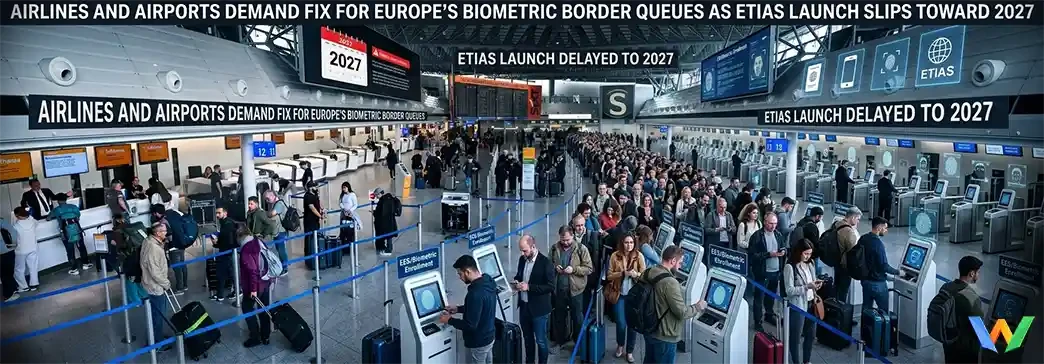
European airlines and airports are calling for a major overhaul of the EU's biometric Entry/Exit System (EES), warning that border queues routinely top two hours and can reach five hours at peak times. The demand comes as the launch of the companion ETIAS travel authorisation, once expected in late 2026, has no official date and looks likely to slip into 2027.
Industry Calls for Six Changes
The EES began its phased rollout on October 12, 2025 and has been fully operational since April 10, 2026. It replaces passport stamping with a digital record of each entry and exit for non-EU visitors to 29 European countries. First-time travellers must have a facial image and four fingerprints taken. Airline and airport groups have now proposed six changes to cut delays, including streamlining biometric checks, expanding pre-enrolment so travellers can register before reaching the border, and preventing duplicate traveller profiles that slow processing.
Most Travellers Report Few Problems
Experience varies. A survey by UK travel association Abta found that 46 per cent of travellers heading to Europe had already used the EES, and most reported minimal disruption. The association said the system has not yet significantly reduced travel demand from the UK. It is nonetheless urging EU authorities to extend temporary contingency measures into 2027, which allow border authorities to ease checks when queues build up.
Separate reports say some EU countries may suspend EES checks at busy crossings until the end of the year, which could ease autumn and Christmas travel.
ETIAS: No Launch Date
ETIAS is a planned online authorisation costing €20 for visa-exempt travellers heading to 30 European countries. As of mid-October 2026, it is not operating, no applications are being accepted and the EU has not confirmed a launch date. Many reports point to 2027 at the earliest. Travel groups say the EES's operational problems have contributed to the delay.
Abta has also warned that more than 150 websites are offering ETIAS services even though no one can currently apply. Travellers are advised to avoid these sites. Anyone who meets all other entry conditions should not be refused entry for lacking an ETIAS, since it is not yet required.
Cruise Passengers Face Longer Boarding
The new rules are also affecting cruise holidays. Royal Caribbean has warned passengers on one-way transatlantic cruises that boarding could take significantly longer because the EES requires face-to-face immigration processing. The cruise line says travellers need to allow extra time and may need one-way flights to Europe for October sailings. It also reminded US-bound guests that approved ESTA authorisations are linked to the specific passport used, so anyone with a new passport must reapply.
Who Is Affected?
The EES applies to non-EU and non-Schengen nationals, including British and American citizens. EU citizens, residence permit holders and long-stay visa holders are exempt, and children under 12 are not fingerprinted. Each traveller using automated self-service kiosks must use their own passport, which matters for school trips and family travel.
What Travellers Should Do
- Allow extra time at airports, ports and land borders, especially at busy hubs.
- Check your passport is valid and in good condition before you travel.
- Use only official websites for any travel authorisation, and ignore sites selling "ETIAS applications."
- Keep documents handy, including proof of onward travel and accommodation, in case a border officer asks.
- Monitor your airline or cruise line for guidance, since procedures vary by location.
What Comes Next
The coming weeks will show whether the EU adopts any of the airline and airport proposals and how authorities handle the Christmas rush. The bigger question is the ETIAS timeline, which determines when travellers will face a second set of pre-travel formalities.
Quick Facts
- System: EU Entry/Exit System (EES), fully operational since April 10, 2026
- Coverage: 29 European countries
- Data collected: facial image and four fingerprints for first-time travellers
- Reported queues: more than two hours routinely, up to five at peak times
- Abta survey: 46 per cent of travellers heading to Europe have used the EES
- ETIAS: €20 authorisation, not running and no confirmed launch date
- Scam warning: more than 150 websites offering ETIAS services