•
•
•
•
•
•
•

How the son of a revolutionary veteran became China's most powerful leader since Mao
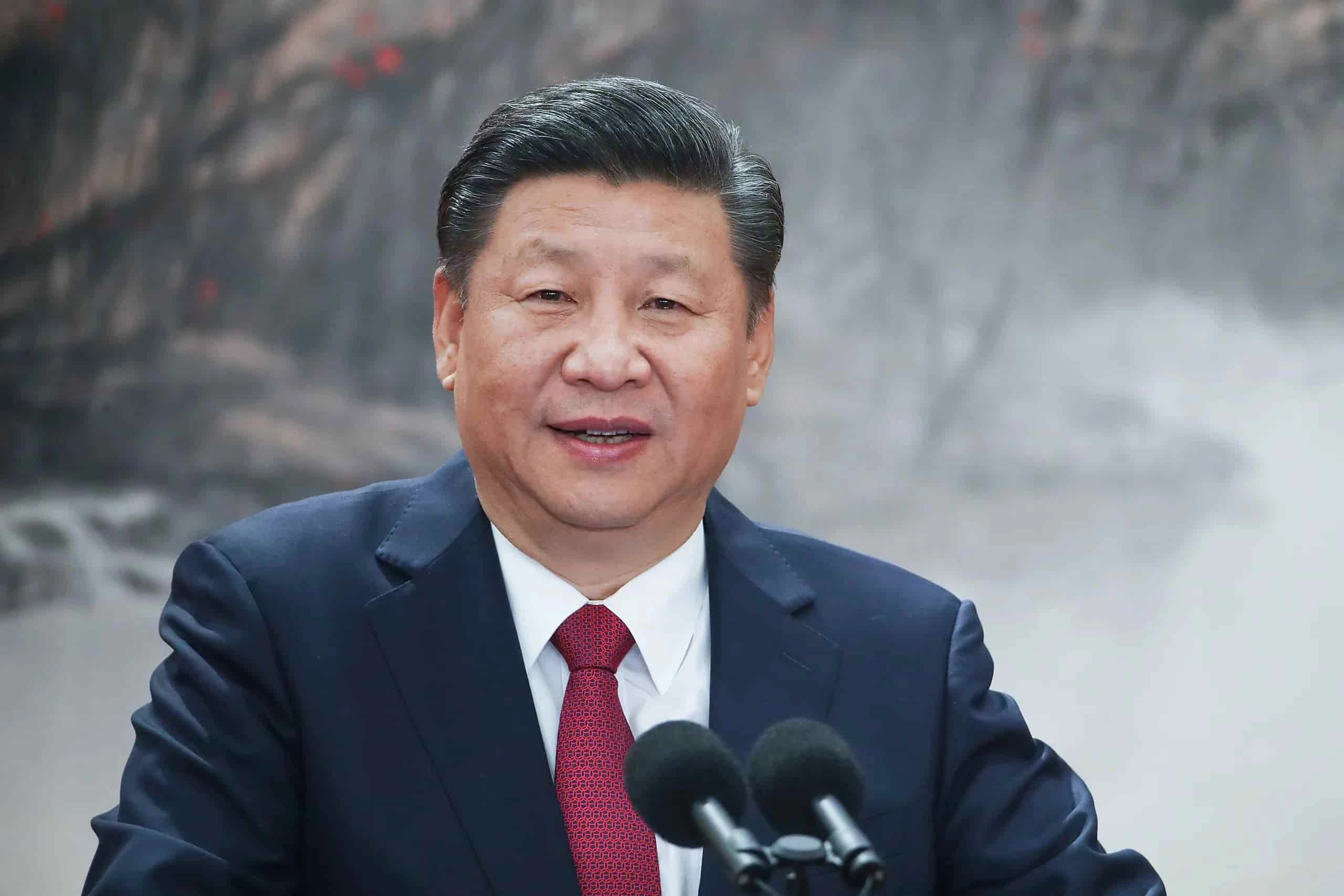
Xi Jinping is the paramount leader of the People's Republic of China, holding the country's three most powerful posts: head of the Chinese Communist Party (CCP), head of state and commander of the armed forces. Since taking power in 2012, he has become China's most dominant leader since Mao Zedong, and his decisions shape global trade, technology and security.
Xi was born in Beijing on 15 June 1953. His father, Xi Zhongxun, was a revolutionary veteran and senior party official, which gave the family an elite status — until his father was purged in the early 1960s.
During the Cultural Revolution, the teenage Xi was sent to the countryside. He spent about seven years in Liangjiahe, a village in Shaanxi province, living in a cave dwelling and doing farm labour — an experience his official biography presents as formative. After repeated applications, he was admitted to the Communist Party in 1974.
From 1975 to 1979, Xi studied chemical engineering at Tsinghua University as a "worker-peasant-soldier" student. He later earned a doctorate in law from Tsinghua's political theory programme.
Xi's career was steady rather than spectacular:
He became General Secretary in November 2012 and President in March 2013.
| Theme | What it means |
|---|---|
| Anti-corruption campaign | Investigations of over a million officials, including senior leaders and generals |
| Centralised power | Term limits on the presidency removed in 2018; "Xi Jinping Thought" written into the constitution |
| Belt and Road Initiative | Launched in 2013 to finance ports, railways and energy projects across Asia, Africa and beyond |
| "Chinese Dream" | National rejuvenation and China's return to global prominence |
| Tech self-reliance | Major investment in semiconductors, AI, EVs and advanced manufacturing |
| Military modernisation | Expanded navy and more assertive posture in the South China Sea and around Taiwan |
In October 2022, Xi secured an unprecedented third term as party leader, followed by a third term as President in March 2023.
Human-rights organisations and many Western governments have criticised policies in Xinjiang, the national security crackdown in Hong Kong, pressure on Taiwan, and tighter controls on media and civil society. Beijing rejects these criticisms as interference in China's internal affairs.
Xi is married to Peng Liyuan, a well-known folk singer and former army performer. They have one daughter, Xi Mingze, who studied at Harvard.
He is General Secretary of the Chinese Communist Party, President of China and Chairman of the Central Military Commission.
Since November 2012, when he became party leader. He is in his third term.
A global infrastructure and investment programme launched by Xi in 2013 to build trade links between China and other regions.
Peng Liyuan, a renowned folk singer.
Xi Jinping has transformed both the Chinese Communist Party and China's role in the world, combining strict domestic control with ambitious global economic and technological goals. How he manages China's economy, its rivalry with the United States and the question of succession will be among the defining issues of the coming decade.
