•
•
•
•
•
•
•

From coding as a teenager to giving away nearly all of his fortune by 2045
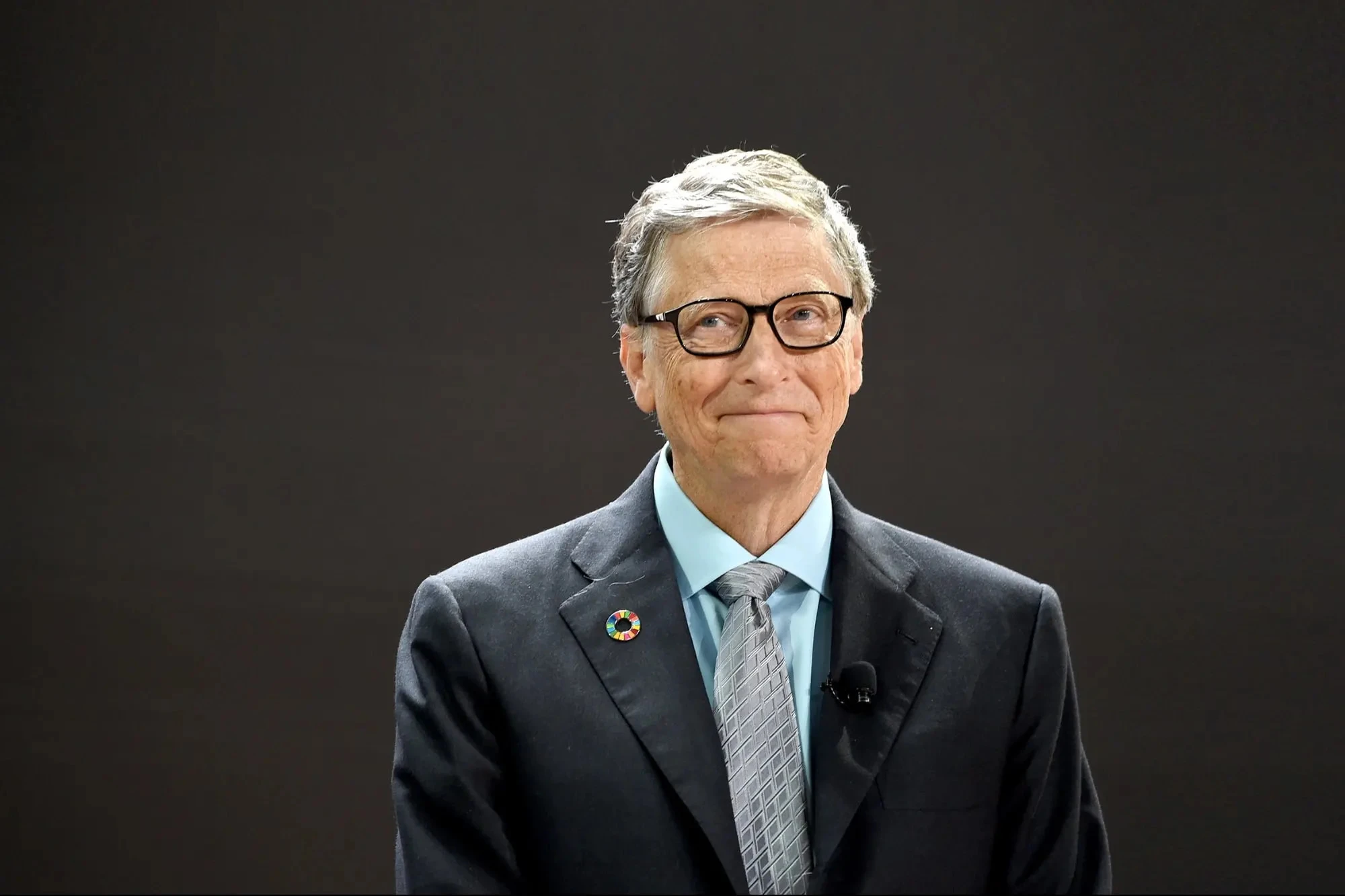
Bill Gates is the co-founder of Microsoft, the company that put software on nearly every personal computer in the world. After leading Microsoft through its rise to dominance, he turned to philanthropy and became one of the most influential figures in global health, development and climate innovation. His decision to give away virtually all of his wealth within two decades is among the largest philanthropic commitments in history.
Gates was born on 28 October 1955 in Seattle, Washington, to William H. Gates Sr., a prominent lawyer, and Mary Maxwell Gates, a businesswoman and civic leader. At Lakeside School, he gained rare access to a computer terminal and began programming at age 13. There he met Paul Allen, his future business partner.
Gates enrolled at Harvard University in 1973 but left in 1975 to pursue software full-time. Harvard awarded him an honorary degree in 2007.
In 1975, Gates and Allen founded Microsoft in Albuquerque, New Mexico, initially writing a BASIC programming language for the Altair 8800 microcomputer.
In 1980, IBM asked Microsoft for an operating system for its upcoming personal computer. Microsoft licensed MS-DOS to IBM while keeping the right to sell it to other manufacturers — a decision that made Microsoft the standard for the PC industry.
Microsoft launched Windows in 1985 and Microsoft Office in 1989. By the 1990s, Windows dominated personal computing, and Gates became the world's richest person.
In the late 1990s, the US government sued Microsoft for anti-competitive practices related to bundling Internet Explorer with Windows. The case ended in a 2001 settlement.
| Year | Change |
|---|---|
| 2000 | Stepped down as CEO; Steve Ballmer took over |
| 2008 | Ended full-time work at Microsoft to focus on philanthropy |
| 2014 | Left chairman role; became technology adviser |
| 2020 | Left Microsoft's board |
Gates and his then-wife Melinda French Gates established the foundation in 2000. It has become one of the largest private foundations in the world, focusing on:
The foundation has been a major funder of Gavi, the Vaccine Alliance and the Global Fund, and has worked extensively in India and Africa.
In May 2025, Gates announced he would give away virtually all his wealth through the foundation, which would spend US$200 billion over 20 years and close permanently at the end of 2045. In January 2026, the foundation unveiled a record US$9 billion budget for the year alongside staff reductions. In September 2026, it pledged at least US$1 billion over two years to expand access to artificial intelligence and launched a coalition with AI companies to build data for underrepresented languages.
Gates founded Breakthrough Energy to invest in clean-energy technologies and wrote How to Avoid a Climate Disaster (2021). He also published a memoir of his early years, Source Code, in 2025.
Gates has faced criticism over Microsoft's past business practices, his foundation's outsized influence on global health policy, and his past association with Jeffrey Epstein, which he has described as a mistake and which drew renewed scrutiny in 2026.
Gates married Melinda French in 1994; they have three children and divorced in 2021. The foundation was renamed the Gates Foundation in 2025 after Melinda French Gates stepped away.
No. He left Harvard in 1975 to start Microsoft, but received an honorary degree in 2007.
It funds work in global health, vaccines, agriculture, education and poverty reduction.
He left the board in 2020 but has served as a technology adviser.
It plans to close at the end of 2045 after spending about US$200 billion.
Bill Gates helped bring computers into homes and offices worldwide, then redirected his fortune toward some of humanity's hardest problems. Whatever the debates around his influence, his work on vaccines, disease eradication and innovation for the world's poorest will be a central part of his legacy.
