•
•
•
•
•
•
•

The Columbia economist behind Interest and Prices, the New Keynesian model and forward guidance, who shares the 2026 Nobel Prize in Economics
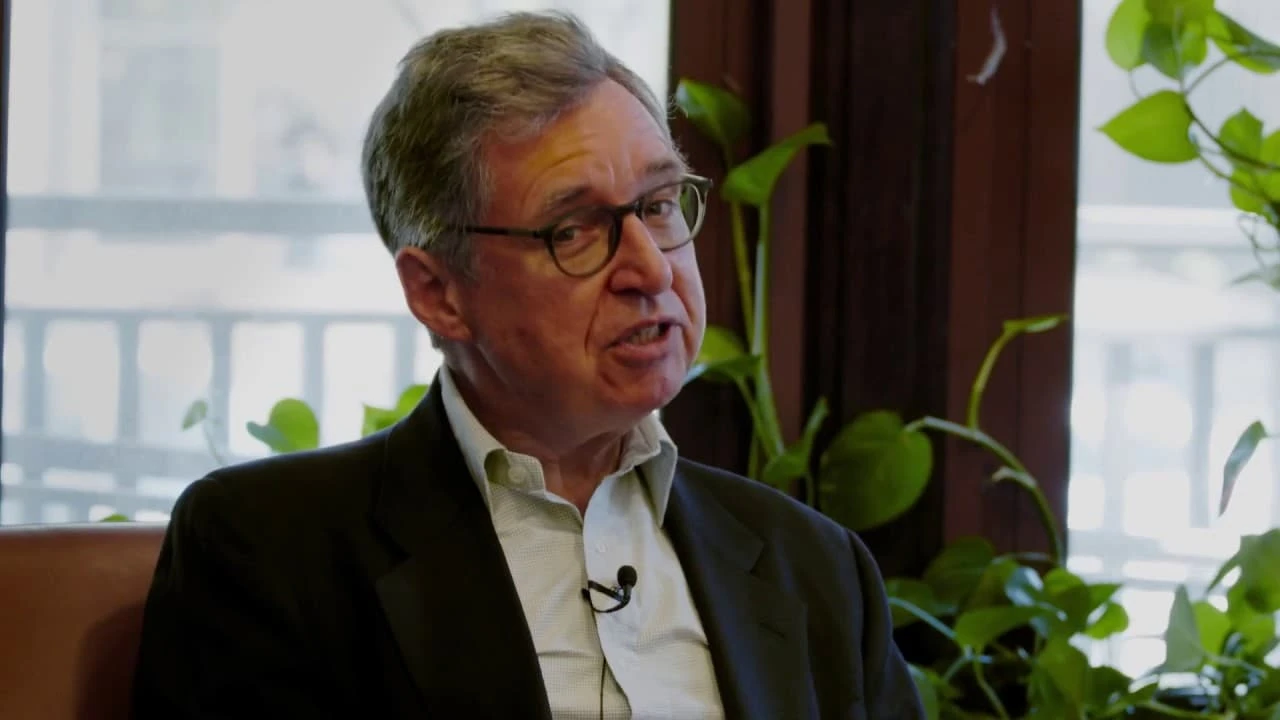
Michael Woodford is an American economist at Columbia University who shares the 2026 Nobel Prize in Economic Sciences with Stanford's Robert E. Hall. The Royal Swedish Academy of Sciences announced the award on October 12, 2026, "for microeconomic foundations of macroeconomic stabilisation." Woodford is best known for his 2003 book Interest and Prices and for helping build the New Keynesian framework that central banks use to think about interest rates, inflation and communication.
This guide covers who he is, what he contributed, how forward guidance works, and why the work matters for policy decisions such as the Reserve Bank of India's recent rate hike.
According to the Nobel announcement, Woodford was born in 1955 in Chicopee, Massachusetts, and is a professor at Columbia University in New York. IBTimes describes him as the John Bates Clark Professor of Political Economy at Columbia. His research focuses on macroeconomic theory and monetary policy, particularly the link between interest rates, inflation and expectations.
Wikipedia notes that one of his former doctoral students, Stephanie Schmitt-Grohé, studied under him at the University of Chicago, where he developed some of the first microfounded New Keynesian models.
The Academy said that Hall and Woodford developed macroeconomic models that significantly improved the ability to carry out effective stabilisation policy, so that well-timed fiscal and monetary measures can reduce the economy's peaks and troughs. A central feature of the models is that households and businesses are forward looking when deciding on savings or prices. When governments and central banks communicate their plans, they can influence that view of the future and steer the economy. The committee said the models have been extremely helpful in dealing with economic downturns.
His best-known work is Interest and Prices: Foundations of a Theory of Monetary Policy. The book sets out a theory of how central banks can stabilise inflation and economic activity by setting interest rates. Wikipedia notes that Woodford calls his approach "neo-Wicksellian," in tribute to the Swedish economist Knut Wicksell, who advocated using the interest rate to keep prices stable, and that he named his book as a homage to Wicksell's own work.
Woodford is closely associated with the New Keynesian framework. As explained by MAS Economics, the version taught to students has three equations and combines forward-looking households, price-setting firms and an interest-rate rule to explain how central banks can steady inflation and output. A key ingredient is that prices adjust slowly in the short run, which is why demand and monetary policy can affect output. The framework includes the New Keynesian Phillips curve, which links inflation to expected inflation and economic activity.
Ynetnews reports that his approach underpins forward guidance, the practice of central banks signalling their future policy path to shape expectations. The practice became an important tool after the 2008 global financial crisis, when interest rates were already close to zero and central banks looked for other ways to stimulate the economy. Economists have also debated a "forward guidance puzzle," where models imply that promises about the distant future can have surprisingly large effects today.
Imagine a central bank says it will keep interest rates low for a long time. Households and firms who believe this may borrow and spend more now, because they expect cheap credit to continue. The announcement itself, not only the actual rate change, moves the economy. Woodford's work gave this idea a formal foundation.
Central banks such as the RBI make rate decisions and communicate them in ways that shape expectations. The RBI raised the repo rate to 5.50% on October 7, 2026, and markets responded immediately, with funds adjusting bond portfolios. This is an example of how expectations about future policy move markets, though the RBI's own framework is separate from any single academic model.
| Year | Milestone |
|---|---|
| 1955 | Born in Chicopee, Massachusetts |
| 2003 | Publishes Interest and Prices |
| After 2008 | Forward guidance becomes a major central bank tool |
| 2026 | Shares the Nobel Prize in Economic Sciences with Robert E. Hall |
What did Michael Woodford win the Nobel for?
Along with Robert Hall, for the microeconomic foundations of macroeconomic stabilisation.
What is his best-known book?
Interest and Prices: Foundations of a Theory of Monetary Policy (2003).
What is forward guidance?
Central banks signalling the likely path of future policy to influence expectations and spending today.
Where does he teach?
Columbia University in New York.
How is his work different from Robert Hall's?
Hall's best-known work covers consumption, unemployment and tax. Woodford's centres on monetary policy, interest rates and inflation. They share the prize for building macro models on microeconomic foundations.
Based on information from the Royal Swedish Academy of Sciences, Ynetnews, MAS Economics, IBTimes, Wikipedia and other reports as of October 12, 2026. Details may change.
