•
•
•
•
•
•
•

South African jurist Navanethem “Navi” Pillay was awarded the 2026 Nobel Peace Prize for her efforts to promote peace and international law, recognising decades of work in human rights and international justice.
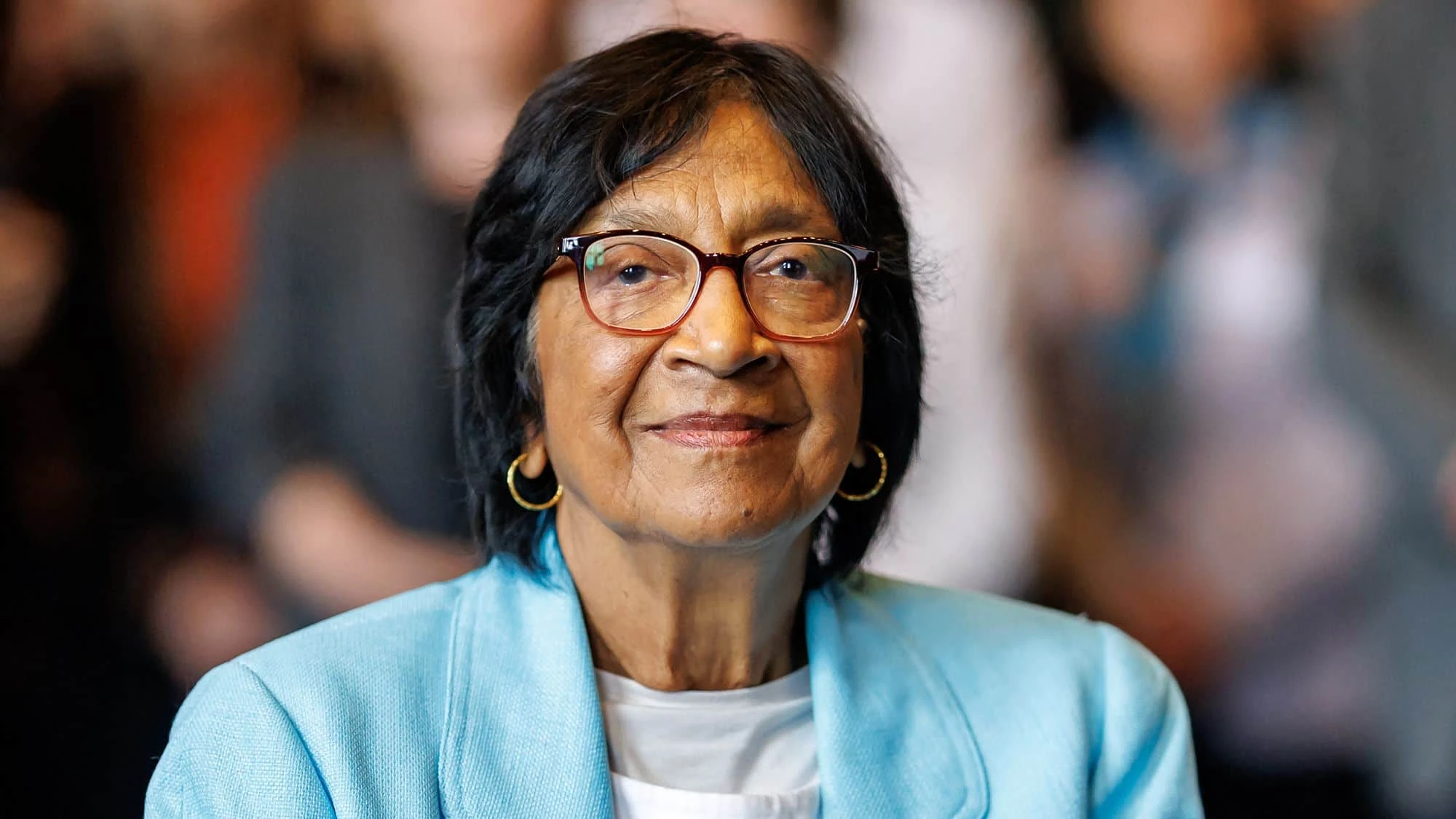
Navanethem “Navi” Pillay is a South African jurist known for her work in human rights and international criminal justice. The Norwegian Nobel Committee awarded her the 2026 Nobel Peace Prize for her efforts to promote peace and international law, announcing the decision on 9 October 2026. The award recognised her long career in advancing accountability for serious international crimes. Official Nobel announcement
Pillay's career spans legal practice under apartheid, judicial service in South Africa, leadership at the International Criminal Tribunal for Rwanda and service as United Nations High Commissioner for Human Rights.
Pillay was born in Durban, South Africa, in 1941, into a family of Indian Tamil descent. She grew up under apartheid, a system of legally enforced racial segregation and discrimination. She studied law and became a lawyer during a period when the political and legal system imposed severe barriers on the country's non-white population.
Her early legal work included defending people affected by apartheid-era repression. That experience shaped a career focused on equal protection, accountability and the principle that legal rights should apply regardless of a person's identity or political power.
Pillay became a judge at the International Criminal Tribunal for Rwanda (ICTR), later serving as its president. The tribunal prosecuted people accused of crimes committed during the 1994 genocide in Rwanda. Her work is associated with the development of international jurisprudence on sexual violence, including recognition that rape and sexual violence can constitute acts of genocide or crimes against humanity when the legal elements are established.
International criminal proceedings require evidence and legal findings in individual cases; a court's rulings should not be reduced to a claim that every allegation automatically meets the legal definition of a crime.
Pillay served as UN High Commissioner for Human Rights from 2008 to 2014. The office works to promote and protect human rights through monitoring, public reporting, technical assistance and engagement with governments and civil society.
The role does not give the High Commissioner authority to overrule national courts or independently enforce every recommendation. Its influence depends on evidence, international mechanisms, cooperation and pressure from states and civil society.
Pillay's work involved issues including discrimination, protection of civilians, accountability for abuses and the universality of human rights. Her positions sometimes drew criticism from governments or political groups, illustrating the tensions that can arise when international human-rights standards challenge state conduct.
The Norwegian Nobel Committee said the award recognised Pillay's efforts to promote peace and international law. The committee highlighted her role in advancing the prosecution of war crimes, crimes against humanity and genocide.
The award links peace not only to the absence of armed conflict but also to legal accountability and institutions capable of addressing grave abuses. It does not mean every international dispute has been resolved or that all states accept the same interpretations of international law.
International law provides rules and processes governing relations among states and, in some circumstances, individual criminal responsibility. International courts and tribunals have different mandates, jurisdictions and enforcement limits. Their work depends on applicable treaties, legal authority, evidence and cooperation.
Pillay's career illustrates how judges, lawyers and human-rights officials can influence the interpretation and implementation of these rules, even though the broader system remains dependent on governments and institutions.
Navanethem “Navi” Pillay, a South African jurist and former UN High Commissioner for Human Rights, received the 2026 prize.
She is known for her legal work, leadership at the International Criminal Tribunal for Rwanda and service as UN High Commissioner for Human Rights.
She served as a judge and president of the ICTR, which prosecuted crimes committed during the 1994 genocide in Rwanda. The tribunal's jurisprudence contributed to international law on sexual violence and international crimes.
The office promotes and protects human rights through monitoring, reporting, technical assistance and engagement with states and civil society.
Navi Pillay's 2026 Nobel Peace Prize recognises a career devoted to human rights and international justice, from apartheid-era South Africa to international tribunals and the United Nations. Her legacy also highlights the continuing challenge of turning legal principles into consistent accountability and protection for people affected by serious abuses.
This article was authored and reviewed by Wipidia's technical editorial desk in Jalandhar, Punjab. Every code snippet, algorithm breakdown, and strategic framework is independently tested against live production standards before publication.
