•
•
•
•
•
•
•

Google CEO Sundar Pichai says the company is sacrificing short-term Cloud revenue to develop advanced AI models, as computing shortages and growing Gemini demand reshape its business strategy.
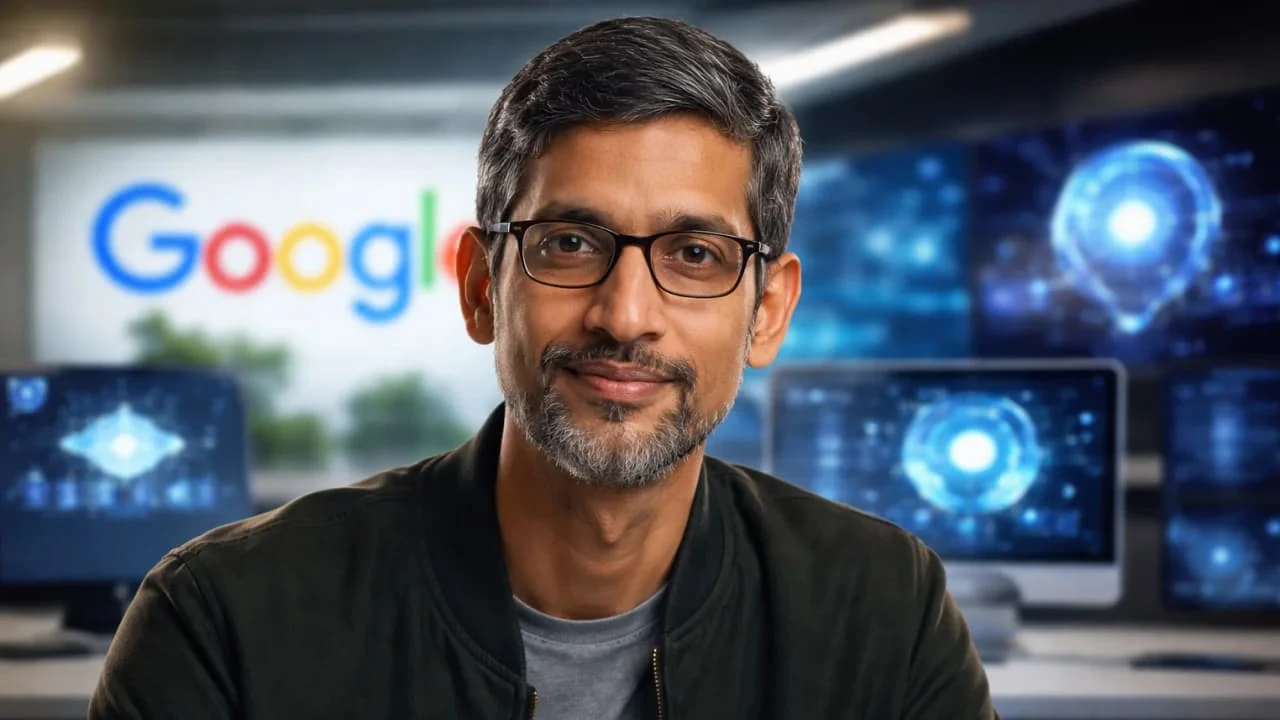
Google is making a strategic trade-off in the AI race: it is reserving some of its limited computing power for advanced AI research instead of selling all of it to paying Cloud customers. CEO Sundar Pichai says staying at the frontier of AI is essential to Google's long-term competitiveness, even if it costs some revenue today.
Computing capacity is a valuable commercial resource, since cloud providers earn money by renting out chips, servers and data centres. Google also needs that same capacity for its own researchers, especially at Google DeepMind, which builds its advanced models.
Every unit of capacity used internally is one an external customer could have paid for. Google is betting that falling behind in model development would cost far more in the long run than some missed cloud sales.
Demand for AI infrastructure is rising faster than supply. Training and running large models needs advanced processors, power, cooling and specialised data centres, which take years to build. Pichai has warned that securing capacity for new customers looking towards 2027 could be difficult.
Google's own products add to the pressure. Pichai said the Gemini 4 Argon model processed nearly 25 trillion tokens in its first 72 hours, about three times what Gemini 3 handled in the same period. Tokens measure usage volume, not model quality or profitability.
Frontier models push the limits of reasoning, coding and scientific analysis, and can improve Google's products across search, productivity tools and enterprise services. They also help Google compete with rivals such as OpenAI and Anthropic.
Pichai has pushed back on the idea of focusing only on smaller, cheaper models. Google will keep offering efficient options like Gemini Flash while continuing to invest in its most capable systems.
| Metric | Figure |
|---|---|
| Google Cloud revenue, Q2 2026 | $24.8 billion (up 82% year over year) |
| Cloud revenue backlog, end of June 2026 | About $514 billion |
| Alphabet 2026 capital expenditure | About $195 to $205 billion |
Backlog is contracted revenue, not revenue already earned, so its conversion depends on delivery and customer usage.
Businesses planning large AI workloads should not assume extra capacity will always be available immediately. Forecasting needs early, discussing capacity commitments with providers and considering multiple cloud providers can reduce risk. Google says Cloud remains a priority, and demand is strong.
Google is betting that building more capable AI will be worth more than the revenue it gives up today. Whether that pays off depends on how well it turns research progress into products people and businesses will pay for, while still expanding capacity for customers.
This article was authored and reviewed by Wipidia's technical editorial desk in Jalandhar, Punjab. Every code snippet, algorithm breakdown, and strategic framework is independently tested against live production standards before publication.
