•
•
•
•
•
•
•

What the IEA's latest data says about data-centre demand, grid connections, transformers and power costs, and what it means for India
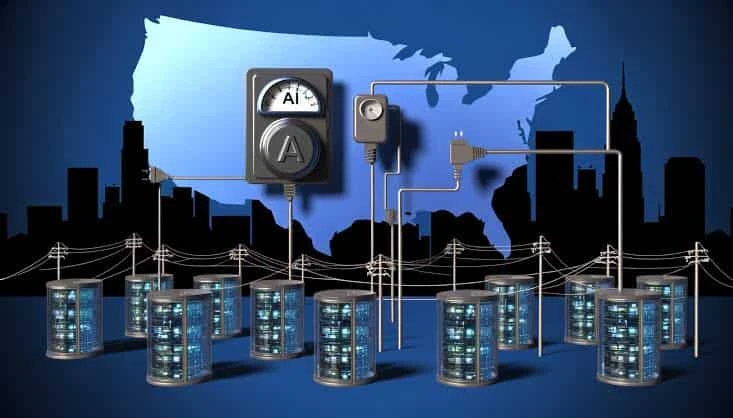
Last updated: October 26, 2026. Figures are from the International Energy Agency (IEA) unless stated otherwise.
| Question | What current evidence says |
|---|---|
| Why is power a bottleneck? | Data centres need large, reliable electrical connections, generation, transformers and cooling |
| Global data-centre electricity use in 2025 | About 485 TWh (IEA) |
| IEA projection for 2030 | About 950 TWh, close to double the 2025 level |
| Growth in 2025 | 17% globally; AI-focused facilities grew faster |
| Other constraints | Grid connection queues, transformer and turbine supply, planning approvals, chips and financing |
| Main source | IEA, Key Questions on Energy and AI (2026) |
Artificial intelligence depends on physical infrastructure as much as software. Training and running large models needs specialised chips, cooling, network connections and a steady electricity supply. In 2026, one of the biggest limits on new AI capacity is whether a site can secure enough power and connect to the grid on a workable timeline.
A data centre houses servers that store, process and move information. AI workloads can require large numbers of high-performance accelerators working together. These chips use electricity directly, and the heat they produce must be removed by cooling systems that also consume power.
Total demand therefore includes more than the processors. Operators must also account for networking, storage, cooling, backup systems and the rest of the facility. A campus can need a high peak capacity even if its average use is lower, and that peak is what a utility must check before approving a site.
It is also wrong to treat every AI query as equally power-hungry. The IEA says energy use per AI task has improved substantially as hardware and software become more efficient. At the same time, rising usage and heavier applications, such as video generation, advanced reasoning and agentic systems, can push total demand up. Efficiency per task and total consumption can move in opposite directions.
A developer may secure land and order servers but still need the utility to assess the project, plan upgrades and approve a connection. If local lines or substations lack capacity, new equipment or network construction may be needed before the facility can run at full scale.
This creates a timing mismatch. Data-centre construction and procurement can move quickly, while permitting, grid planning and electrical construction often take longer. A project announcement is therefore not a completed data centre.
Transformers, switchgear, power electronics and other high-voltage components deliver electricity safely at the required voltage. When many projects order at once, manufacturing and installation capacity can become constraints too.
The IEA identifies tighter supply chains for energy technologies, including transformers and gas turbines, as part of the challenge. Ordering early helps manage risk but does not remove the need for grid capacity, permits or skilled installers.
AI facilities generally need power around the clock. Wind and solar can supply large amounts of low-carbon electricity, but output varies with weather and time of day. A dependable plan may combine grid supply, storage, demand management, renewables and firm generation, depending on local conditions and rules.
Some US developers are considering on-site gas generation because grid connections are delayed. The IEA cautions that on-site generation brings its own design, fuel-supply, emissions, cost and equipment challenges. It is not a universal quick fix.
As AI servers become more powerful, the electricity needed per rack rises. This raises the importance of cooling design, power distribution and handling sudden changes in demand. Liquid cooling can help some high-density deployments, but it does not remove the need for efficient design or adequate supply.
| Headline claim | What to ask |
|---|---|
| "Company plans a 1 GW campus" | Is the grid connection approved, and by when? |
| "Investment of billions announced" | Is it committed spending or a multi-year ambition? |
| "New AI data centre opens" | Is it fully powered or opening in phases? |
| "Data centres will use X% of power by 2030" | Is this a global, national or local figure, and which scenario? |
This is a simple filter we recommend when reading any AI-infrastructure story: separate announced capacity from operating capacity and scenario projections from observed data.
The rise from 485 TWh in 2025 to roughly 950 TWh in 2030 signals that data centres could become a larger part of electricity demand. It does not mean every grid will face the same problem. The impact depends on where facilities are built, how fast utilities add capacity, which energy sources are available and how efficiently computing is used.
The local effect can matter more than the global share. A data centre concentrated in one region can require major substation or transmission investment even if data centres are a modest share of national use. If costs are not planned and allocated transparently, other customers may worry about who pays for upgrades and whether new demand affects bills or reliability.
Forecasts are also uncertain. Announced projects may be delayed, reduced or cancelled. AI workloads and chip efficiency may change. New power supplies or grid technologies may alter the outcome. The IEA figures are a planning scenario, not a guarantee of 2030 demand.
| Action | Why it helps | Important limitation |
|---|---|---|
| Choose sites with available grid capacity | Can reduce the need for major network upgrades | Capacity must be confirmed with the utility |
| Coordinate data-centre and grid planning early | Aligns construction, permits and equipment delivery | Local approval processes still apply |
| Improve server utilisation and workload scheduling | Reduces wasted computing and can shift flexible workloads | Some tasks are time-critical and cannot move |
| Use efficient chips and cooling | Lowers energy use per unit of computing | Efficiency gains may be offset by increased use |
| Combine renewables with storage and firm supply | Can improve the match between supply and demand | Cost and reliability depend on the local system |
| Publish credible energy and water metrics | Helps communities and customers assess impacts | Reporting methods need consistent definitions |
Before treating a site as ready, ask the utility these questions:
For policymakers, transparent queue management, realistic project forecasts and coordinated infrastructure planning reduce the risk of building too much or too little capacity.
India's AI infrastructure plans need to be considered alongside wider electricity demand, renewable-energy expansion, transmission investment, cooling requirements and regional grid capacity. A proposal in one state cannot be judged using national electricity totals alone: the local substation, transmission corridor, reliability requirements, land and water conditions all matter.
Practical points for Indian readers and companies:
No. Grid access is a major constraint, but projects also depend on chips, networking equipment, transformers, cooling, land, permits, skilled workers and financing.
No. The IEA projects data-centre electricity use to rise from about 485 TWh in 2025 to about 950 TWh in 2030. That is close to doubling data-centre consumption, not total global electricity demand.
No. Energy use varies by model, task, hardware and system efficiency. The IEA notes that energy use per task has fallen, while total demand can still rise as usage and energy-intensive applications grow.
Renewables can supply a significant share, but matching variable generation to round-the-clock demand may require storage, grid connections, flexible workloads or other firm electricity sources.
No. Announced capacity is not operating capacity. Projects can change because of grid access, equipment availability, financing, permits or changes in demand.
The AI infrastructure race is also a race to secure reliable electricity. The IEA's 2026 analysis points to rising data-centre demand alongside practical constraints in grid connections, transformers, power equipment and approvals. The right response is not a single technology or a blanket prediction of an energy crisis. It is better site selection, coordinated planning, efficient computing, transparent cost allocation and a realistic mix of power sources.
We will update this article when the IEA or relevant electricity authorities publish new data, and we will keep operating data centres separate from announced projects.
Related reading: explore Wipidia's technology blogs for more explainers on AI, computing and digital infrastructure.
This article was authored and reviewed by Wipidia's technical editorial desk in Jalandhar, Punjab. Every code snippet, algorithm breakdown, and strategic framework is independently tested against live production standards before publication.
