•
•
•
•
•
•
•

The startup investor who became the face of the generative AI boom
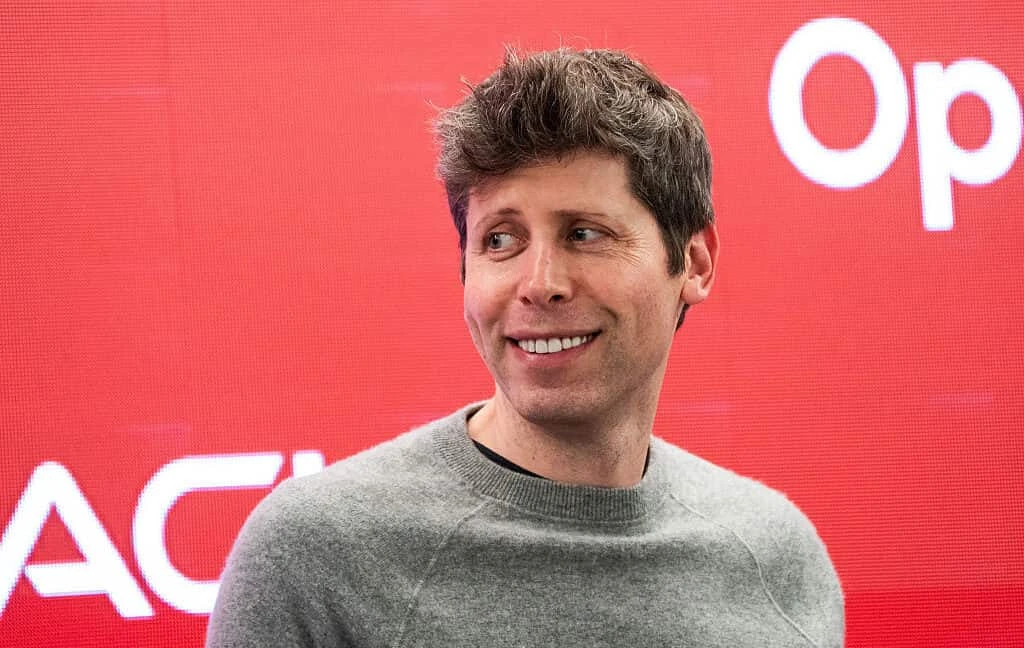
Sam Altman is the chief executive of OpenAI, the AI company whose chatbot ChatGPT brought generative artificial intelligence into the mainstream. Before OpenAI, he was a startup founder and the president of Y Combinator, Silicon Valley's best-known accelerator. Today he is one of the most closely watched figures in technology, shaping debates on AI progress, safety and regulation.
Altman was born on 22 April 1985 in Chicago and grew up in St. Louis, Missouri, the eldest of four children. He got his first computer at age eight. He studied computer science at Stanford University but left after two years to start a company.
In 2005, at 19, Altman co-founded Loopt, a location-sharing smartphone app, which was one of the first startups backed by Y Combinator. It raised significant funding but struggled to gain traction and was sold in 2012.
Altman became a partner at Y Combinator and in 2014 succeeded co-founder Paul Graham as president. He expanded YC's reach, backing thousands of startups and launching a research arm. He left in 2019 to focus on OpenAI.
In 2015, Altman co-founded OpenAI as a non-profit research lab with Elon Musk, Greg Brockman, Ilya Sutskever and others, with the mission of ensuring artificial general intelligence (AGI) benefits all of humanity. He became CEO in 2019, when OpenAI created a capped-profit arm and began a major partnership with Microsoft.
| Year | Milestone |
|---|---|
| 2015 | OpenAI founded |
| 2019 | Altman becomes CEO; Microsoft invests |
| 2020 | GPT-3 released |
| Nov 2022 | ChatGPT launched — one of the fastest-growing consumer apps ever |
| 2023 | GPT-4 released; Altman briefly ousted by the board and reinstated within days |
| 2025 | OpenAI completes its recapitalisation into a for-profit structure overseen by its non-profit |
| 2026 | Confidentially files for an IPO, but Altman later says it will not happen in 2026 |
In November 2023, OpenAI's board fired Altman, citing a lack of candour. Nearly all employees threatened to quit, Microsoft offered to hire him, and he was reinstated within five days with a new board.
In a Fortune interview published in September 2026, Altman said it would be an ill-advised moment for OpenAI to go public given current AI safety concerns, effectively pushing any IPO beyond 2026. He also said leading AI labs had discussed pacing frontier development to allow more work on safety. OpenAI continues to face legal challenges, including a lawsuit from co-founder Elon Musk over its shift away from non-profit status.
Altman has invested in companies working on nuclear energy (Helion, Oklo), longevity research and World (formerly Worldcoin), an identity and crypto project he co-founded.
Critics have questioned OpenAI's move from non-profit ideals toward commercialisation, its safety practices, use of copyrighted data for training, and the concentration of power in a few AI companies. Altman argues that iterative public deployment is the safest way to prepare society for advanced AI.
Altman married software engineer Oliver Mulherin in 2024; the couple welcomed a child in 2025.
Leading OpenAI and the launch of ChatGPT, which sparked the global generative AI boom.
Yes, briefly. The board removed him in November 2023, but he was reinstated within days.
OpenAI filed confidentially for an IPO in 2026, but Altman said in September 2026 that a listing would not happen that year.
No. He left Stanford after two years to found Loopt.
Sam Altman has gone from startup founder to one of the central figures of the AI era. How he balances OpenAI's commercial ambitions with its safety mission will influence not just his company's future, but how the world experiences artificial intelligence.
