•
•
•
•
•
•
•

The Stanford economist behind the consumption random walk, unemployment research and the flat tax, who shares the 2026 Nobel Prize in Economics
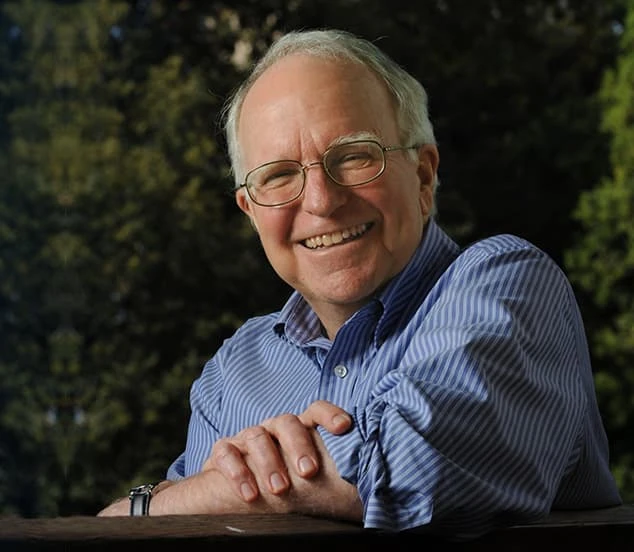
Robert E. Hall is an American macroeconomist at Stanford University who shares the 2026 Nobel Prize in Economic Sciences with Columbia University's Michael Woodford. The Royal Swedish Academy of Sciences announced the award on October 12, 2026, "for microeconomic foundations of macroeconomic stabilisation." Hall is also widely known for his 1978 "random walk" paper on consumption, his work on unemployment, his role chairing the committee that dates US recessions, and the flat tax proposal he developed with Alvin Rabushka.
This guide covers his background, his main ideas, why the Nobel committee honoured him and how his work connects to everyday policy debates.
According to the Nobel Prize announcement, Hall was born in 1943 in Palo Alto, California, and received his PhD in 1967 from the Massachusetts Institute of Technology. Other biographies add that he earned his bachelor's degree at Berkeley, and that his doctoral adviser was Nobel laureate Robert Solow.
He taught at the University of California, Berkeley, and at MIT before joining Stanford in 1978. He is the Robert and Carole McNeil Senior Fellow, Emeritus, at Stanford's Hoover Institution and a professor of economics at Stanford.
The Academy said Hall and Woodford developed new macroeconomic models that significantly improved the ability to carry out stabilisation policy, so that well-timed fiscal and monetary measures can reduce the economy's peaks and troughs. Instead of basing models on statistical links between variables like inflation, production and consumption, they built them on a microeconomic foundation, starting with how households and firms make forward-looking decisions. The committee said this leaves governments and central banks better equipped for shocks such as energy crises or sudden changes in household spending.
Hall's 1978 paper changed how economists think about spending. Older theories said consumption followed past income. Hall argued that if people plan ahead, consumption should respond only to surprising news about future income, so changes in consumption should be unpredictable. The Het Website profile describes this as probably his most famous contribution. Later studies found consumption is somewhat more predictable than Hall claimed, but most empirical research since has treated his result as the starting point.
Hall has made major contributions to labour economics, including the study of unemployment, wage formation and how jobseekers find work. Stanford's listing of his research includes titles on search-and-matching analysis of high unemployment at the zero lower bound, job-finding rates and the limited influence of unemployment on wage bargaining. More recent work with Marianna Kudlyak examines the natural rate of unemployment and why unemployment recoveries follow a steady pace.
With Hoover colleague Alvin Rabushka, Hall developed a framework for consumption-based taxation and wrote a December 1981 Wall Street Journal article that sparked renewed interest in the idea. Their work helped revive debate in the United States about simplifying the tax system. This is separate from his Nobel-winning research.
Hall chairs the National Bureau of Economic Research's Business Cycle Dating Committee, which maintains the semi-official chronology of US recessions and expansions. He also directed the NBER's research programme on economic fluctuations and growth from 1977 to 2013.
Hall has served as president and vice president of the American Economic Association, delivered its Ely Lecture and is a distinguished fellow of the association, according to the European Central Bank's biography. He is a member of the National Academy of Sciences. He has advised the Justice Department, the Treasury, the Federal Reserve Board and the Congressional Budget Office, where he serves on the advisory committee, and has testified before US congressional committees.
Hall's work underpins how economists think about spending, jobs and recessions, which in turn shapes how central banks such as the Federal Reserve and the Reserve Bank of India approach decisions on interest rates. The award comes at a time when many central banks are managing energy shocks and inflation pressures, the kind of disturbances the Academy cited.
Note that the Academy is recognising a body of work for stabilisation policy shared with Woodford, not a single paper or policy.
| Year | Milestone |
|---|---|
| 1943 | Born in Palo Alto, California |
| 1967 | PhD from MIT |
| 1977 | Starts directing NBER's economic fluctuations and growth programme; chairs business cycle dating |
| 1978 | Joins Stanford; publishes consumption "random walk" paper |
| 1981 | Flat tax article with Alvin Rabushka in the Wall Street Journal |
| 2013 | Ends role as director of NBER's EFG programme |
| 2026 | Shares the Nobel Prize in Economic Sciences with Michael Woodford |
What did Robert Hall win the Nobel for?
For work, shared with Michael Woodford, on the microeconomic foundations of macroeconomic stabilisation.
What is Hall's most famous idea?
His 1978 finding that consumption should change only with unexpected news about income.
What is the flat tax?
A simplified, consumption-based tax framework developed by Hall and Alvin Rabushka. It is not part of the Nobel citation.
Where does he work?
Stanford University and the Hoover Institution.
Based on information from the Royal Swedish Academy of Sciences, CNBC, Stanford, the European Central Bank, Hoover Institution, CEPR, Arbiterz and Wikipedia as of October 12, 2026. Details may change.
