•
•
•
•
•
•
•

Explore the life of Mahatma Gandhi, from his early years in Gujarat and legal studies in London to his South African struggle and leadership in India’s freedom movement.
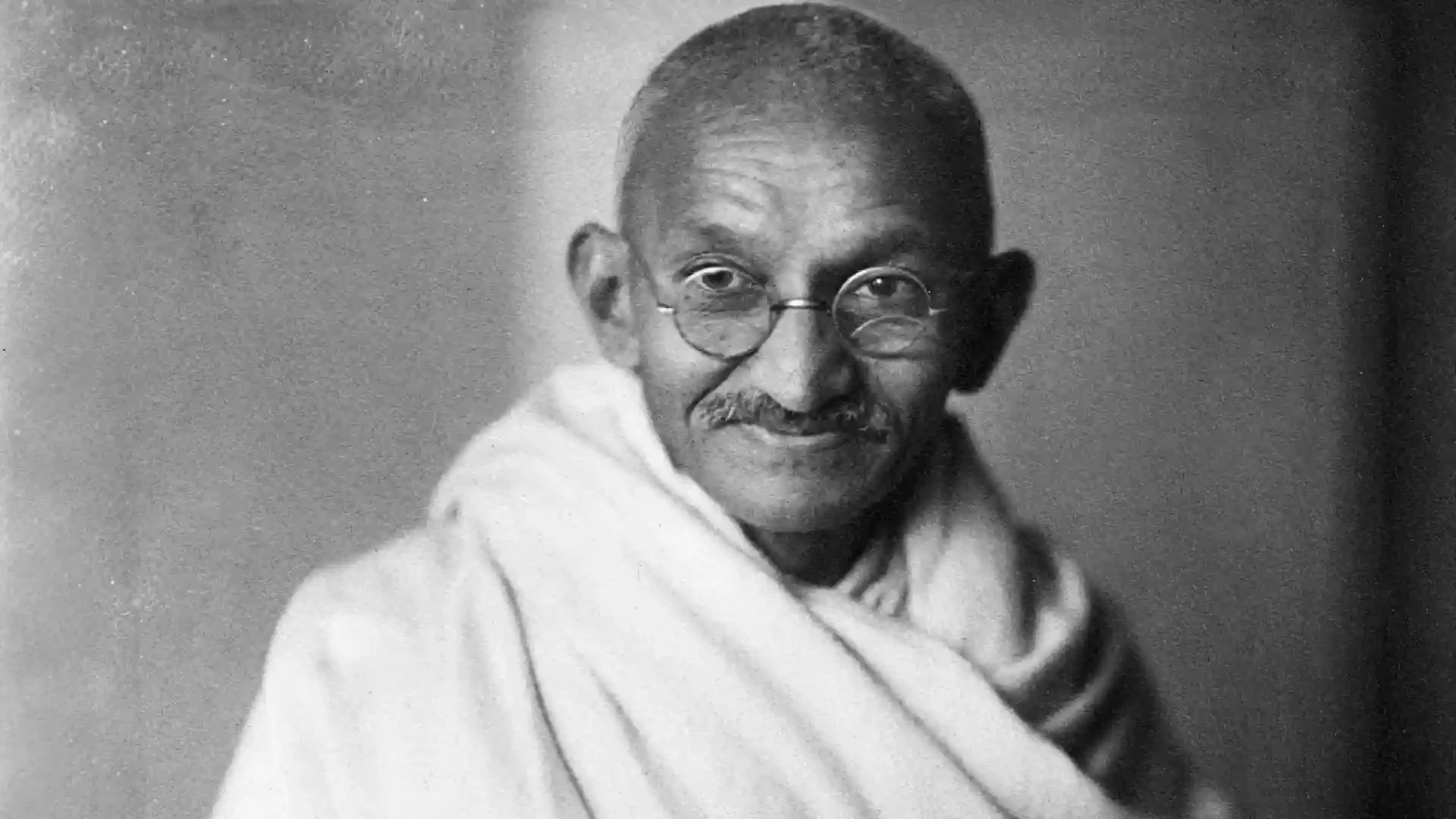
Mahatma Gandhi, born Mohandas Karamchand Gandhi on 2 October 1869, was an Indian lawyer, anti-colonial nationalist and political thinker who became one of the most prominent figures in the struggle against British rule. His use of nonviolent resistance and Satyagraha became closely associated with India's independence movement and later influenced civil rights movements around the world.
Gandhi's journey, however, began far from the major political movements for which he later became known. His early life in Gujarat, legal education in London and 21 years in South Africa shaped the ideas and methods that he eventually brought to India.
Gandhi was born in Porbandar, a coastal town in present-day Gujarat. His father, Karamchand Gandhi, served as a diwan, or chief minister, while his mother, Putlibai, came from a Pranami Vaishnava family. His childhood was influenced by religious traditions as well as stories that emphasized values such as truth and moral conduct.
As a student in Rajkot, Gandhi was described as shy and relatively quiet. He studied subjects including arithmetic, history, Gujarati and geography before attending Alfred High School.
At 18, Gandhi graduated from high school and briefly enrolled at Samaldas College. He eventually decided to pursue legal education in Britain.
In 1888, Gandhi travelled to London to study law. He enrolled at the Inner Temple with the intention of becoming a barrister. During his time in London, he also became involved with the London Vegetarian Society and encountered new intellectual and religious influences, including discussions around the Bhagavad Gita.
Gandhi was called to the bar in June 1891 at the age of 22. His initial attempts to establish a legal career in India were unsuccessful, eventually leading him to accept legal work in South Africa.
In 1893, Gandhi travelled to South Africa to work as a lawyer. He would remain there for approximately 21 years, a period that proved crucial to his political development.
Soon after arriving, Gandhi experienced racial discrimination. One well-known incident involved his removal from a first-class train compartment at Pietermaritzburg after refusing to leave it. Other incidents involved restrictions on Indians using public spaces and discriminatory treatment by officials.
These experiences changed Gandhi's outlook. Rather than immediately returning to India, he began organizing against discriminatory policies affecting the Indian community.
In 1894, he helped establish the Natal Indian Congress, which became an important organization for representing Indian interests in South Africa.
Gandhi also founded the newspaper Indian Opinion in 1903. Published in several languages, it addressed social, political and intellectual issues affecting Indians in South Africa.
One of the most important developments during Gandhi's South African years was the evolution of Satyagraha, generally associated with resistance based on truth and nonviolent action.
In 1906, Gandhi opposed legislation in Transvaal that required Indian and Chinese residents to undergo registration and carry identification certificates. At a mass meeting in Johannesburg on 11 September 1906, he adopted the developing method of Satyagraha as a form of resistance.
For Gandhi, Satyagraha was closely connected with the pursuit of Satya, or truth. His broader philosophy also emphasized Ahimsa, or nonviolence, along with self-restraint and non-attachment.
The experience became an important foundation for the methods Gandhi later used in India's freedom movement.
Gandhi returned to India in 1915 at the request of Gopal Krishna Gokhale. He soon became involved in issues affecting farmers, workers and ordinary Indians.
Rather than beginning immediately with nationwide political campaigns, Gandhi became involved in local struggles.
In 1917, Gandhi became involved in the Champaran agitation in Bihar. Farmers were being forced to cultivate indigo and sell it to plantation owners under unfavorable arrangements.
Gandhi used nonviolent protest to support the peasants, and the authorities eventually made concessions. The episode became one of his first major achievements in India.
In 1918, Gandhi supported farmers in Kheda, Gujarat, where floods and famine had created severe difficulties. The farmers demanded relief from land revenue.
Gandhi helped organize a non-cooperation campaign in which peasants pledged not to pay revenue under the existing conditions. Eventually, the government relaxed revenue-payment conditions and released prisoners associated with the agitation.
Gandhi became increasingly influential within the Indian National Congress. By the early 1920s, his political campaigns were increasingly centered on self-rule, or Swaraj, while also addressing poverty, social discrimination, women's rights and religious harmony.
His approach relied heavily on non-cooperation, civil disobedience and mass participation rather than armed rebellion.
In 1930, Gandhi led the famous Dandi Salt March, a roughly 400-kilometre journey protesting the British salt tax. The campaign turned an everyday commodity into a symbol of resistance to colonial rule.
In 1942, Gandhi and the Congress launched the Quit India Movement, demanding an end to British rule. The British responded by imprisoning Gandhi and many other Congress leaders.
Gandhi's political methods were closely connected to his personal philosophy.
He emphasized Satya (truth) and Ahimsa (nonviolence). His interpretation of Satyagraha presented truth as a central principle of resistance.
His broader set of ethical principles also included:
These principles were influenced by Indian religious and philosophical traditions and became part of Gandhi's approach to personal discipline and political action.
Importantly, the historical record also shows that Gandhi's ideas and positions evolved over time, and scholars have debated aspects of his political thought and actions. His years in South Africa, in particular, include both his resistance to discrimination and documented statements that have generated criticism regarding his attitudes toward Africans.
India achieved independence in August 1947, but independence came alongside the Partition of British India into India and Pakistan.
Partition triggered large-scale displacement and religious violence, particularly in Punjab and Bengal. Gandhi did not participate in the official independence celebrations in the way many leaders did; instead, he travelled through areas affected by communal violence and attempted to reduce tensions.
He undertook several hunger strikes aimed at stopping religious violence. His final fast began in Delhi on 12 January 1948.
Gandhi was assassinated on 30 January 1948 at an interfaith prayer meeting in Delhi. He was 78 years old.
His death marked the end of a life that had moved from law and community activism to mass political leadership and international influence.
Gandhi's birthday, 2 October, is observed in India as Gandhi Jayanti, a national holiday. The United Nations also observes 2 October as the International Day of Non-Violence.
His legacy is closely associated with nonviolent resistance, civil disobedience, Satyagraha and India's independence movement. His methods have also been studied in the context of later movements for civil rights and political freedom.
At the same time, studying Gandhi historically involves examining the evolution and contradictions within his ideas rather than viewing his life only through a simplified heroic narrative. The source material documents both his anti-colonial activism and debates surrounding some of his earlier views and actions in South Africa.
More than a century after his political activism began, Gandhi remains an important subject for understanding Indian history, colonialism, nonviolent resistance and political movements.
His life illustrates how legal training, personal experiences, community organizing and political philosophy developed over several decades. From a young lawyer in Gujarat and London to his experiences in South Africa and later mass movements in India, Gandhi's career demonstrates how Satyagraha and nonviolent political action became central features of his public life.
His story is therefore not simply about one independence leader. It is also about the development of a political method that connected individual discipline, mass participation and resistance to colonial authority.
