•
•
•
•
•
•
•

British bestselling author and former Conservative politician Jeffrey Archer has died aged 86, leaving behind a remarkable literary career, political controversy and more than 300 million books sold worldwide.
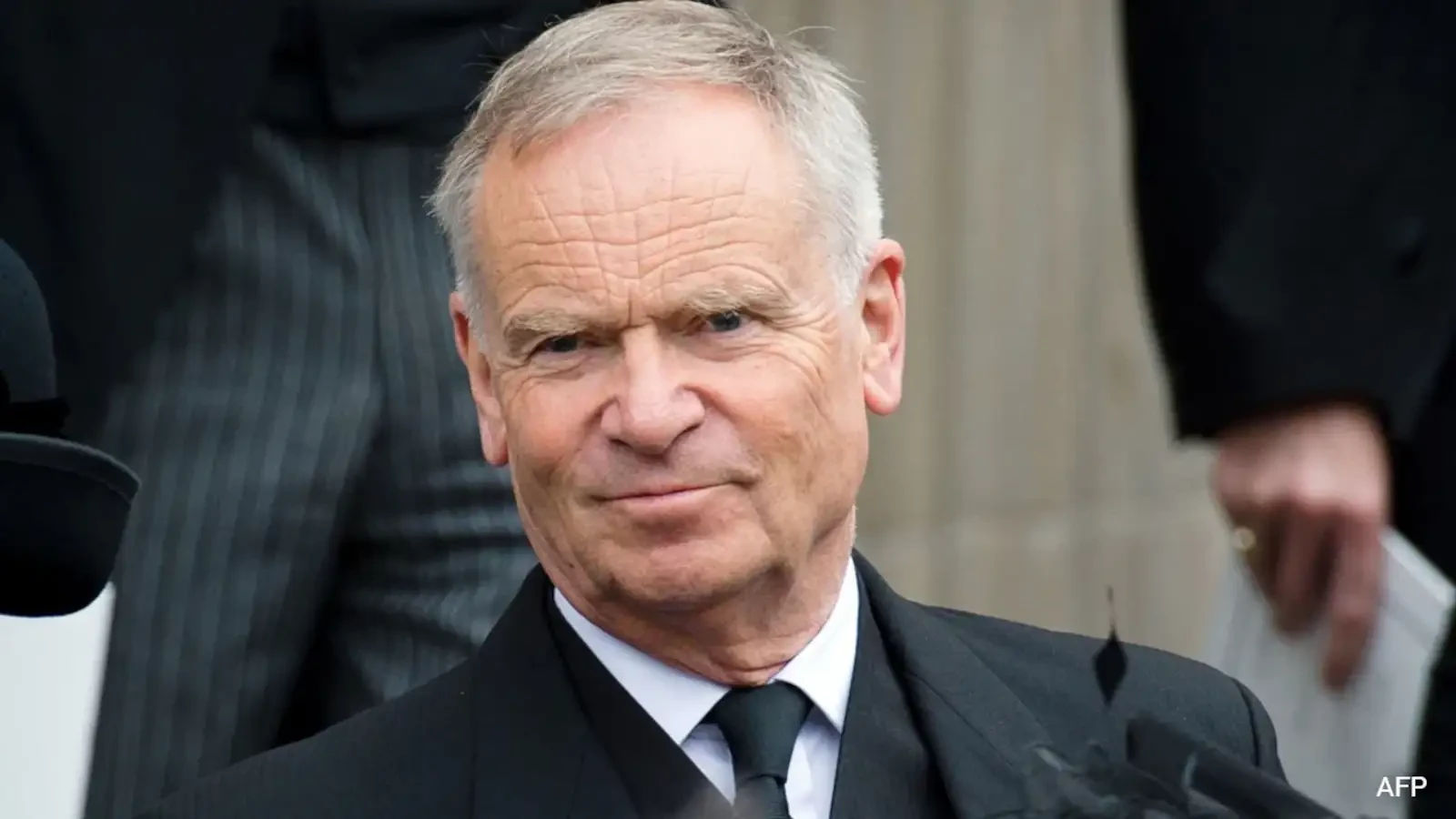
British novelist and former Conservative politician Jeffrey Archer has died at the age of 86, bringing an extraordinary and often controversial public life to an end.
Archer died suddenly and peacefully at his home on October 5, 2026, according to his publisher HarperCollins. The publisher said he died “between writing sessions”, an especially poignant detail given that he remained professionally active until the end of his life.
His death came just one day before the scheduled publication of his final novel, *Adam and Eve*. Archer had recently been promoting the book and had appeared at a sold-out London event where he met readers and signed books only a day before his death.
For generations of readers, Jeffrey Archer was synonymous with fast-paced storytelling, ambitious characters, political intrigue, family conflict and dramatic reversals. His books became international bestsellers, while his own life frequently appeared to contain the same kind of twists found in his fiction.
According to his publisher and other reports, Archer's books sold more than 300 million copies worldwide, with his work reaching readers across more than 100 countries.
Jeffrey Archer began his fiction-writing career in the 1970s.
His debut novel, *Not a Penny More, Not a Penny Less, was published in 1976*. The book established the style that would become central to Archer's career: tightly structured plots, ambitious characters and stories built around deception, revenge and unexpected turns.
Three years later came the novel that would become one of his defining works — *Kane and Abel*.
Published in 1979, the sweeping story follows two men born into dramatically different circumstances whose lives become intertwined through ambition, wealth and rivalry. The book became a global bestseller and eventually sold more than 30 million copies, according to The Guardian.
Archer went on to publish numerous novels, short stories, plays and other works.
Among his best-known books are:
His Clifton Chronicles series became another major international success, introducing readers to a multi-generational story of family, ambition, love and social change.
His writing was often dismissed by some critics as commercially driven, but that did little to reduce its popularity with readers. Archer's ability to create suspense and maintain momentum helped him remain a bestselling author for decades.
The Guardian reported that Archer spent 14 years and five months on the Sunday Times bestseller lists and more than five years on the New York Times bestseller lists.
Before becoming an internationally recognised novelist, Archer had already entered British politics.
He was elected as a Conservative Member of Parliament in 1969, winning a by-election in the Lincolnshire constituency of Louth at the age of 29. His political career, however, was relatively brief.
Financial difficulties eventually forced him to leave the House of Commons, but Archer later rebuilt his position within the Conservative Party.
In 1985, then-Prime Minister Margaret Thatcher appointed Archer deputy chairman of the Conservative Party. He became an energetic fundraiser and speaker and was considered an influential figure within Conservative circles.
He was later made a life peer in 1992, giving him a seat in the House of Lords.
His political ambitions resurfaced strongly in 1999, when he sought to become the Conservative candidate for London's first elected mayor.
That campaign, however, would become the beginning of the most damaging chapter of his public life.
Archer's political career had already experienced controversy, but the events surrounding his libel case against the Daily Star eventually proved devastating.
In 1987, Archer sued the newspaper after it alleged that he had paid a woman for sex. He won the case and received £500,000 in damages, which at the time represented a huge libel award.
Years later, the case was reopened in the public spotlight.
During Archer's attempt to become London's Conservative mayoral candidate in 1999, allegations emerged that he had arranged a false alibi relating to the original case.
The matter eventually went to court.
In 2001, Archer was convicted of perjury and perverting the course of justice and sentenced to four years in prison. He served approximately half of the sentence before being released in 2003.
The conviction effectively ended his active political career.
His downfall became one of the most widely discussed political scandals in modern British public life, particularly because Archer had previously enjoyed a successful career within the Conservative Party and had been regarded as a possible future political force.
Even the most difficult period of Archer's life became part of his writing career.
During his imprisonment, he wrote *A Prison Diary*, documenting his experiences of incarceration.
The work added another unusual chapter to an already unconventional literary career. Archer had transformed political ambition, personal controversy and public scrutiny into material that he could examine through writing.
Despite the scandal, his popularity as a novelist did not disappear.
In fact, Archer continued to publish successfully for years after his conviction and remained a recognisable figure in British cultural life.
He eventually retired from the House of Lords in 2024, closing the final formal chapter of his political career.
The central reason for Archer's extraordinary commercial success was his ability to tell accessible, fast-moving stories.
His novels frequently revolved around characters driven by:
His plots were designed to keep readers turning pages, often ending chapters with revelations or unresolved conflicts.
That storytelling approach helped Archer build a huge international readership even when literary critics were less enthusiastic about his work.
His books were translated and distributed globally, with HarperCollins saying his novels reached 119 countries and 49 languages.
That international reach made Archer more than simply a successful British novelist. He became a recognisable global name in commercial fiction.
Perhaps the most remarkable detail surrounding Archer's death is the timing of his final book.
*Adam and Eve was scheduled for publication on October 6, 2026*, just a day after Archer's death.
He had described it as his final novel and was actively promoting it in the days immediately before his death. His appearance at a sold-out London event on October 4 meant that readers had seen him publicly only hours before the news of his death emerged.
The timing gives the book an unexpected significance.
Rather than being a posthumous discovery from an unfinished archive, Adam and Eve represents the conclusion of a career in which Archer continued writing and publishing for roughly half a century.
His publisher's description of his death — occurring between writing sessions — also reflects how closely writing remained connected to his life until the end.
Jeffrey Archer's legacy is difficult to define through a single achievement.
He was simultaneously a bestselling novelist, former Conservative MP, political fundraiser, life peer, convicted perjurer and public figure whose career repeatedly moved between extraordinary success and serious controversy.
His supporters and readers remember his storytelling ability and remarkable work ethic. His political career, meanwhile, remains inseparable from the scandals that ultimately ended his ambitions.
Yet his literary influence is undeniable.
More than 300 million books sold worldwide is a remarkable commercial achievement, and titles such as Kane and Abel have remained popular decades after their original publication.
Archer also demonstrated an unusual ability to recover professionally from public setbacks. After leaving frontline politics, he continued writing, publishing and appearing before audiences around the world.
Jeffrey Archer leaves behind a complicated but highly distinctive legacy.
As a novelist, he created stories that reached hundreds of millions of readers and helped establish him as one of Britain's best-known commercial authors.
As a politician, his career illustrates how quickly public trust can disappear when personal misconduct collides with political ambition.
And as a public figure, Archer remained remarkably resilient. Even after imprisonment and the collapse of his political ambitions, he returned to writing and continued producing bestselling books.
His death at 86 marks the end of a career that crossed British politics, popular literature, publishing and public controversy.
For many readers, however, his most lasting legacy will remain his books — particularly Kane and Abel, Not a Penny More, Not a Penny Less and the Clifton Chronicles.
With Adam and Eve arriving immediately after his death, Jeffrey Archer's final story will reach readers at almost exactly the moment his own story has come to an end.
