•
•
•
•
•
•
•

Harmanpreet Kaur’s biography, cricket career, records and captaincy legacy, from her India debut and iconic 171 to leading India to its first Women’s Cricket World Cup title.
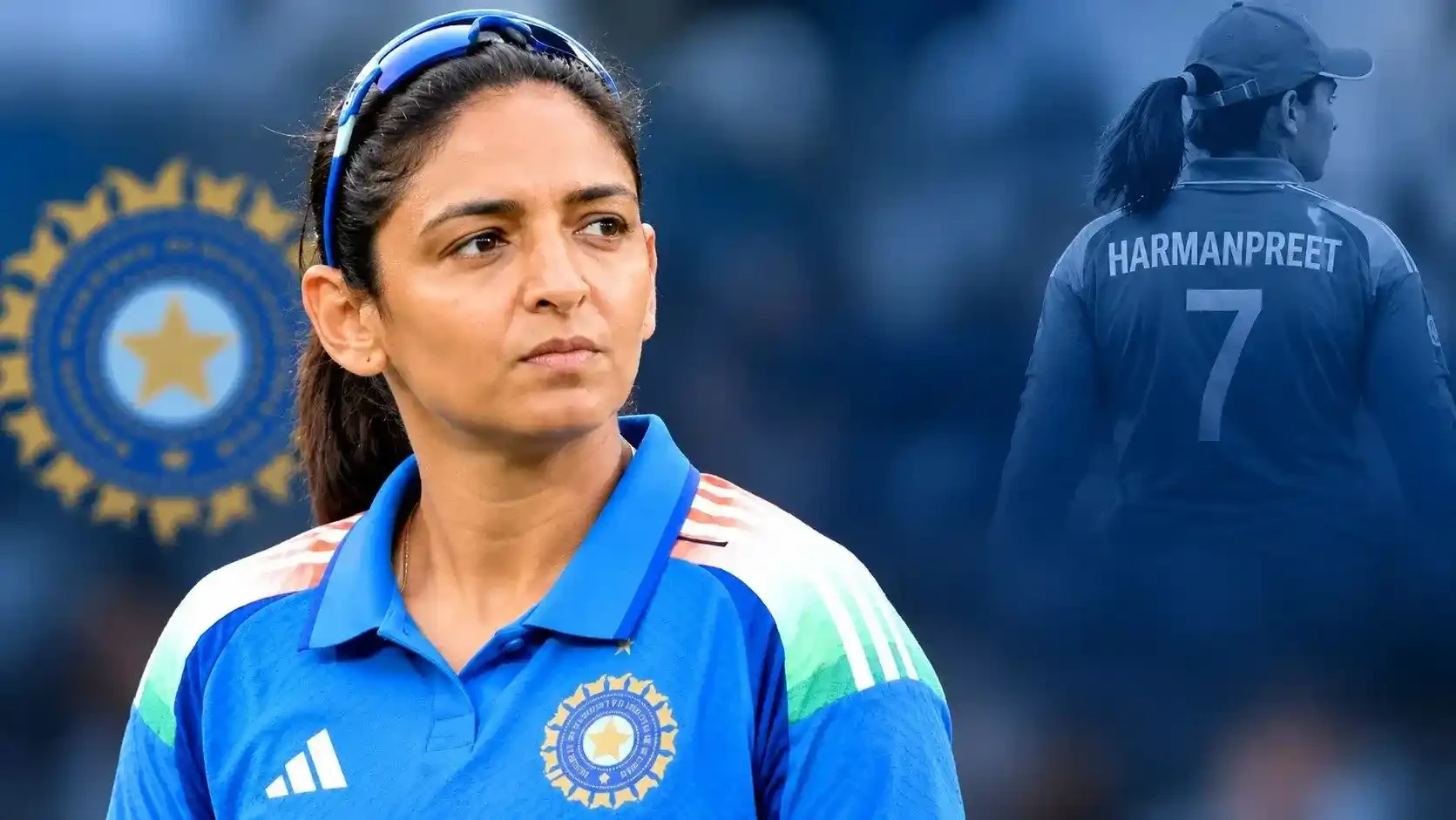
On 6 October 2026, Harmanpreet Kaur announced that she was stepping down as captain of the Indian women's cricket team across all three formats.
The decision marked the end of one of the longest leadership eras in women's international cricket. Kaur had taken over India's T20I captaincy in 2016 and later became the full-time ODI and Test captain in 2022 following Mithali Raj's retirement from international cricket.
However, this is not retirement from international cricket.
Kaur confirmed that she intends to continue playing for India, explaining that she is ready to return to the game without the responsibility of captaincy.
Her message effectively summed up the transition: captaincy has ended, but her cricket journey continues.
At 37, Kaur leaves captaincy after a period that delivered some of the biggest achievements in the history of Indian women's cricket.
Most importantly, she leaves as the captain who finally led India to its first Women's ODI World Cup title.
Born on 8 March 1989 in Moga, Punjab, Harmanpreet Kaur developed a passion for cricket at a young age.
She grew up in a region where cricket was deeply popular, but opportunities for women cricketers were considerably more limited than they are today.
Kaur's powerful batting quickly became her defining characteristic.
Rather than being known only as a specialist batter, she developed into a genuine all-rounder, contributing with both the bat and right-arm off-spin.
Her early career coincided with a period when Indian women's cricket was beginning to receive greater visibility. Her performances eventually earned her an India call-up, and she made her international debut in 2009.
Over the following years, Kaur developed from a promising young batter into one of India's most recognisable cricket stars.
Harmanpreet's international career has stretched across Tests, ODIs and T20Is, making her one of the most experienced players in women's cricket.
She became a central figure in India's middle order and eventually emerged as one of the team's most important leaders.
Her career has also coincided with the transformation of women's cricket from a relatively niche sport into a major international and commercial competition.
Kaur was part of that transformation.
In February 2026, she became the most-capped women's international cricketer in history, moving beyond New Zealand's Suzie Bates after reaching 356 international appearances.
That record underlined the extraordinary longevity of her career.
When discussing Harmanpreet Kaur's career, one innings inevitably stands out.
At the 2017 Women's Cricket World Cup, Kaur produced one of the most memorable innings in women's international cricket.
Against Australia in the semi-final, she smashed an unbeaten 171 runs, combining power and control in an extraordinary display of batting.
Her innings helped India reach the final and became one of the defining performances of the tournament.
The knock also changed the way many cricket fans viewed Kaur.
She was no longer simply an important Indian player. She had demonstrated that she could produce a match-winning innings against one of the strongest teams in world cricket on the biggest stage.
The 171 remains one of the most iconic individual performances in the history of the Women's ODI World Cup.
Harmanpreet Kaur has also been an important figure in the growth of women's T20 cricket.
In November 2018, she became the first Indian woman to score a T20I century, reaching three figures against New Zealand.
That achievement was significant because it demonstrated her ability to adapt her aggressive batting style to the shortest international format.
Kaur subsequently became one of India's most experienced T20I players and played a major role in the development of the country's women's T20 setup.
She also became the first Indian cricketer, male or female, to play 100 international T20 matches in 2019.
Her T20 career later became closely connected with the rise of franchise women's cricket, including the Women's Premier League, where she captains Mumbai Indians.
Kaur's leadership journey began in the T20I format in 2016.
She eventually took charge of India's ODI and Test teams in 2022, becoming the team's full-time captain across the major formats.
Her tenure was marked by both breakthrough victories and difficult moments.
But the defining feature of her leadership was India's growing competitiveness across formats.
Under Kaur, India achieved several notable milestones, including:
Her leadership also coincided with a new generation of Indian women's cricketers becoming household names.
The biggest achievement of Harmanpreet Kaur's captaincy came in November 2025.
India won its first-ever Women's Cricket World Cup, defeating South Africa in the final on home soil.
For decades, the Women's ODI World Cup had remained one of the biggest prizes missing from India's cricket history.
India had previously reached the final in 2005 and 2017, but had fallen short on both occasions.
The 2025 campaign finally ended that wait.
As captain, Harmanpreet became only the third Indian captain after Kapil Dev and MS Dhoni to win a 50-over World Cup for India.
The victory transformed her captaincy legacy.
Instead of being remembered only for the famous 171 or her individual records, Kaur became the leader who delivered the biggest trophy in the history of Indian women's cricket.
Another important chapter of Kaur's captaincy came at the Asian Games.
India won the women's cricket gold medal at the 2022 Asian Games in Hangzhou, marking the country's first Asian Games gold in women's cricket.
Kaur subsequently led India to another gold medal in 2026, giving the team consecutive Asian Games titles.
The 2026 triumph also became the final assignment of her captaincy career.
That gave Kaur a particularly fitting ending to her leadership era: she stepped down after leading India to another international gold medal.
Kaur's leadership record also includes success in the Women's Asia Cup.
India won the tournament in 2012, 2016, 2022 and 2026, with Kaur playing a significant leadership role during India's dominance in the competition.
The 2026 edition was particularly significant because India completed an unbeaten campaign and defeated Sri Lanka by 72 runs in the final.
India's victory gave the team a record-extending eighth Women's Asia Cup title overall.
Kaur's leadership therefore ended with another major continental trophy.
Kaur's career is defined not only by trophies but also by individual milestones.
In February 2026, Kaur became the most-capped women's international cricketer, overtaking Suzie Bates.
She reached 356 international appearances at the time of the record.
Her century against New Zealand in 2018 made her the first Indian woman to score a century in Women's T20I cricket.
Her unbeaten 171 against Australia in the 2017 World Cup semi-final remains one of the most celebrated innings in Women's ODI cricket.
By leading India to the 2025 World Cup title, Kaur became the first woman captain to guide India to a senior ICC World Cup championship.
In 2026, Kaur became only the third Indian woman to cross 9,000 international runs, joining an elite group of Indian women's batters.
She also became the first Indian cricketer, male or female, to score a half-century in all three international formats at Lord's, after making 58 against England.
Kaur's batting has traditionally been associated with power, aggression and clean ball-striking.
She is particularly dangerous when attacking pace and has frequently used her strength to clear the boundary.
Her bowling, meanwhile, has provided India with an additional off-spin option.
That all-round ability has made her valuable in multiple formats.
However, perhaps her most important quality has been adaptability.
Kaur has played through several generations of Indian women's cricket, adapting to changes in fitness standards, tactical approaches, professional leagues and the increasing demands of international cricket.
It is difficult to discuss Kaur's career without discussing the broader growth of women's cricket in India.
When she made her international debut in 2009, women's cricket did not have the commercial ecosystem that exists today.
There was no Women's Premier League, international women's cricket received considerably less mainstream coverage, and professional opportunities were more limited.
Over the course of Kaur's career, that landscape changed dramatically.
The emergence of the WPL, increasing broadcast coverage and larger audiences have created a new environment for Indian women cricketers.
Kaur has been part of that transformation from the beginning.
Her longevity has allowed her to connect different generations of players — from the era of Mithali Raj and Jhulan Goswami to the current generation featuring Smriti Mandhana, Shafali Verma and Richa Ghosh.
Harmanpreet Kaur's contribution to Indian cricket has also been recognised away from the field.
She received the Arjuna Award for Cricket in 2017, one of India's major sporting honours.
In 2026, she was also named among the recipients of the Padma Shri, India's fourth-highest civilian honour.
These honours reflect the significance of her contribution beyond individual match performances.
Kaur's decision in October 2026 was not an announcement of retirement.
Instead, she explained that she felt ready to continue her career without the responsibility of leading the team.
After years of captaincy, the decision could allow her to concentrate more closely on batting, fitness and contributing as a senior player.
Her statement also suggested that she viewed the transition as a continuation rather than an ending.
That distinction matters.
India is moving into a new leadership phase, but Kaur remains available as an experienced international player who can provide knowledge and stability to the next generation.
The biggest question now is what Kaur can achieve as a player without the additional responsibility of captaincy.
The change could potentially allow her to focus more heavily on her own performances.
She has already accumulated an extraordinary list of achievements: a World Cup title, Asian Games gold medals, Asia Cup trophies, individual batting records and the distinction of becoming the most-capped women's international cricketer.
But her international career is not over.
At 37, Kaur has chosen to step away from leadership rather than from cricket itself.
That means fans can still expect to see one of India's most experienced players competing on the international stage.
Harmanpreet Kaur's legacy cannot be reduced to a single innings or trophy.
The 171 against Australia made her a global cricket name.
Her T20I century established her as a pioneer of India's shortest-format game.
Her longevity produced international appearance records.
Her captaincy brought Asia Cup and Asian Games success.
And ultimately, her leadership delivered the trophy that Indian women's cricket had been chasing for decades: the Women's ODI World Cup.
That combination makes Kaur one of the most influential players in the history of Indian women's cricket.
Now, as she moves from captain back to player, the next chapter of her career begins.
The captaincy may have ended, but Harmanpreet Kaur's place in Indian cricket history is already secure.
