
Tesla–SpaceX Merger Talks as SpaceX Profit Surges

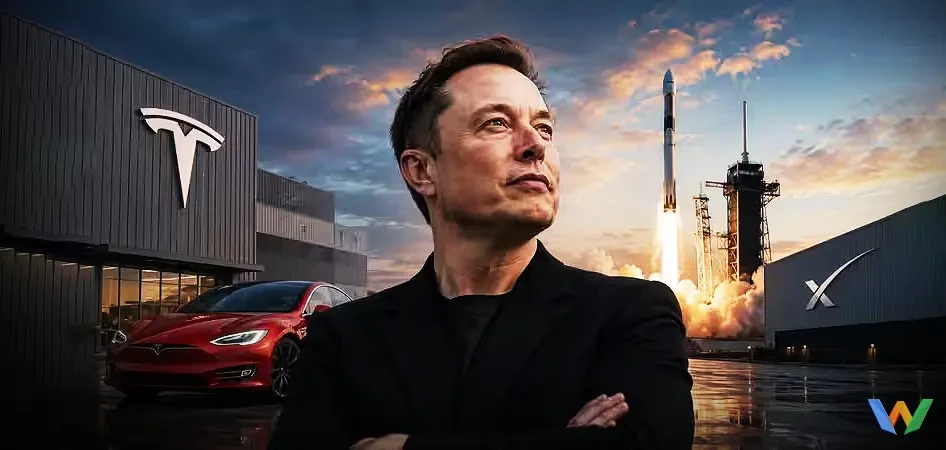
Elon Musk Explores Tesla–SpaceX Merger as AI Growth Drives Record Earnings
Elon Musk’s Tesla–SpaceX Merger Plan Gains Momentum
October 21, 2026: Elon Musk’s technology empire could be heading towards another major corporate shake-up, as Tesla and SpaceX explore the possibility of merging their operations. The discussions come as SpaceX reports stronger-than-expected financial results, driven by rapid growth in artificial intelligence (AI), satellite internet and space-related services.
Musk has publicly supported the idea of combining the two companies, arguing that closer cooperation could create significant advantages in software, computing infrastructure and advanced technology. Both businesses have established special committees to examine a potential deal, although no final agreement has been announced.
A merger would bring together two businesses with different core operations but increasingly overlapping ambitions. Tesla is known for electric vehicles, battery technology and autonomous driving, while SpaceX operates rockets, satellite communications and expanding AI infrastructure.
Combining these operations could create a technology group spanning transport, communications, space exploration and artificial intelligence. However, the proposal remains at an exploratory stage and would face important financial, regulatory and shareholder considerations.
SpaceX Revenue Jumps 161% as AI Business Expands
SpaceX reported third-quarter revenue of approximately $14.58 billion, representing a 161% increase year over year and exceeding analyst expectations of around $12.72 billion.
The company also recorded net income of approximately $4.4 billion, significantly above market forecasts. The result marks a substantial improvement from the loss reported in the previous quarter and highlights the growing contribution of its newer business activities.
Artificial intelligence has become a major driver of SpaceX’s financial performance. Its expanding AI operations include computing infrastructure and AI software, as the company competes for a larger share of the market for advanced models and cloud-based computing services.
The growth reflects rising demand for the computing power needed to train and operate AI systems. Technology companies are investing heavily in data centres, specialised chips, electricity supply and cooling systems to support increasingly complex AI workloads.
Despite the strong results, the expansion is capital-intensive. SpaceX reported substantial capital expenditure as it continued investing in AI computing capacity, satellite networks and its Starship rocket programme.
Starlink Remains a Key Part of Musk’s Business Strategy
While artificial intelligence is attracting increasing attention, Starlink remains an important part of SpaceX’s commercial foundation. The satellite internet service provides connectivity to consumers, businesses and organisations in locations where traditional broadband networks may be limited.
Growth in Starlink subscriptions and broader connectivity services has helped support SpaceX’s revenue expansion. Its satellite network also fits into Musk’s wider ambitions to develop a connected technology ecosystem across land, air and space.
A potential Tesla–SpaceX merger could create opportunities to explore shared technology, including communications systems, computing hardware and AI software. However, the extent of any practical integration would depend on the terms of a deal and the priorities of both companies.
SpaceX’s rocket-launch business also remains strategically important. Its launch capabilities support satellite deployment and future space missions, while the Starship programme is intended to enable larger payloads and more ambitious exploration objectives.
The challenge will be balancing these long-term projects with the substantial investment required to expand AI infrastructure and maintain commercial growth.
Why a Tesla–SpaceX Merger Could Matter
A merger could reshape how investors view Musk’s companies by combining businesses operating across several major technology sectors.
For Tesla, closer links with SpaceX could potentially offer access to expertise in AI computing, engineering and advanced systems. For SpaceX, Tesla’s capabilities in batteries, manufacturing and autonomous technology could create areas for cooperation.
However, the strategic possibilities do not guarantee that a merger would create value for shareholders. Investors would need to consider the companies’ relative valuations, ownership structures, financing arrangements and the risks of combining businesses with different operational demands.
Musk has indicated that he would not directly participate in the merger committee discussions because of the potential conflict of interest arising from his leadership roles at both companies. Shareholder approval and other applicable regulatory requirements would also be important factors.
Until the companies disclose formal terms, the financial structure and likely benefits of a possible transaction remain uncertain.
AI Investment Brings Opportunities and Financial Risks
SpaceX’s latest results underline the growing commercial importance of AI, but they also highlight the costs of competing in the sector.
Building data centres and securing enough computing capacity requires major upfront spending. Companies must also manage electricity availability, infrastructure delays, competition and the possibility that demand or pricing may change.
SpaceX’s broader strategy links AI expansion with its satellite and launch businesses. In the longer term, Musk has discussed ambitious plans involving space-based infrastructure, although these would require significant technological progress and investment.
Competition remains intense, with established technology companies and specialist AI developers investing heavily in their own systems. SpaceX will need to sustain customer demand and turn its rapid revenue growth into durable profitability while funding its other major projects.
For investors, the key question is whether the company can maintain its growth without allowing capital expenditure and execution risks to outweigh the financial benefits.
What Happens Next?
The proposed Tesla–SpaceX combination is still under review, and there is no confirmed merger agreement. Investors will be watching for further announcements from both companies, including any details about valuation, governance, financing and the approval process.
Meanwhile, SpaceX’s latest earnings offer evidence of strong momentum across AI and connectivity. Its future performance will depend on how effectively it manages infrastructure spending, expands Starlink, develops its AI operations and advances its rocket programme.
If a merger eventually proceeds, it could mark a significant change in the structure of Musk’s business interests. For now, the combination remains a possibility rather than a completed transaction.
The immediate takeaway is clear: SpaceX is increasingly more than a rocket company. Its expanding AI and connectivity businesses are changing its financial profile, while the potential Tesla tie-up raises fresh questions about how Musk intends to bring his technology ambitions together.