•
•
•
•
•
•
•

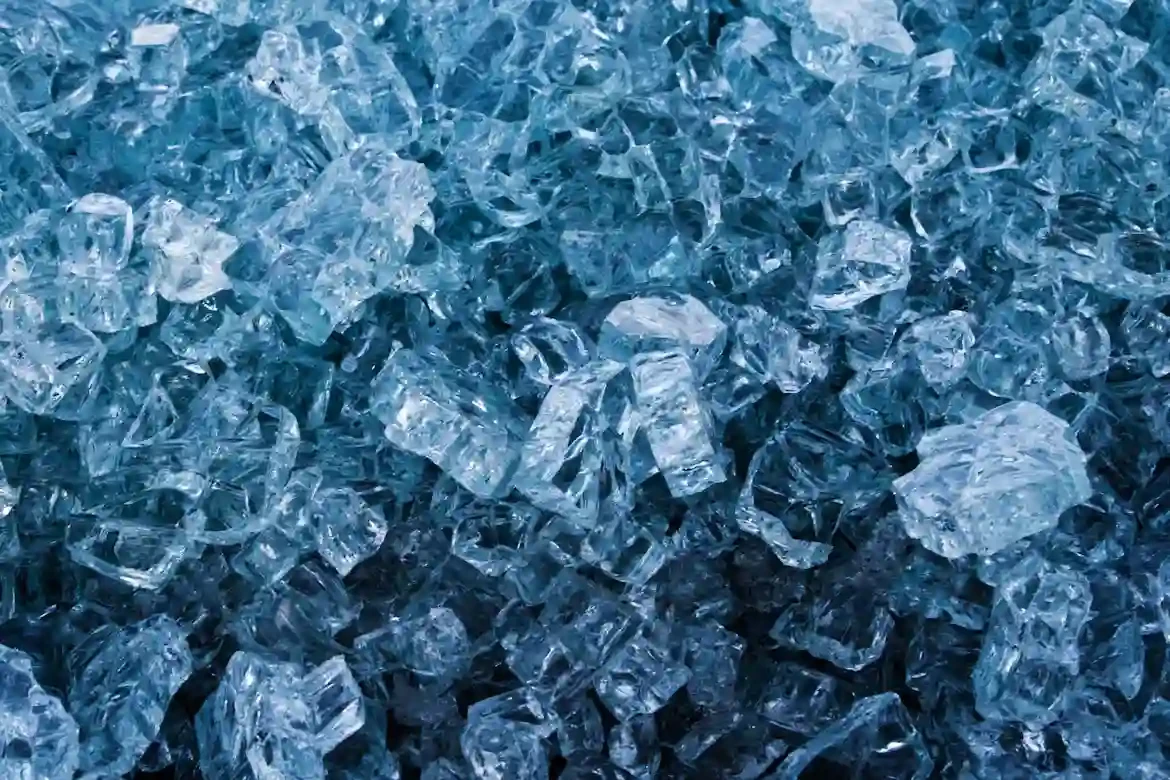
Scientists have studied an extraordinary form of water that can remain solid at temperatures exceeding 2,000°C—conditions hot enough to vaporize ordinary water instantly.
The material, known as superionic ice, forms only under extremely high pressure. Unlike familiar ice, its structure allows oxygen atoms to remain locked in a solid arrangement while hydrogen ions move freely through the crystal.
Superionic ice is an unusual phase of water created when water is subjected to enormous pressure and intense heat.
In ordinary ice, water molecules remain arranged in a relatively stable structure. In superionic ice, however, the oxygen atoms form a rigid lattice, while the hydrogen ions are able to move through it.
This unusual structure gives the material properties of both a solid and a conducting liquid.
The key is pressure.
At normal atmospheric pressure, water would boil and eventually become vapor long before reaching 2,000°C. But under pressures millions of times greater than Earth's atmosphere, water behaves very differently.
Scientists recreate these extreme conditions in laboratories using specialized high-pressure experiments. These experiments allow researchers to observe phases of matter that normally exist only under extraordinary natural conditions.
One of the biggest reasons scientists are interested in superionic ice is its possible presence inside Uranus and Neptune.
These planets are known as ice giants, and their interiors are believed to contain water-rich materials exposed to immense pressure and heat.
If superionic ice exists deep inside these planets, its electrically conductive properties could help explain some of the unusual characteristics of their magnetic fields.
The research provides scientists with a better understanding of how water behaves under extreme conditions.
Water is one of the most common substances in the universe, but its behavior can change dramatically when pressure and temperature reach extraordinary levels. Studying these exotic phases can therefore help scientists build better models of planetary interiors.
The findings also demonstrate that the word “ice” does not necessarily mean something cold. Under the right conditions, water can form solid structures even at temperatures that would destroy ordinary ice instantly.
| Feature | Ordinary Ice | Superionic Ice |
|---|---|---|
| Temperature | Forms at low temperatures | Can exist at extremely high temperatures under pressure |
| Structure | Water molecules form a solid lattice | Oxygen forms a lattice while hydrogen ions move freely |
| Electrical conductivity | Relatively low | High |
| Natural relevance | Common on Earth | Potentially found inside ice giants |
| Required conditions | Low temperature | Extreme pressure and high temperature |
The study of superionic ice highlights how much remains to be discovered about one of Earth's most familiar substances.
Under extreme planetary conditions, water can take forms that are completely different from the ice, liquid and vapor we encounter on Earth. Understanding these phases could provide valuable clues about the hidden interiors of distant worlds—and about how matter behaves under some of the most extreme conditions in nature.