•
•
•
•
•
•
•

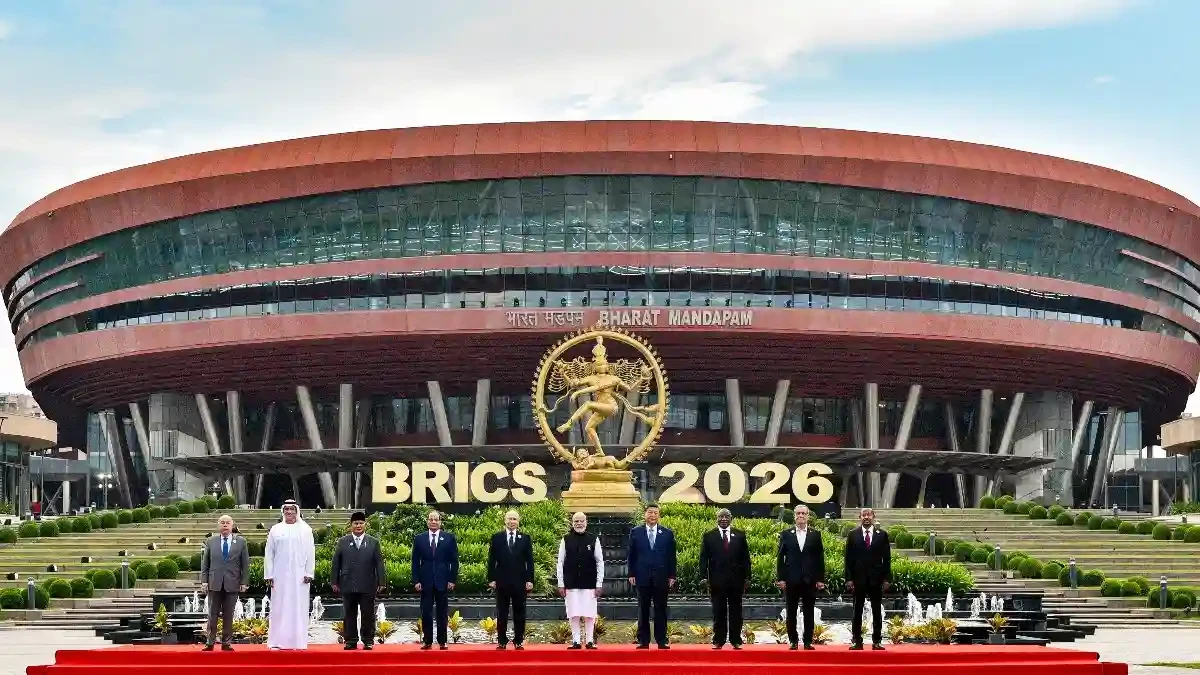
The 18th BRICS Summit concluded in New Delhi on September 13, 2026, with member countries adopting the 45-page New Delhi Declaration outlining their shared positions on global governance, trade, technology and geopolitical challenges.
The summit brought together leaders of the expanded BRICS grouping at a time of heightened international tensions and growing debates over trade protectionism, economic resilience and the role of the Global South. The declaration reaffirmed the bloc's push for greater representation of developing countries in international institutions while expanding cooperation across several strategic sectors.
BRICS leaders expressed concern over the rise of protectionist trade measures, unilateral tariffs and other barriers to international commerce. The bloc reiterated the importance of a more open and predictable global trading system and raised concerns about measures that could disrupt economic growth and supply chains.
The declaration addressed major international conflicts and reaffirmed support for a two-state solution to the Israeli-Palestinian conflict. BRICS members also condemned terrorism and stressed the importance of diplomatic efforts and international cooperation in addressing geopolitical crises.
A central theme of the summit was the need to make global institutions more representative. BRICS members called for greater participation and influence for Global South countries in international decision-making bodies.
The position reflects the bloc's broader ambition to strengthen the role of developing economies in shaping global economic and political policies.
The declaration also highlighted growing concerns surrounding the weaponisation of critical minerals and strategically important technology supply chains.
With advanced technologies and critical resources becoming increasingly important to national security and economic competitiveness, BRICS countries emphasised the need for resilient and reliable supply chains.
Indian Prime Minister Narendra Modi placed emphasis on inclusive development, stronger multilateral cooperation and a greater role for developing countries in global affairs.
Modi also held 15 high-level bilateral meetings during the summit, underlining India's diplomatic engagement with participating countries and other partners.
Chinese President Xi Jinping outlined new areas of cooperation centred on trade and artificial intelligence. The proposals reflected BRICS' growing interest in emerging technologies and their potential role in economic development.
AI has increasingly become a major area of international cooperation and competition, making technology governance a significant issue for the expanded bloc.
Russian President Vladimir Putin proposed an insurance mechanism and a joint grain-market initiative, presenting them as measures to strengthen economic cooperation among BRICS countries.
The proposals also come against the backdrop of continuing Western sanctions on Russia and wider efforts among BRICS members to strengthen alternative economic and trade mechanisms.
The 2026 summit reflected the growing reach of the organisation, which now includes 11 member countries and 10 official partner countries.
The expanded membership gives BRICS a broader geographic and economic footprint and strengthens its position as a platform for cooperation among emerging and developing economies.
The presence of major leaders, including Prime Minister Narendra Modi, Chinese President Xi Jinping and Russian President Vladimir Putin, also gave the summit considerable diplomatic significance.
The question of a potential common BRICS currency remained an important part of discussions surrounding the summit.
India maintained its position against moving towards a single common currency, particularly one perceived as being linked to China's economic influence. Instead, BRICS cooperation continues to focus more broadly on strengthening trade, financial cooperation and alternative payment mechanisms.
The New Delhi Summit demonstrated that BRICS is seeking to expand its role beyond economic cooperation. Its agenda increasingly covers geopolitics, technology, global governance, trade and strategic resources.
The New Delhi Declaration also highlighted the bloc's broader objective of giving the Global South a stronger voice in international affairs while building greater resilience against economic and geopolitical disruptions.
As BRICS continues to expand, the 2026 summit in New Delhi marked another step towards establishing the grouping as an increasingly influential platform for economic cooperation, geopolitical coordination and reform of the international system.