•
•
•
•
•
•
•

As fewer young people take part in traditions, the knowledge of grandparents is quietly fading
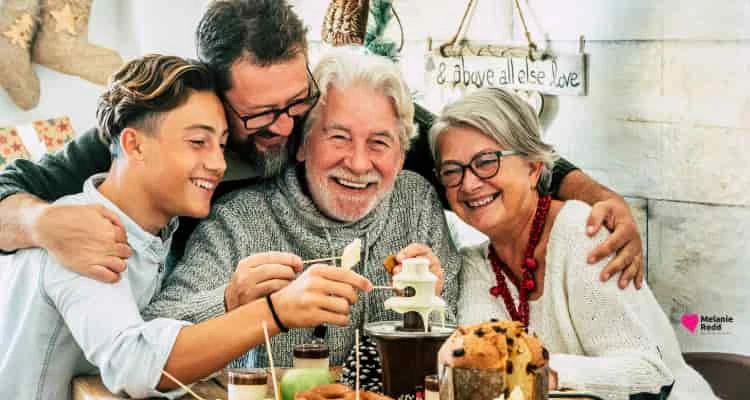
In many homes, the person who knows exactly how a festival should be prepared, which songs are sung at a wedding, or what each step of a prayer means is a grandparent. For generations, rituals were learned not from books but by standing beside elders, watching, helping and asking questions.
That chain of learning is weakening. Young people today often live away from their families for education or jobs, work long hours, and celebrate festivals in smaller, quicker ways. Rituals still happen, but more often in a shortened form — and with fewer young people learning the details.
This is not simply nostalgia. Elders carry knowledge, meaning and emotional connection that are difficult to replace, and research suggests that sharing traditions across generations benefits both the old and the young.
Many young adults leave their hometowns for education and jobs. Festivals that once lasted days with the extended family are now squeezed into a weekend visit — or a video call.
According to Census of India 2011 data, nuclear families made up roughly 70% of households, while joint and extended families together accounted for about 20%. When grandparents live in a different city, children see rituals performed less often and have fewer chances to learn them.
Demanding jobs and study schedules leave little room for multi-step ceremonies, preparation and travel.
Some young people question the purpose of certain customs or see them as outdated. Without someone to explain the meaning behind them, rituals can feel like empty routines.
Online tutorials and ready-made ritual kits make it possible to perform ceremonies without guidance — but rarely with the context, stories or family-specific variations that elders know.
The joint family is changing rather than vanishing. Census data showed the share of nuclear households actually dipped slightly between 2001 and 2011, and many families today are structurally nuclear but still function closely across generations — sharing responsibilities, money and frequent contact. This "transitional" family model creates an opportunity to keep elders involved in traditions even when everyone does not live under one roof.
The UNFPA's India Ageing Report 2023 projects that the share of people aged 60 and above will roughly double, from about 10.5% in 2022 to 20.8% in 2050 — from around 149 million to 347 million people. By 2046, older people are projected to outnumber children aged 0–14.
India will have more elders than ever, yet the report and related commentary note that nuclear families and weakening traditional support systems leave many older people with less day-to-day connection to younger relatives. Involving elders in rituals is one meaningful way to keep that connection alive.
Elders often remember the exact order of steps, the right ingredients, traditional recipes, prayers, songs and the region- or family-specific versions of customs that are not written anywhere. Once that memory is lost, it is usually lost for good.
A tutorial can show what to do. A grandparent can explain why a lamp is lit at a certain time, why a particular dish is made for a festival, or the story behind a family custom. Meaning is what turns a ritual from a chore into something people want to continue.
Research on grandparents and grandchildren sharing festive and traditional activities describes how these experiences help children gradually maintain their cultural heritage, roots and identity. Grandparents in that research often saw passing on traditions as a deliberate choice to leave a legacy and ensure cultural continuity.
The same study found grandparents who shared festive activities with grandchildren reported greater perceived benefits — in enjoyment, creativity, physical activity and their relationship with the grandchildren — than those who did not. Being the person the family turns to during a festival gives elders a valued role at a stage of life when they may otherwise feel sidelined.
Studies on intergenerational transmission show that beliefs and values can flow from grandparents to grandchildren. Research has found positive links between grandparents' and adult grandchildren's levels of trust in others, particularly in families with strong bonds. Rituals — which often centre on gratitude, respect, sharing and community — are a natural setting for this transfer.
Research from the US Longitudinal Study of Generations found that religious and traditional values transmitted from grandparents were linked to grandchildren's stronger family values and emotional closeness to grandparents — which, in turn, shaped their sense of responsibility for caring for elders. In simple terms, shared traditions can help build the closeness that makes families look after one another.
Rituals do not have to be frozen in time. Research notes that grandchildren can also inspire grandparents to learn about current customs. Young people can help elders join festivals over video calls, document recipes digitally or adapt ceremonies to modern schedules — while elders ensure the core meaning is not lost.
| Ritual area | What elders contribute | What is lost without them |
|---|---|---|
| Festivals | Preparation sequence, traditional foods, stories behind the festival | Family-specific recipes and customs |
| Prayers and worship | Correct recitation, meaning of offerings and symbols | Understanding of why steps are performed |
| Weddings | Regional customs, songs, roles of relatives | Local variations and folk songs |
| Birth and naming ceremonies | Traditional practices, family naming customs | Continuity of family lineage traditions |
| Rites for the departed | Proper procedures, remembrance customs | Confidence and clarity at difficult moments |
| Seasonal and harvest traditions | Links to agriculture, nature and community | Connection between traditions and their origins |
With India ageing and younger generations more mobile, families will increasingly decide whether traditions are consciously handed down or gradually forgotten. Expect growth in digital family archives, community and housing-society celebrations that bring generations together, and intergenerational programmes in schools and senior-citizen groups. The families that keep rituals meaningful will likely be those that treat elders not as gatekeepers, but as teachers and partners.
Elders hold detailed knowledge of how rituals are performed, the meaning behind each step, and family or regional variations that are rarely documented. They also provide emotional continuity and a sense of identity.
Common reasons include migration for work and study, smaller nuclear households, time pressure, changing beliefs and a lack of explanation about why rituals matter.
Research links it to stronger cultural identity, closer relationships, transmission of values, and wellbeing benefits for grandparents, including greater enjoyment and a sense of purpose.
Recording elders' explanations, keeping a shared family ritual notebook, and using video calls during festivals help keep traditions alive across distances.
Yes. Many traditions have evolved over time. Simplifying rituals can work well when elders help identify the core meaning that should be preserved.
Rituals survive through people, not just practices. Elders hold the knowledge, stories and meaning that make traditions worth continuing — and involving them benefits both generations, strengthening identity for the young and purpose for the old. As India grows older and families spread out, making deliberate space for elders in rituals may be one of the simplest ways to protect both culture and family bonds.
