•
•
•
•
•
•
•

Meaning, technology, tracking, applications and FAQs explained simply
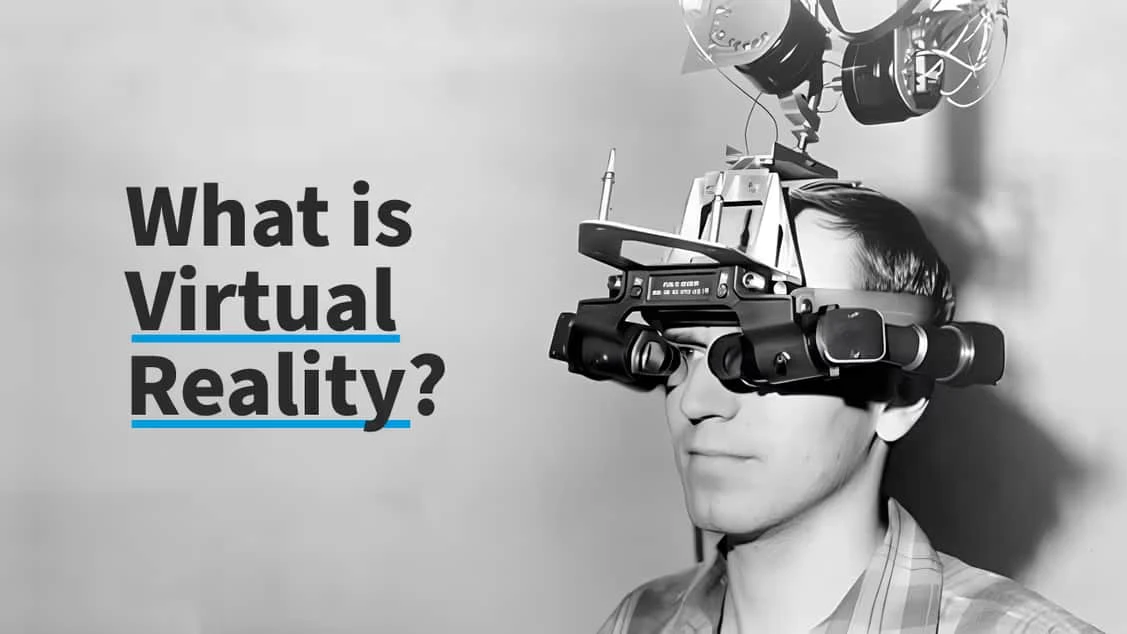
Virtual reality (VR) is technology that places you inside a computer-generated 3D environment. Instead of looking at a flat screen, you wear a headset that fills your vision and responds to your head movement, so the digital world feels like a space you are physically in.
VR combines hardware, sensors and software to trick your senses.
A headset shows each eye a slightly different image, just as your eyes see slightly different views in real life. Your brain merges them into a sense of depth.
Lenses between your eyes and the screens bend light so the image fills your field of view and appears at a comfortable focal distance.
Gyroscopes, accelerometers and cameras track where your head and hands are. There are two main approaches:
| Tracking type | How it works | Example use |
|---|---|---|
| 3DoF | Tracks rotation only (look around) | Simple 360° video |
| 6DoF | Tracks rotation and position (walk, lean, duck) | Modern games and training |
| Inside-out | Cameras on the headset watch the room | Standalone headsets |
| Outside-in | External sensors track the headset | High-precision setups |
The image must update within a few milliseconds of your movement. Delays cause mismatch between what your eyes see and what your inner ear feels, which can lead to motion sickness.
Handheld controllers or camera-based hand tracking let you interact. Spatial audio makes sounds seem to come from specific directions.
Game engines draw two views of the scene continuously. Some headsets use a connected PC, while standalone headsets have built-in processors.
| Technology | Meaning |
|---|---|
| VR | Fully virtual environment |
| AR | Digital content overlaid on the real world |
| MR | Digital objects that interact with the real world |
Benefits: immersive learning, safe practice of risky tasks, remote presence.
Limitations: cost, motion sickness for some users, headset weight, limited content in some fields, and privacy concerns around sensor data.
What is VR in simple words? A headset-based way to step into a digital world.
How does virtual reality work? Two slightly different images, motion tracking and fast rendering create a convincing 3D space.
What technology does VR use? Displays, lenses, motion sensors, controllers, spatial audio and real-time 3D software.
Is VR safe? Generally yes for short sessions. Take breaks if you feel dizzy or tired, and follow age guidance from the manufacturer.
