•
•
•
•
•
•
•

The Trump administration has dropped two appeals challenging court rulings against restrictions on Public Service Loan Forgiveness, preserving existing eligibility rules while one related appeal remains pending.
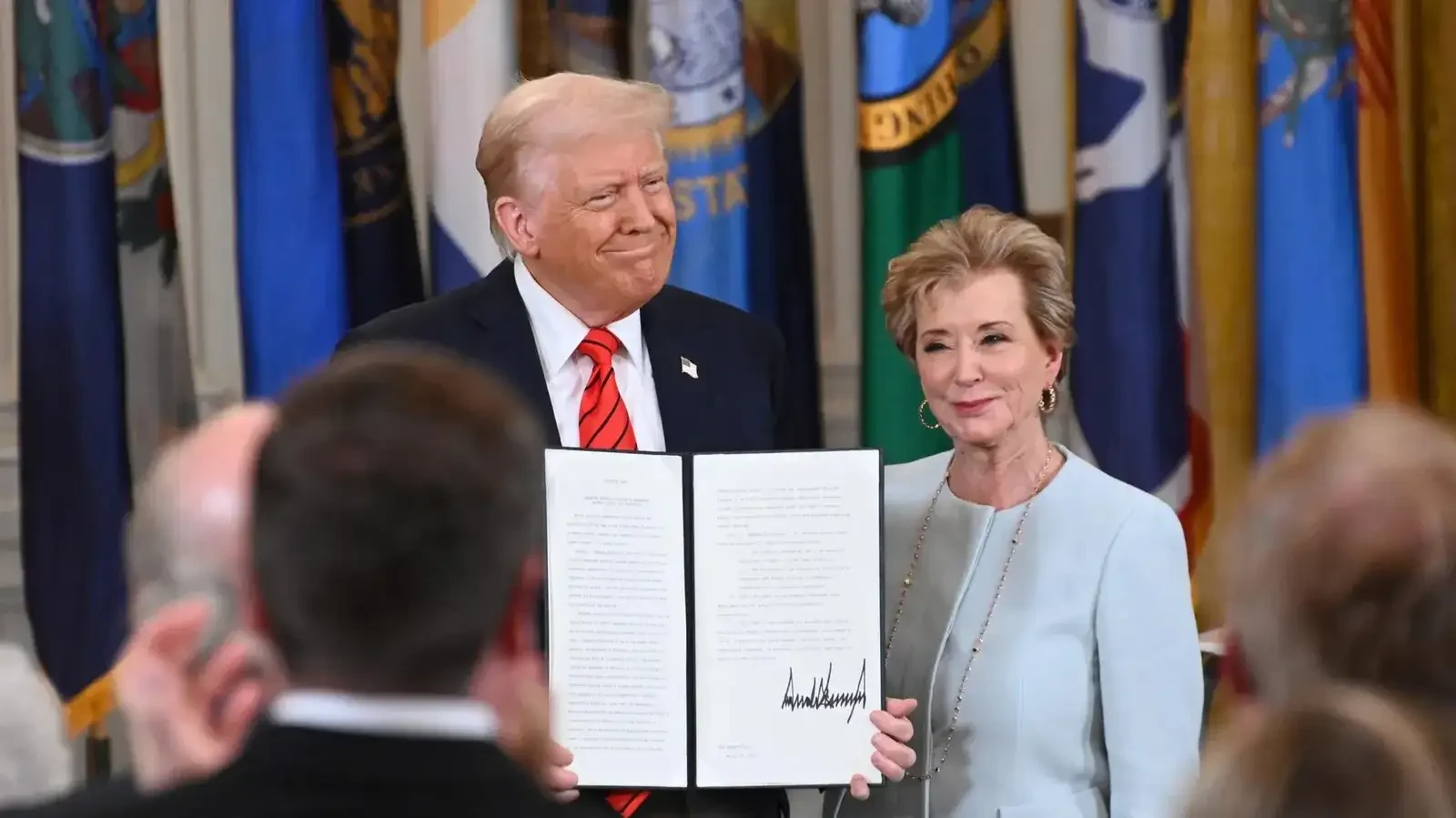
The Trump administration has dropped two legal appeals aimed at restoring restrictions on the US Public Service Loan Forgiveness (PSLF) program, marking a significant development for government employees and nonprofit workers pursuing federal student debt relief.
The US Department of Justice withdrew the appeals on October 21, 2026, after federal judges struck down a rule that would have allowed the Department of Education to disqualify certain employers from the loan forgiveness program. The administration has not publicly explained its decision to abandon the two appeals.
The move leaves the existing PSLF eligibility framework in place while a separate appeal remains pending. For borrowers working toward student loan forgiveness, the development reduces the immediate risk that their employers could be excluded under the disputed rule.
The Public Service Loan Forgiveness program is a federal initiative established in 2007 to encourage Americans to pursue careers in public service. It offers eligible borrowers forgiveness of their remaining federal Direct Loan balances after they complete the required qualifying payments while working for an eligible employer.
Under the program's traditional requirements, borrowers generally need to make 120 qualifying monthly payments, equivalent to ten years of payments, while meeting employment and repayment-plan conditions.
Eligible employment can include positions with federal, state and local government agencies, as well as qualifying nonprofit organizations. Teachers, nurses, public defenders, firefighters, public health professionals and other public servants may benefit if they satisfy the program's requirements.
PSLF is particularly important for workers whose public-interest careers may offer lower salaries than comparable positions in the private sector. The promise of federal student loan forgiveness can make these jobs more financially manageable over the long term.
However, forgiveness is not automatic after ten years of employment. Borrowers must satisfy the applicable loan, employment and repayment conditions, and their qualifying payments must be properly documented.
The dispute centres on a rule developed by the Trump administration that sought to narrow the definition of qualifying public service employers.
In March 2025, President Donald Trump signed an executive order directing the Education Department to exclude organizations whose activities were deemed to have a “substantial illegal purpose” from the PSLF program.
The department subsequently adopted regulations that would have given the education secretary authority to determine whether an employer met that standard. If an organization were disqualified, its employees could lose the ability to accumulate qualifying PSLF payments for periods covered by the determination.
The rule raised concerns among nonprofit organizations, public-interest groups and borrowers whose employment could be affected by decisions about their employers' eligibility.
Under the administration's approach, certain activities involving immigration-related services, gender-affirming care for minors and other conduct identified under the rule could potentially trigger an employer eligibility review, depending on the circumstances and the department's determination.
Supporters of the restrictions argued that federal student loan benefits should not subsidize organizations engaged in unlawful activities. Critics, however, warned that the rule gave the government excessive discretion over which organizations could participate in a federal benefit program.
They also argued that the policy could discourage people from working for organizations engaged in legally protected advocacy, healthcare or public-interest services.
The proposed restrictions faced legal challenges from nonprofit organizations, public-interest advocates and a coalition of states.
On June 30, 2026, federal courts in Massachusetts and Washington, DC, ruled against the disputed rule and vacated it before its scheduled implementation on July 1.
The challenges questioned whether the Education Department had sufficient statutory authority to impose the new employer eligibility restrictions. They also raised concerns about the rule's potential impact on constitutionally protected speech and advocacy.
The courts agreed with challenges to the rule, preventing it from taking effect. Their decisions meant the department could not enforce the disputed restrictions under the vacated regulation.
The administration subsequently appealed the rulings in August, seeking to continue its legal challenge.
That legal battle took a new turn on October 21, when the Justice Department agreed to dismiss two of its appeals through joint court filings. The agreements provided that each side would bear its own legal fees and costs.
Officials did not provide a public explanation for the withdrawal.
Importantly, dropping the appeals does not mean the administration has announced a comprehensive new student debt policy. The decision concerns a specific legal dispute over employer eligibility under PSLF.
The federal government's decision affects two of the three appeals connected to challenges against the disputed employer rule.
One appeal involved litigation brought by public-interest organizations and other groups. Another arose from a separate challenge brought by nonprofit organizations, unions and municipalities.
The third appeal, involving a coalition of states and the District of Columbia, remained pending as of October 21, 2026.
The status of that remaining case matters because it means the wider legal dispute has not necessarily concluded in every proceeding. The administration's withdrawal from two cases nevertheless represents a substantial retreat from its previous effort to defend the restrictions in court.
Until further court action or a new lawful policy changes the position, the vacated employer rule cannot be enforced.
For borrowers pursuing Public Service Loan Forgiveness, the immediate effect is that the disputed restrictions remain blocked.
Workers at qualifying government agencies and nonprofit organizations can continue pursuing forgiveness under the applicable program rules. Employment with an organization that might have faced scrutiny under the vacated rule does not, by itself, disqualify a borrower under that rule.
The development may be especially significant for people employed by immigration legal aid organizations, public-interest law firms, healthcare providers and advocacy groups. Some workers had expressed concern that their employers' activities could jeopardize their progress toward student loan forgiveness.
The withdrawal of two appeals reduces uncertainty surrounding that particular eligibility threat. However, borrowers should not assume that every employer automatically qualifies or that all student debt will be cancelled.
PSLF eligibility still depends on the relevant federal loan requirements, qualifying employment, repayment conditions and payment history.
Borrowers working toward federal student loan forgiveness should consider the following steps:
Borrowers experiencing payment-count discrepancies or eligibility problems should seek clarification through official federal student aid channels rather than assuming the court developments automatically resolve individual account issues.
The PSLF dispute extends beyond individual student borrowers. It also raises questions about recruitment, employee retention and the financial stability of organizations that provide public services.
Many nonprofit employers compete with private-sector businesses for qualified professionals while operating with limited budgets. Student loan forgiveness can be an important factor when graduates decide whether to pursue public-interest careers.
If employees believe that their employer could lose PSLF eligibility because of government decisions about its activities, they may reconsider their career choices or move to organizations perceived as less vulnerable to regulatory changes.
The vacating of the restrictions and the government's decision to drop two appeals reduce that specific source of uncertainty.
The case also highlights the broader legal debate over executive authority, administrative rulemaking and the boundaries of federal agencies' power to determine eligibility for government benefit programs.
For organizations involved in litigation, the decision represents a development in their challenge to the regulation. For the government, it leaves the disputed rule blocked without a final appellate ruling endorsing the administration's legal arguments.
The remaining appeal was still pending as of October 21, 2026. Its outcome, along with any subsequent administrative or legislative action, could affect the longer-term legal position.
The federal government has not publicly explained why it withdrew the two appeals. It would therefore be premature to conclude that the decision signals a broader reversal on student loan policy.
For now, the most immediate consequence is clear: the challenged employer restrictions remain vacated, and the existing PSLF framework continues to govern eligibility.
Borrowers should continue meeting the program's requirements, monitoring their qualifying payment counts and checking official updates. The decision offers reassurance to public servants concerned about the disputed rule, but it does not eliminate the need to comply with the program's other conditions.
The outcome is an important development in the continuing debate over student loan debt relief in the United States, the role of government in regulating public-service benefits and the legal protections available to organizations and workers affected by federal policy changes.
