•
•
•
•
•
•
•

Biometric border checks, ETIAS delays, queue tips and a checklist for smoother entry in 2026 and 2027
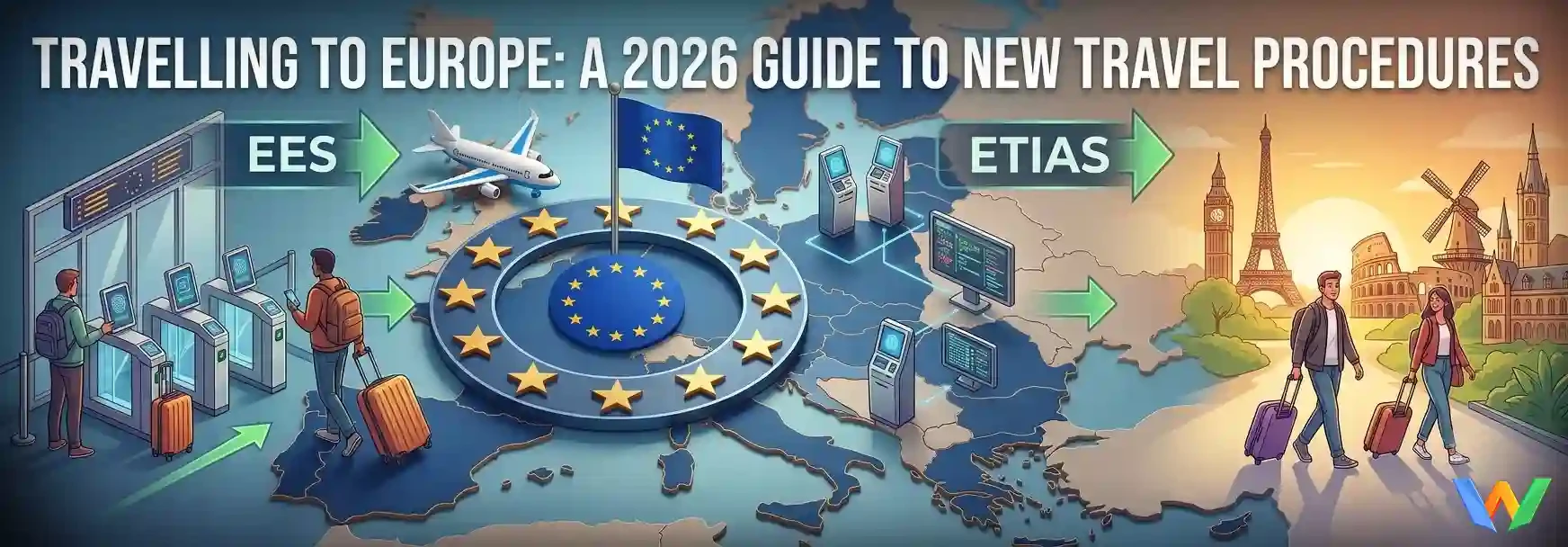
Planning a trip to Europe this winter or next summer? The way you cross the border has changed. Passport stamps are being replaced by biometric checks, and a second system, ETIAS, is still waiting in the wings. Headlines about long queues, delayed launches and fake application websites have left many travellers confused about what is actually required. This guide explains how the EU Entry/Exit System (EES) works, what is happening with ETIAS, how to prepare and how to avoid scams and delays.
The Entry/Exit System is an automated IT system that records the entry, exit and refusal of entry of non-EU nationals travelling to the Schengen area for short stays. Instead of a border officer stamping your passport, the system logs each crossing electronically with the date and place. It also helps authorities automatically calculate how long you have stayed, which matters because short stays are limited to 90 days within any 180-day period.
The EES covers 29 European countries: 25 EU member states plus Norway, Liechtenstein, Iceland and Switzerland. It applies whether you need a Schengen visa or are visa-exempt for up to 90 days.
At your first crossing, the system registers:
Children under 12 are not fingerprinted. After your first registration, later crossings are quicker because your details are already on file, typically needing a facial check and verification rather than starting from scratch.
EU citizens, holders of residence permits and long-stay visa holders are exempt. If you hold a Schengen visa or are visa-exempt, you are included.
| Date | Milestone |
|---|---|
| October 12, 2025 | EES begins gradual rollout at external borders |
| April 10, 2026 | EES becomes fully operational |
| October 2026 | Airlines and airports call for six changes after reports of long queues |
| Late 2026 to 2027 | Some countries may suspend checks at busy crossings; travel groups seek contingency measures into 2027 |
| TBC | ETIAS launch still unconfirmed |
Experiences vary widely. A survey by UK travel association Abta found that 46 per cent of travellers heading to Europe had already used the EES, and most reported minimal disruption. The association said the system had not significantly affected travel demand from the UK.
At the same time, European airlines and airports say the reality at busy borders is much worse. They report queues that routinely exceed two hours and can reach five hours at peak times. Their proposals include:
Both pictures can be true. The system may run smoothly at a quiet airport on a Tuesday and struggle at a peak-season ferry port or a crowded airport hub.
Some reports say certain EU countries could suspend EES checks at busy crossings until the end of 2026. Travel groups, including Abta, want temporary contingency measures extended into 2027 so border officers can ease checks when queues build. These measures could help travellers over the Christmas period, but they are decisions for each country, so check your destination's latest guidance.
ETIAS, the European Travel Information and Authorisation System, is a separate planned online authorisation for visa-exempt travellers. Key points:
Abta has warned that more than 150 websites offer ETIAS services even though nobody can apply. These sites may charge fees for an authorisation that does not exist, or collect passport details for misuse. Do not pay for an ETIAS today. When the system launches, use only official EU sources.
The EES can affect cruises, too. Royal Caribbean has told passengers on one-way transatlantic cruises that boarding could take significantly longer because the system requires face-to-face immigration processing. Passengers are advised to allow extra time, and one-way sailings in October generally mean one-way flights to Europe. US travellers should also remember that ESTA approvals are linked to the specific passport used, so a new passport requires a new ESTA application for travel to the United States.
At some crossings, registration happens at a booth with an officer and no kiosk, so the process can look different from place to place.
The next big tests will be the Christmas and new year period and then summer 2027, when travel volumes rise again. If border authorities extend contingency measures or adopt the airline and airport proposals, delays could ease. If not, travellers should plan for longer processing at busy crossings. Either way, ETIAS adds another piece to the puzzle whenever it finally launches.
"I need ETIAS to enter Europe right now."
No. ETIAS is not operating and applications are not open.
"EES means my passport will be stamped as before."
The system replaces manual stamping, although officers may still stamp in limited circumstances.
"I only need to register once, so I can skip it later."
Registration happens on your first crossing, but each later entry and exit is still logged.
"Children do not need to register."
Children are included, although those under 12 are not fingerprinted.
When did the Entry/Exit System start?
The phased rollout began on October 12, 2025, and it became fully operational on April 10, 2026.
Does EES apply to British and American travellers?
Yes. It applies to non-EU and non-Schengen nationals, including British and American citizens.
Is ETIAS required now?
No. ETIAS is not operating, and no applications can be made.
How much will ETIAS cost?
It is planned to cost €20 once launched.
Why are the queues so long?
Biometric registration takes time, especially for first-time travellers at busy borders. Airlines and airports say queues can exceed two hours.
How can I avoid scams?
Do not pay for ETIAS today, and rely only on official EU and government sources.
Europe's new border system is already part of travel life, and its teething problems are not over. With ETIAS still on hold and queues varying widely by location, the best approach is to prepare, allow extra time and stay sceptical of anyone selling authorisations that do not yet exist. Check official guidance before you go, and a little patience at the border will keep your holiday on track.
